

S-E Asia GDP growth to slow in 2019 amid trade war: ICAEW

Mindy Tan
Singapore
ECONOMIC growth across the South-east Asia region is expected to slow in 2019 to 5 per cent, after an estimated 5.3 per cent in 2018, according to the Institute of Chartered Accountants in England and Wales' (ICAEW) latest Economic Insight report on the region.
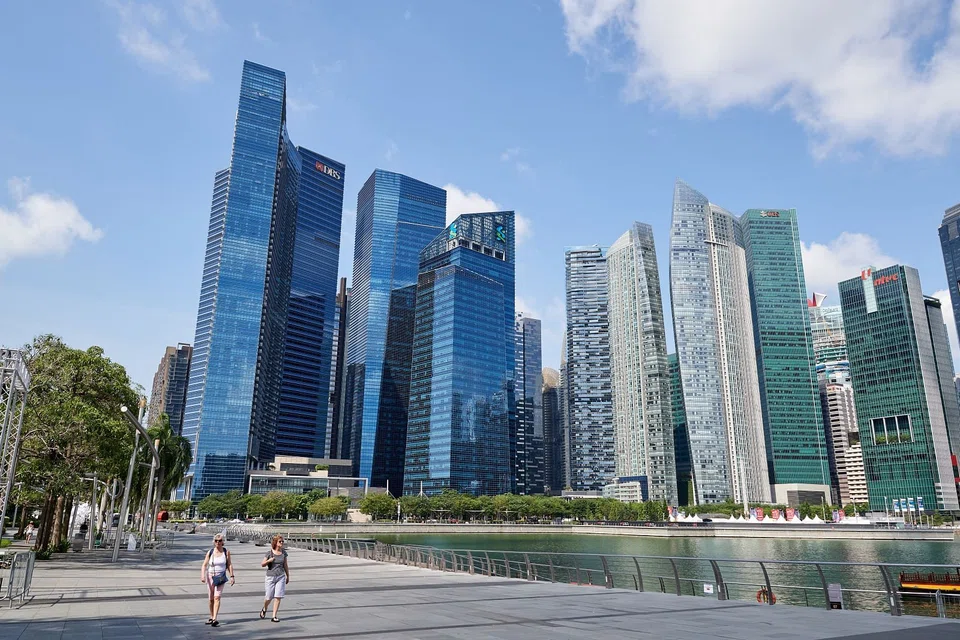
Singapore specifically is expected to experience the sharpest downturn, with gross domestic product (GDP) growth set to moderate from an expected 3.3 per cent in 2018 to 2.5 per cent next year, as US-China tensions and the resulting slowdown in Chinese demand continue to weigh on growth.
Malaysia's export-dependent economy is also expected to be weighed down by this. ICAEW estimated that GDP growth will ease from 4.8 per cent in 2018 to 4.5 per cent in 2019.
Many of the region's economies are small open economies heavily dependent on exports, with a high level of exports to China, noted ICAEW. In particular, Malaysia and Vietnam are both highly exposed to China with total exports to China in value-added terms accounting for 10.7 per cent and 10.3 per cent of GDP respectively in 2017. Of this, more than half were to meet Chinese domestic demand.
The report added that some economies may eventually benefit from the relocation of supply chains, and South-east Asia could be a preferred destination.
Still, it is not an easy decision to uproot large parts of an electronics or car supply chain. "We view this as a medium-term structural change rather than a short-term remedy," said ICAEW.
On the other end of the spectrum, Indonesia and the Philippines will be the least affected by the trade tensions. And, while growth is set to ease in Vietnam, Indonesia and the Philippines in 2019, they will still be among the top 10 fastest growing economies globally.
Meanwhile, domestic demand is expected to provide some relief amid the more challenging outlook for exports.
An expansionary fiscal policy will help, with fiscal spending expected to be strong in Indonesia, Thailand and the Philippines ahead of upcoming elections in the first half of 2019.
However, domestic demand growth is unlikely to reach the stellar pace achieved in 2018, in part because of lower monetary policy support, said Mark Billington, ICAEW regional director, South-east Asia.
TRENDING NOW

US dollar falters after Iran’s offer to reopen Hormuz sends oil lower

He built the Vingroup empire. Now South-east Asia’s richest man is handing some key roles to his sons

Floods compound Philippine growth woes from public-works scandal

Tokyo reverses baby bust with AI matchmaking and generous subsidies

