

S Korea considers reimposing curbs as Covid-19 cases surge
Country reports 1,212 new daily cases; movement restrictions have been extended in Seoul
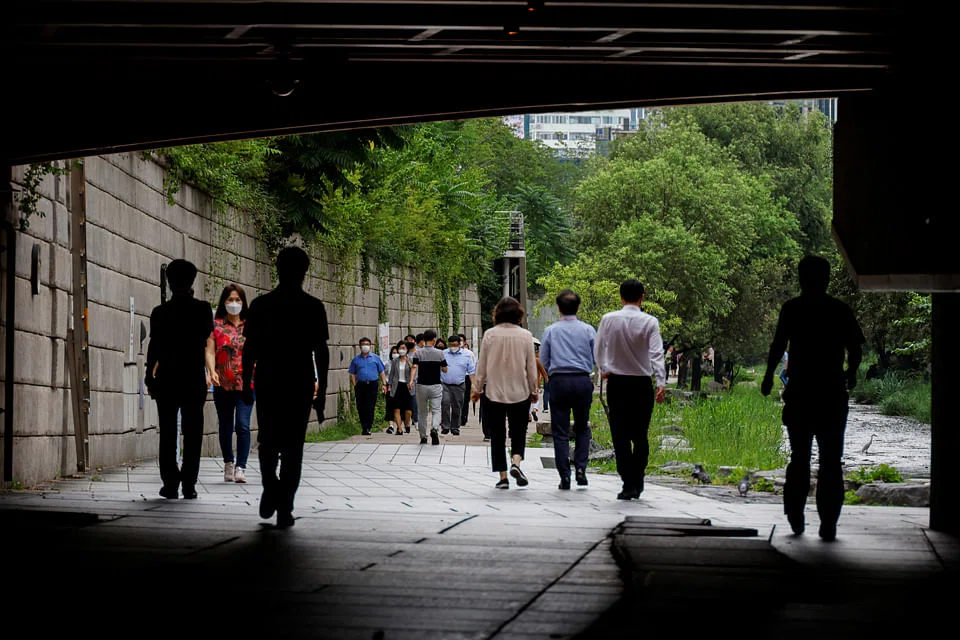
Seoul
SOUTH Korea reported its second highest number of daily new Covid-19 cases on Wednesday, just days after it began easing social-distancing restrictions in some parts of the country, buoyed by an accelerated vaccine rollout.
With the majority of the 1,212 new cases as of midnight Tuesday coming from densely populated Seoul, officials extended movement curbs in the capital and surrounding regions for at least another week and are considering pushing restrictions back up to the highest level.
According to Yonhap news agency, Wednesday's cases were also expected to top 1,000, with 1,010 already tallied by 6pm (0900 GMT).
Prime Minister Kim Boo-kyum said a fourth wave of the virus was spreading rapidly, especially among unvaccinated people in their 20s and 30s, while a growing number of highly contagious Delta variant cases raised new worries.
Mr Kim urged people in that demographic to get tested preemptively "to protect not just yourself, but everyone in your family, friends, school and the country".
"If the situation is not under control after monitoring for two to three days, it might leave us with no choice but to impose the strictest of all social-distancing levels," Mr Kim added.
President Moon Jae-in ordered the military be mobilised to aid wider contact tracing and urged authorities to open additional testing centres in densely populated areas, presidential spokeswoman Park Kyung-mee told reporters on Wednesday.
The daily caseload was the highest since Dec 25, when South Korea was battling a third wave of the pandemic.
Officials had been moving in recent weeks toward a full reopening of the country. Movement restrictions in much of the country were eased on July 1, although officials in greater Seoul held off as they watched case numbers beginning to creep up again.
Health experts said the relaxation of measures that restricted business operating hours and social gatherings outside of Seoul, along with the knowledge that further easings would be coming, led to public complacency, particularly in socially mobile younger people in the capital.
Seoul Mayor Oh Se-hoon called on the prime minister to consider expanding vaccinations to younger people, which he said would alleviate the situation.
Around 85 per cent of the new locally transmitted cases were in the Seoul metropolitan area, which is home to more than half of the country's population.
"While the infection rate has dropped relatively in the people aged over 60 on the back of inoculation drive, the transmission continues in the unvaccinated group," said Kim Tark, associate professor of infectious disease at Soonchunhyang University Bucheon Hospital. "It's a reminder to speed up vaccination for people under 60."
Just 10 per cent of the country's population of 52 million people have been fully vaccinated, while 30 per cent have received at least one shot, the majority of them aged over 60.
The Korean Medical Association urged the government to refrain from any hasty decisions to ease social-distancing policies with vaccinations at low levels.
The country received 700,000 doses of the Pfizer/BioNTech vaccine from Israel on Wednesday under a swap arrangement, along with a separate shipment of 627,000 directly purchased doses.
Some of the new supply will be sent to greater Seoul for inoculation programmes due to start on July 13, authorities said.
The country has reported a total of 162,753 infections and 2,033 deaths during the pandemic. REUTERS
Decoding Asia newsletter: your guide to navigating Asia in a new global order. Sign up here to get Decoding Asia newsletter. Delivered to your inbox. Free.
Share with us your feedback on BT's products and services
TRENDING NOW
Singapore expects all parties to honour commitments, says PM Wong after Indonesia cuts gas exports
China’s US$3.5 trillion stock rout deepens as profits sink, major stimulus stays elusive
Gas supply cut from Indonesia accounts for less than 2% of Singapore’s daily gas demand: EMA
Singapore’s central gas buyer affirms Indonesia’s role as ‘important partner’ amid export review warning

