

S$6.67b FY15 forecast deficit to fund future investments
Funds for Changi Airport development, employment credit, productivity and research to take up S$6b

Nisha Ramchandani
Singapore
AN overall budget deficit of S$6.67 billion, or 1.7 per cent of GDP, is expected for fiscal year 2015 as a hefty S$6 billion is being set aside for future investments.
Half of the S$6 billion will go to the new Changi Airport Development Fund, while significant top-ups are also being made to the Special Employment Credit Fund, National Productivity Fund and the National Research Fund.
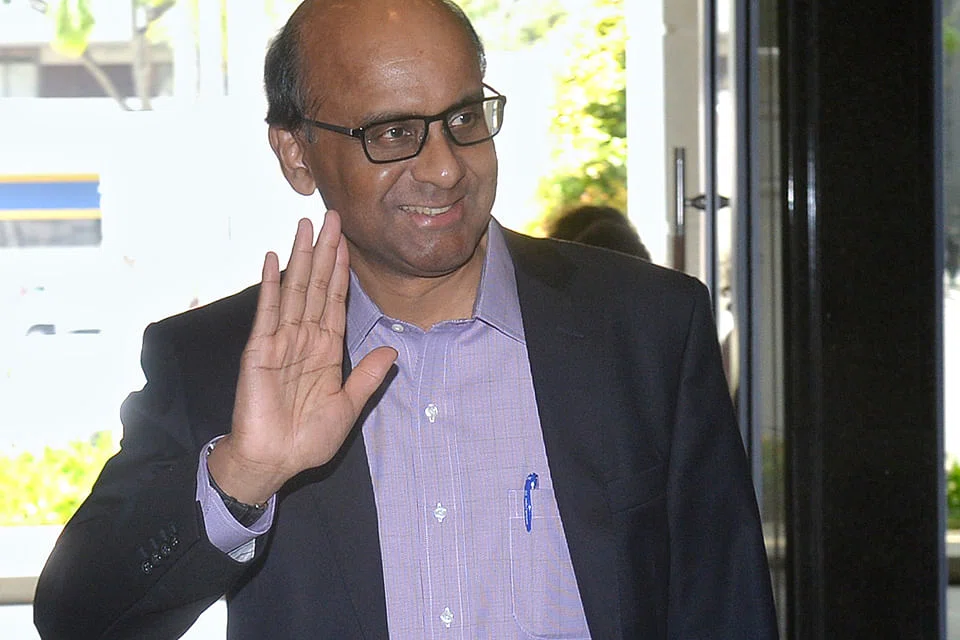
Without these funds, the budget for FY15 would otherwise be quite close to balance, said Deputy Prime Minister and Finance Minister Tharman Shanmugaratnam in his budget speech.
He added: "We have sufficient surpluses from previous years of this term of government to enable us to invest ahead and fund the overall deficit in FY2015. There is no draw on past reserves."
Operating revenue for FY15 is expected to climb 4.8 per cent to S$64.27 billion, driven by motor vehicle-related revenues such as motor vehicle taxes and vehicle quota premiums. On the other hand, stamp duty collections for FY15 are estimated at S$2.6 billion, or 7 per cent less than the revised estimate for FY14.
Meanwhile, budgeted expenditure for FY15 will rise sharply from S$57.2 billion to S$68.22 billion in one of the biggest increases over the last decade.
"Overall, the budget presents long-term plans by the state to invest heavily in infrastructure," noted Desmond Sim, head of CBRE Research (Singapore & South East Asia). "These plans will reinforce Singapore's position as a leading seaport and airport and it bodes well for both the hospitality and the logistics markets for the future."
For instance, the Ministry of Transport is expected to see expenditure of around S$10.9 billion for FY15, rising 80.6 per cent from FY14, as funds are channelled towards expanding Changi Airport and boosting rail infrastructure such as the Thomson-East Coast Line and the Tuas West extension.
Plans are underway to start developing Changi Airport's Terminal 5 to ensure the airport maintains its edge as a competitive air hub in the region. The new terminal, which is expected to come onstream in the mid-2020s, will boost Changi's handling capacity to 135 million passengers per annum.
Aside from transport, investments are also being made towards improving health care as well as towards developing Singapore's heartlands.
For health care, significant efforts are being made towards beefing up Singapore's healthcare infrastructure - such as by expanding capacity in public and community hospitals as well as nursing homes by 2020. Thus, expenditure for health for FY15 is expected to rise by nearly 30 per cent to S$9.3 billion.
Beyond FY15, government expenditure is also expected to rise over the medium to long term, highlighted Mr Tharman in his speech. The government's overall spending is expected to hit 19 per cent to 19.5 per cent of GDP on average over the next five years.
Meanwhile, net investment returns contribution for FY15 is expected to grow to S$8.94 billion from S$8.55 billion for FY14.
Budget 2015 will also see S$11.67 billion set aside for special transfers as well as top-ups to endowment funds and trust funds. Of the S$11.67 billion, S$5.67 billion are in special transfers - up from S$4.33 billion for FY14 - which include GST Voucher Special Payments, Temporary Employment Credit, Productivity and Innovation Credit and the Wage Credit Scheme. The remaining S$6 billion in top-ups are going to the Changi Airport Development Fund, Special Employment Credit Fund, National Productivity Fund and the National Research Fund.
KEY POINTS
READ MORE:






