

Saudi Arabia cuts ties with Iran in biggest stand-off since 80s
Saudi government gives Iran's ambassador 48 hours to leave after protesters set its embassy in Teheran on fire
Beirut
Saudi Arabia severed ties with Iran in the biggest meltdown in relations between the two Middle Eastern power brokers in almost three decades, raising the spectre of deepening conflicts across the fragile region.
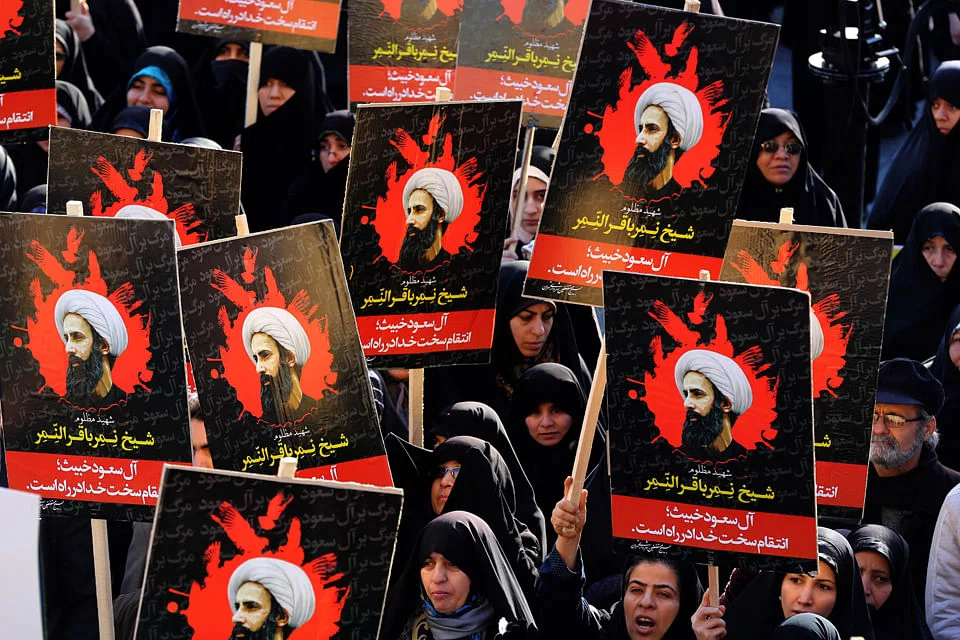
The Saudi government gave Iran's ambassador 48 hours to leave after protesters set its embassy in Teheran on fire at the weekend following the execution of Saudi cleric Nimr al-Nimr, a critic of the kingdom's treatment of its Shi'ite minority. He was one of 47 men given capital punishment in the Sunni nation for offences that included terrorism and political activism.
The clash between the sectarian rivals, two of the world's largest oil producers, exposes again the fault lines in the tinderbox region and risks worsening conflicts in Yemen and Syria, where Sunni-dominated Saudi Arabia and Shi'ite Iran are fighting proxy wars. The oil price rose while stock markets in China, Japan and across Europe tumbled on the first full trading day of 2016.
"From an investment perspective, it's bad news. People were betting on reactivating the dialogue between the Saudis and the Iranians, and to appease tensions," said Jihad Azour, a former Lebanese finance minister and now vice-president of consultant Booz & Co in Beirut. "It's clear it's not going to be the case for some time."
The expulsion of the Iranian diplomats came with an escalation in the war of words between the two countries. Saudi Arabia has been critical of the US-led deal last year with Iran over its nuclear programme.
Saudi Foreign Minister Adel al-Jubeir, who announced the decision to eject the Iranians, said late on Sunday in Riyadh that his people would no longer deal with "a country that supports terrorism and sectarianism".
Iranian Supreme Leader Ayatollah Ali Khamenei had said earlier that Saudi rulers would face repercussions for the execution of the Shi'ite cleric and that "the divine hand of revenge will take the Saudi politicians by the throat".
While Iranian-backed Lebanese group Hezbollah blamed the Saudi royal family for killing Mr al-Nimr, the Gulf region rallied to support Saudi Arabia.
The United Arab Emirates summoned Iran's envoy to protest the attacks on Saudi missions. Kuwait said that it backed "all measures adopted by Saudi Arabia to maintain its security and stability", according to an unnamed Foreign Ministry official cited by the official Kuna news agency.
In Bahrain, the Interior Ministry warned that legal action would be taken against "anyone attempting to use the recent verdicts in Saudi Arabia to heighten sectarian tensions or to incite violence". There were scattered protests by demonstrators in the majority Shi'ite nation after Mr al-Nimr's execution.
The stand-off between Iran and Saudi Arabia is the biggest between the regional powers since the late 1980s, when the kingdom suspended ties with Iran after its embassy was attacked following the death of Iranian pilgrims during the hajj in Mecca. Saudi Arabia also supported Saddam Hussein's Iraq against Iran during the first Gulf War.
The latest clash probably will undermine already-stumbling efforts to end the war in Syria, where Saudi Arabia backs largely Sunni militants and Iran supports the regime of President Bashar al-Assad.
It reverberated through financial markets on Monday, contributing to a 7 per cent decline in Chinese stocks. Gold and US Treasuries rose. Oil advanced, with futures at one point gaining more than 3 per cent in London to US$38.50 before retreating.
The ongoing tensions did not halt a protracted slide in oil prices last year amid a global supply glut. Brent crude prices fell for a third year in 2015, tumbling 35 per cent. Saudi Arabia is the biggest member by output in the Organization of the Petroleum Exporting Countries (Opec), while Iran is the fifth largest in the group.
The crisis may cause a short-term price spike of US$1 to US$3 a barrel in an oversupplied market, said John Auers, executive vice-president at Turner, Mason & Co in Dallas. He said that he doubts that it will change Saudi Arabia's longer-term posture of overproducing crude to depress global prices, harming Iran as it moves to increase its own output.
"Things like this can escalate pretty quickly," Mr Auers said. "But my gut feeling is that the Saudis and the Iranians won't let it affect the market too much." BLOOMBERG
READ MORE:
TRENDING NOW

He built the Vingroup empire. Now South-east Asia’s richest man is handing some key roles to his sons
China’s Pinglu Canal likely to benefit Singapore, other South-east Asia ports in the long term
Suntec Reit to increase Singapore focus, sell three Australia properties
Despite the de-dollarisation debate, demand for dollar liquidity in Asia is growing

