‘Save every drop of fuel’, urges South Korea’s president, as Iran crisis hits
Lee Jae-myung sharpens earlier appeals for restraint, signalling heightened sense of urgency
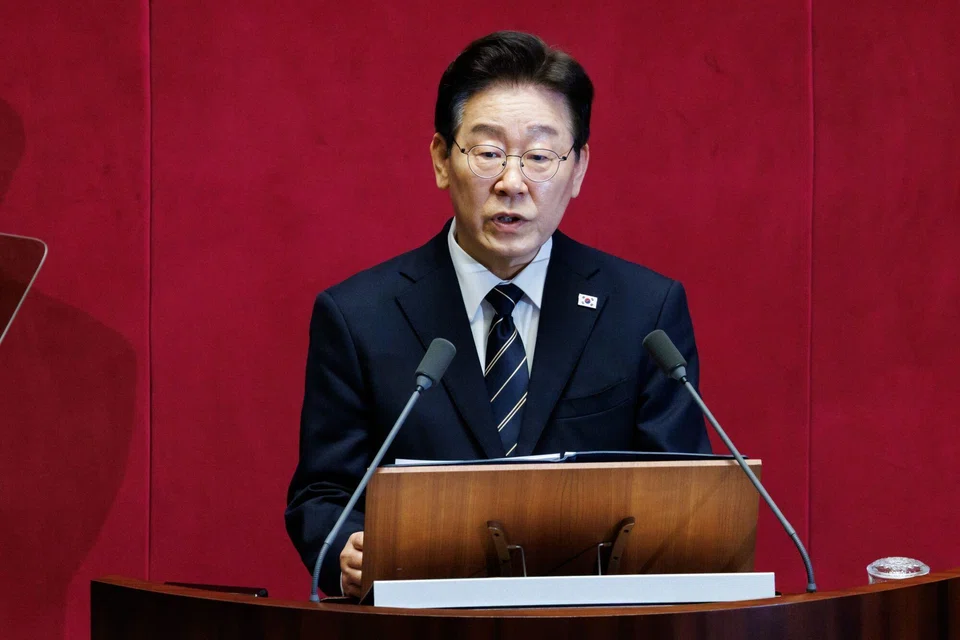
[SEOUL] South Korean President Lee Jae-myung urged citizens to “save every drop of fuel”, ramping up an official call for energy conservation as the deepening Iran conflict hits the energy-importing nation hard, straining households and businesses.
In a parliamentary address on Thursday (Apr 2), Lee sharpened earlier appeals for restraint in fuel use, signalling a heightened sense of urgency as the government moves to contain the economic fallout from surging energy prices and prolonged supply disruptions. He warned that the Middle East crisis has triggered one of the most severe energy security threats in decades.
“I earnestly appeal to all citizens to actively participate in energy-saving movements in daily lives, such as taking public transportation and conserving electricity,” Lee said. “The current crisis is not a passing shower that quickly subsides, but rather a massive storm whose duration is uncertain, making it all the more severe.”
The remarks come as his administration proposed a 26.2 trillion won (S$22.3 billion) supplementary Budget, aimed at cushioning the shock from surging fuel costs, supporting vulnerable households and stabilising supply chains. The package is designed to respond to a sharp spike in oil prices, with Brent crude jumping more than 40 per cent in March.
The government has already taken unprecedented steps, including imposing a fuel price cap for the first time in nearly three decades, and expanding fuel tax cuts to ease the burden on the public and companies. Authorities have also stepped up efforts to secure alternative energy supplies, and manage key inputs such as naphtha and urea, which are critical to industrial production.
The extra Budget allocates more than 10 trillion won to offset high energy costs, including subsidies and direct support to households, while additional funds will be used to support small businesses, young workers and sectors hit by rising logistics and input costs. Lawmakers are set to vote on it by Apr 10.
Lee framed the fiscal response as both a crisis measure and a structural pivot, saying the government will accelerate investment in renewable energy and strengthen supply chain resilience to lower dependence on external shocks.
Economists say the stimulus could help support growth in the near term, but warn it may also add to inflation risks as higher energy prices feed through to the broader economy. The government has sought to limit market impact by funding the package largely through excess tax revenue rather than new bond issuance.
At a meeting of financial authorities on Thursday, including the finance minister and the Bank of Korea governor, officials said the extra Budget is expected to raise growth by about 0.2 percentage point and have a limited impact on inflation, given the negative GDP gap and its focus on supporting vulnerable sectors.

“If we save every drop of fuel, avoid wasting even a single plastic bag, and add a spirit of mutual consideration and collective resolve, we can emerge from the tunnel of crisis safely and swiftly,” Lee added. BLOOMBERG
Decoding Asia newsletter: your guide to navigating Asia in a new global order. Sign up here to get Decoding Asia newsletter. Delivered to your inbox. Free.
Share with us your feedback on BT's products and services