
SBF seeks to build ecosystem that grows stronger via more partnerships
 Add BT as a preferred source
Singapore
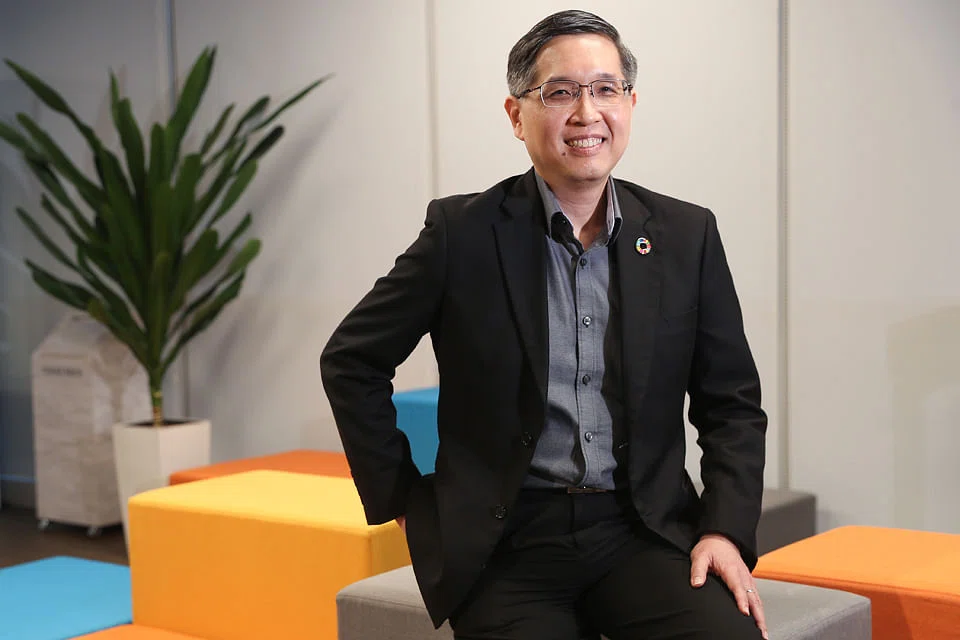
EVEN as the country's main business chamber, the Singapore Business Federation (SBF) cannot do everything alone, said chief executive officer (CEO) Lam Yi Young.
"Partnership is something I believe very strongly in, that we need to do a lot more," he said - not just the SBF itself working with partners, but also encouraging firms to work together.
Mr Lam took over on Jan 1 from former SBF CEO Ho Meng Kit. "Mr Ho has, over the last 10 years, done a lot to build a strong organisation. What we are doing is really building on what he has done," he said. "It's continuity, plus further strengthening the good work that has been done."
Like Mr Ho, Mr Lam was previously in the civil service. One of the roles he sees for the SBF is a bridge between the government and firms: taking firms' feedback and advocating to the government, as well as understanding government policy and explaining it to members.
A second role is that of facilitator: helping individual firms in areas such as digitalisation, internationalisation, and jobs and skills. "But the constraint with that is, we are only so big." The SBF has around 100 staff, and this role is a "high-touch" one.
Navigate Asia in
a new global order
Get the insights delivered to your inbox.
That is where the third role comes in: as an enabler. "How do we build a community, bring people together, so that more people can be helped?"
One aspect of this is working with other trade associations and chambers (TACs). Mr Lam cites a joint statement on fair hiring, released in January by the TAC Alliance. "It does make a difference to come together as 29 TACs, versus as SBF alone, or any of the other TACs alone saying this."
Another aspect is encouraging small and medium-sized enterprises (SMEs) to work together to reap advantages of scale. This does not necessarily have to be in the form of actual consortia, Mr Lam added: "It can be just a business relationship."
One example was during the February festive season, when 12 food manufacturers packaged their products together as food hampers for supermarkets in Vietnam. This was "a foot in the door", which they might not have got on their own, said Mr Lam.
A third aspect is encouraging larger firms to work with smaller ones. He said: "We're very mindful, it has to be a win-win. We can't be asking big companies to do national service." These arrangements, too, can range from formal to informal. An international hotel chain could use Singapore toiletries, or a property developer could bring Singapore brands to its overseas malls.
"It could be just helping the SMEs to learn," he added. "It could be just sharing your experience. If you went into a certain country, paid a lot of 'school fees' because you didn't know what to do, then share with the SMEs your experience so they don't pay the same 'school fees'."
As for partnerships of its own, the SBF is in talks with universities to see how to support SMEs in areas such as training, research and development, and consultancy.
The main challenge that Mr Lam sees in the year ahead is, unsurprisingly, that of recovery and growth: aiding both firms that are chasing expansion, and those still concerned with survival.
Even amid pandemic travel restrictions, internationalisation efforts continue. The SBF is helping firms link up with counterparts abroad via its two new Singapore Enterprise Centres in Jakarta and Ho Chi Minh City.
"Sometimes the challenges companies face is in the initial introduction," said Mr Lam. SBF staff in the centres can act as "hands and legs on the ground in the foreign country" - for instance, going down in person to visit a potential supplier on behalf of a Singapore-based firm, to make that introduction.
Other areas of focus for SBF this year are sustainability; women in the workforce; sustainable employment, with issues of low-wage workers, mature workers, displaced PMETs (professionals, managers, executives and technicians), and fair hiring; and fair tenancy.
As the new CEO, Mr Lam has also started a new practice: company visits, with the first in April. The idea is to visit a range of firms to get a better sense of concerns, while taking the chance to introduce SBF's range of services and find out how these could be improved.
Mr Lam estimates that with these monthly visits, the senior management team can meet over 100 companies each year. While SBF already conducts surveys, he said: "Nothing beats a face-to-face conversation. We can find out things that a survey alone cannot."
READ MORE: FYIstival: A digital festival of overseas opportunities
Decoding Asia newsletter: your guide to navigating Asia in a new global order. Sign up here to get Decoding Asia newsletter. Delivered to your inbox. Free.
Copyright SPH Media. All rights reserved.

