SCCCI’s new president Kho Choon Keng wants ‘memorable experiences’ to be a draw for new members
Sharon See
Sharon See

Published Mon, Jul 11, 2022 · 08:21 PM
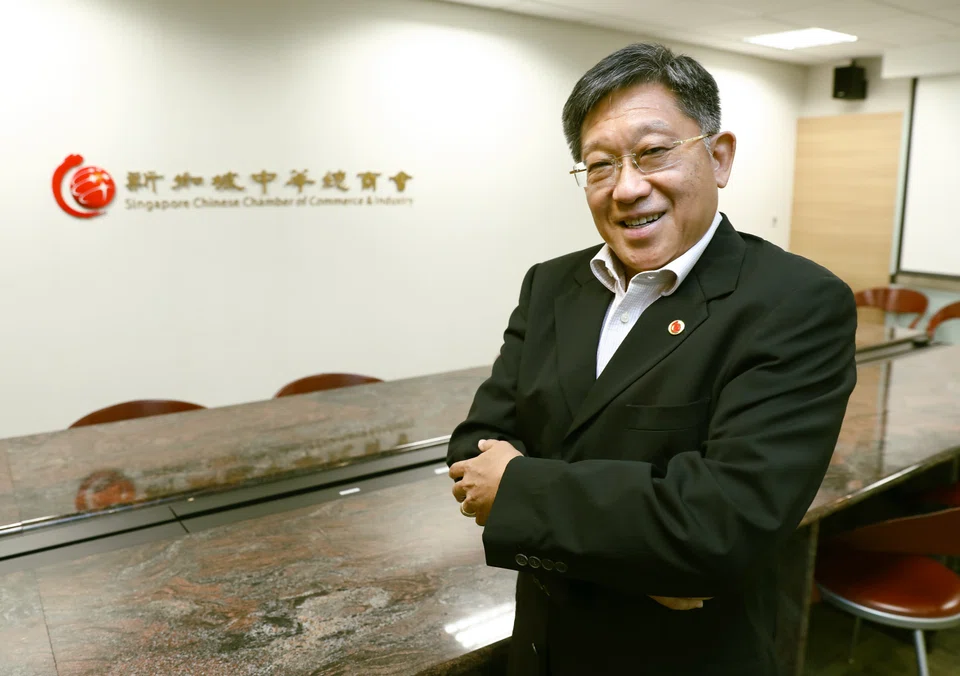
    • SCCCI president Kho Choon Keng notes that it is the members that give life to the chamber.
    • SCCCI president Kho Choon Keng notes that it is the members that give life to the chamber. YEN MENG JIIN, BT

    THE Singapore Chinese Chamber of Commerce & Industry (SCCCI) started out with a simple mission: to bring companies together so they can help one another. More than a century later, this remains a core tenet of the association, says its president Kho Choon Keng.

    The chamber was formed by a group of Chinese migrant businessmen in 1906, who wanted to bring together companies so that they can help one another out while tackling challenges together. Their contributions to society then extended to building schools and caring for fellow migrants’ welfare.

    When businesses from various industries come together now, Kho says they are able to draw on their collective wisdom from the past 116 years, to establish win-win collaborations and overcome difficulties and differences together.


    But beyond these benefits, Kho recognises that it is the members that give life to the chamber.

    “If there’re no members, then you don’t need SCCCI anymore,” Kho says candidly.

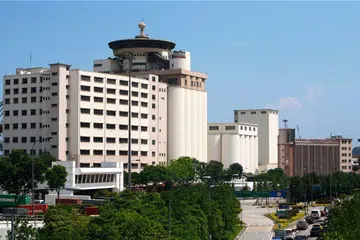
    “So we try to unite them, even though they are all in different businesses — even if you go to China, or United States or Vietnam for investment, for example — when you’re big enough, everybody would have a role to play because today, every business is quite integral to one another,” he tells The Business Times in an interview at the chamber’s office at Jurong Town Hall.

    Kho, who took office in mid-March, is the president of the chamber’s 61st council, having taken over from 2-term president Roland Ng.

    He is also executive chairman of property developer Lian Huat Group and is involved in several other associations and councils, but remains modest when asked about his involvement.

    “I won’t say it’s because I’m over-passionate, but when I have time, I’ll just contribute as much as I can,” he says.

    “Since I’ve been elected and trusted, I just have to learn to embrace the job and make sure that I will do my best,” he says of his appointment at the chamber. “Quoting DPM Lawrence Wong’s words, I’ll use every ounce of my strength to contribute to the chambers and to serve the business community.”

    While the rich and long history of SCCCI inspires trust and credibility, Kho notes that his role comes with “very big and heavy responsibilities” as the chamber has come this far.

    “I cannot say that I have a plan where I’m going to change it 180 degrees. Neither would it be practical to say that I’m going to do a big quantum leap because after 116 years of foundations, everything will progress in quite an acceptable and gradual manner,” he says.

    His plan hence is to try to consolidate the chamber, and one big challenge that is not unique to SCCCI, he says, is how it can stay attractive to new and younger members.

    In other words, the question is one of staying relevant in catering to members’ needs, particularly in today’s rapidly changing business environment.

    “We need to hold fast to the basic principles of creating value for our members as well as all the businesses in Singapore,” he says, adding that this is his immediate goal.

    Here, he cites a speech by Warren Buffett in 2018 that touched on the need to leave behind a “memorable experience” for customers, regardless of the type of business one is conducting.

    This, he says, dictates how successful one will be.

    Specifically, Kho tells BT there are 4 things the chamber can do to achieve this.

    The first is to build a “tripartite hub” linking the government, the chamber and its members for “information flow, exchange of ideas as well as trying to understand the grievances, challenges as well as the sorrows”.

    The chamber’s role is to “analyse and digest” that information before passing it to the government so that a win-win solution may be put forward for the business community. The government, he adds, is fortunately “very pro-business”.

    In recent months, businesses’ woes are likely to stem from rising inflation and supply chain disruptions. The world, it seems, has no shortage of uncertainties, whether it’s the Covid-19 pandemic or the Russia-Ukraine war.

    “Nobody can foresee, no matter how smart you are, unless you have a nice crystal ball,” he says.

    “So what we can do, I believe, is that we have to trust the government. We have to be confident in our government, and by doing so, we can instil confidence in our members and the entire society,” he adds as he lauds the government’s “progressive” response in leading Singapore through the crisis.

    In fact, being patriotic to one’s country, alongside integrity, says Kho, is among the core values for his term of council.

    “I think this is very important especially after experiencing the pandemic,” he says.

    Singapore has “emerged quite successfully”, he adds, while the government has dipped into the reserves to support businesses and the general public.

    And in the spirit of giving back, Kho says another core belief he holds is succession, and specifically, “how do you pass down the business or whatever you have achieved generation by generation”. This makes contributing to society a part of succession, he adds.

    “We try to do our best to help or guide the young, especially Chinese entrepreneurs or Singaporean entrepreneurs and Singaporeans, to appreciate that the development path of Singapore is not a straightforward or easy one,” he says.

    “So everyone has to treasure the prosperity that we’re enjoying now as well as the stability that we have now.”

    Back to creating “memorable experiences”, SCCCI’s second mission is to help member companies expand overseas, as this will widen their market, revenue and profitability.

    Asked how China’s strict Covid-zero policy may affect businesses’ internationalisation plans, Kho says companies should also consider going into the Asean region, which has a population of more than 650 million.

    “It’s a very big emerging economy, and they are not as locked down as China. In fact, they are opening up, so that will be a frontier that Singaporeans can progress into,” he says.

    Digitalisation and sustainability are the third and fourth thrusts, and Kho believes the chamber can play a big and supportive role in helping companies achieve them.

    For businesses that are still lagging behind where digital transformation is concerned, Kho says SCCCI has a technology committee with sufficient resources and links to the government’s digitalisation agencies.

    There have also been several webinars over the past 2 years — and more recently, physical workshops — that saw “overwhelming response” at the height of the pandemic but has since tapered off.

    One challenge for small and medium enterprises (SMEs) though, when it comes to business transformation, is the cash flow, Kho notes.

    Compared with multinational corporations (MNCs), SMEs live on cash flow “by the day or by the month”, while MNCs live on cash flow “by the year or by the decades”. This makes many SMEs very mindful about how much they can spend and invest on their long-term goals, he says.

    “But at the end of the day, I suppose with enough persuasion, with enough explanation to explain the logic and enough support whether financially or otherwise, slowly, I think there’ll be more people crossing the line,” he adds.

    Looking ahead, Kho is more optimistic about 2023 than he is this year, believing that things should get better than seen so far.

    “We have been through 2 very difficult years — the pandemic and the crisis,” he says. “It’ll be very wasteful if we don’t capture the experience of this pandemic as a learning curve.”