Sentiment improves among Japan’s big firms, but Iran war clouds outlook
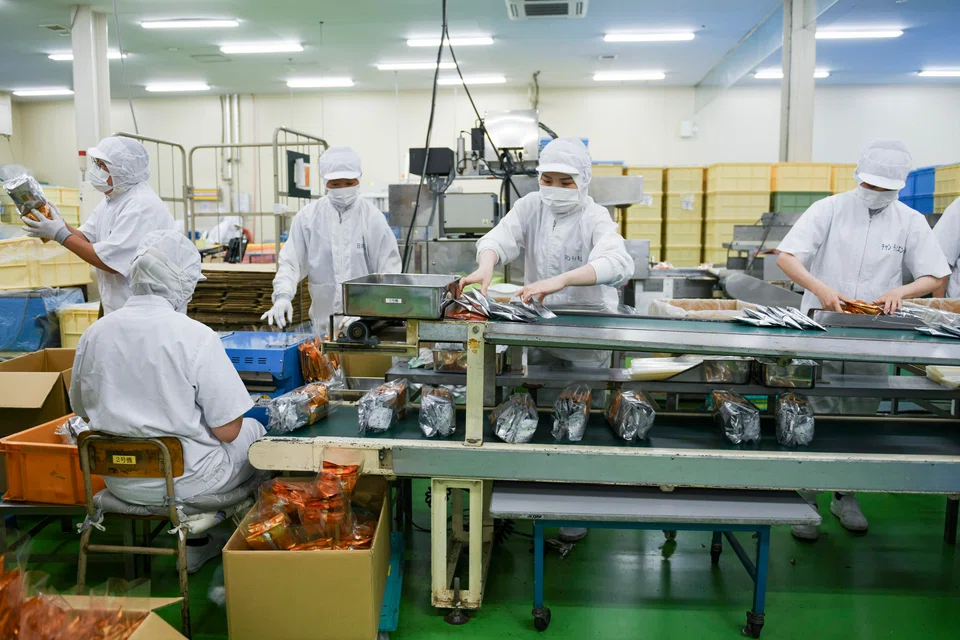
[TOKYO] Business sentiment among large Japanese manufacturers improved in the three months to March, a closely watched survey showed on Wednesday, a sign that increasing economic uncertainty from the Middle East conflict has yet to hit morale.
But firms expect conditions to worsen in the next three months, the survey showed, as soaring fuel costs and supply disruptions from the Iran war cloud the global outlook and threaten to squeeze margins.
The headline index measuring big manufacturers’ business confidence stood at +17 in March, the BOJ’s “tankan” survey showed, up from +16 in December. That compared with a median market forecast for a reading of +16.
An index gauging sentiment among large non-manufacturers stood at +36 in March, unchanged from December. It compared with a median market forecast for +33.
“The Tankan survey showed that firms are shrugging off the energy shock caused by the Iran war, which should encourage the BoJ to hike rates at this month’s meeting,” said Marcel Thieliant, head of Asia-Pacific at Capital Economics.
The survey was conducted between Feb 26 and March 31 with roughly 70 per cent of firms responding by March 12, nearly two weeks after the US-Israel attacks on Iran on Feb 28.
While many firms responded after the Feb 28 attacks, the tankan likely did not fully incorporate the impact of the Middle East conflict, a BOJ official told a briefing.
While robust demand for AI chips and receding uncertainty over US trade policy lifted sentiment, rising costs, labour shortages and the Middle East conflict weighed on corporate morale, the official said.
Big firms expect to increase capital expenditure by 3.3 per cent in fiscal 2026, compared with a median market forecast for a 3 per cent gain, the survey showed.


In a sign of heightening inflation expectations, companies expect inflation to hit 2.6 per cent one year from now, up from 2.4 per cent in the December survey.
They expect inflation of 2.5 per cent three years from now, as well as five years from now, which were both the highest projections on record, the survey showed.
Markets have been rattled since the Iran war effectively shut the Strait of Hormuz, a chokepoint for about a fifth of global oil and gas flows, driving up crude oil prices and demand for the safe-haven dollar.
The conflict has put the Bank of Japan in a tight spot as it looks at raising still-low borrowing costs to cope with inflation that has exceeded its 2 per cent target for nearly four years.
While price pressures from the war could accelerate inflation, rising energy prices will likely hurt economic activity in Japan, which relies almost entirely on imported fuel.
The BOJ ended a decade-long, massive stimulus programme in 2024 and raised rates including in December, when it hiked its short-term policy rate to a 30-year high of 0.75 per cent, on the view that Japan was making progress in durably achieving its 2 per cent inflation target.
With the weak yen adding to inflationary pressures, markets are pricing in roughly a 70 per cent chance of another hike in April. REUTERS
Decoding Asia newsletter: your guide to navigating Asia in a new global order. Sign up here to get Decoding Asia newsletter. Delivered to your inbox. Free.
Share with us your feedback on BT's products and services