
Shanghai overtakes Jilin to be China's biggest Covid hotspot
 Add BT as a preferred source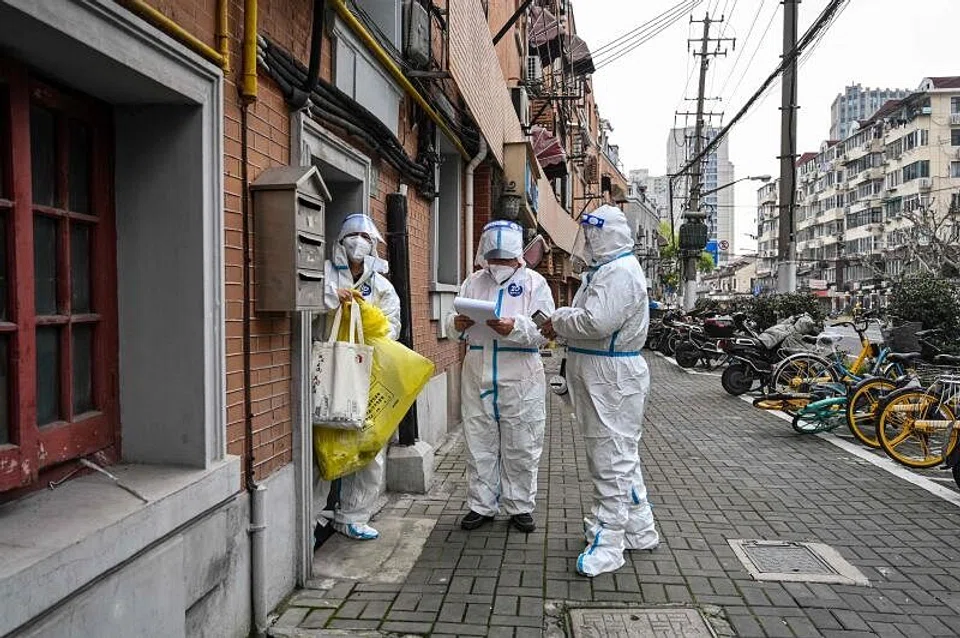
[SHANGHAI] Shanghai became China's biggest coronavirus hotspot after reporting another record increase in daily Covid-19 infections. The financial hub overtook the north-eastern province of Jilin, which reported 2,078 cases for Saturday (Mar 26).
Shanghai has 2,676 new infections, a jump of 18 per cent from a day earlier, according to data from the municipal health commission. Covid-19 cases in Shanghai kept hitting records in the past week, though a vast majority are asymptomatic.
A member of the city's pandemic task force said officials were determined to avoid a full lockdown over the damage it would do to the economy.
Millions of Chinese in affected areas have been subjected to city-wide lockdowns by an Omicron-led outbreak that has sent daily case counts creeping ever-higher, though they remain insignificant compared to other countries.
Shanghai, however, has aimed to ease disruption with a more targeted approach marked by rolling 48-hour lockdowns of individual neighbourhoods and large-scale testing while largely keeping the metropolis of 25 million people running.
At a daily Shanghai press conference on Saturday, officials alluded to the importance of avoiding a full lockdown of the huge port city. "If Shanghai, this city of ours, came to a complete halt, there would be many international cargo ships floating in the East China Sea," said Wu Fan, a medical expert with the city's pandemic task force. "This would impact the entire national economy and the global economy."
Navigate Asia in
a new global order
Get the insights delivered to your inbox.
Wu made the comments as city officials also announced that they would begin handing out self-testing kits to Shanghai residents, in the latest sign that the government was expanding its pandemic response.
The north-eastern province of Jilin also said Saturday that it had begun distributing 500,000 of the rapid-antigen kits.
Shanghai and Jilin have been the areas hardest hit by the outbreak, which took off in early March.
On Sunday, Shanghai officials said the city will carry out a fresh round of testing for Covid-19 that will require residents to locked down in 2 batches between Mar 28 and Apr 5.
The city will first lock down areas east of the Huangpu River, which includes its financial district and industrial parks, for 4 days starting Monday. Then the lockdown will start in the city's west for another 4 days.
The Shanghai government said on its official WeChat account that all public transport will be suspended during the lockdowns and that all firms and factories will suspend manufacturing or work remotely during the lockdown, apart from those involved in offering public services or food supply.
China had largely kept the coronavirus - which first emerged in the city of Wuhan in late 2019 - under control through its strict zero-tolerance measures.
But that top-down approach is increasingly being questioned amid concerns over the economic impact and public "pandemic fatigue", especially considering Omicron's less severe symptoms.
The National Health Commission announced 2 weeks ago that it would introduce the sale in China of rapid antigen self-test kits for the first time, and they have begun to appear on pharmacy shelves.
But Saturday's announcements appeared to mark their first wide-scale use as part of official pandemic control measures.
China on Saturday reported 5,600 new confirmed domestic transmissions, most of them asymptomatic.
Chinese authorities had watched nervously as a deadly Hong Kong Omicron surge sparked panic buying and claimed a high toll of unvaccinated elderly in the southern Chinese city.
Its subsequent spread in mainland China has posed a dilemma for authorities wrestling with how forcefully they should respond.
On Wednesday, Shanghai infectious disease expert Zhang Wenhong, a top doctor in the city's pandemic fight, called for balancing anti-virus measures with maintenance of "normal life".
The comments in his widely followed blog indicated growing official tolerance for voices who question the lockdown approach.
Shanghai's softer strategy has so far failed to stop cases from rising, and the localised lockdowns have provoked grumbling online and a run on groceries in some districts. BLOOMBERG, AFP, REUTERS
Decoding Asia newsletter: your guide to navigating Asia in a new global order. Sign up here to get Decoding Asia newsletter. Delivered to your inbox. Free.
Share with us your feedback on BT's products and services

