

Sheikh Hamad bin Khalifa, ruler who transformed Qatar, dies at 74
The country’s GDP increased 24-fold during his reign
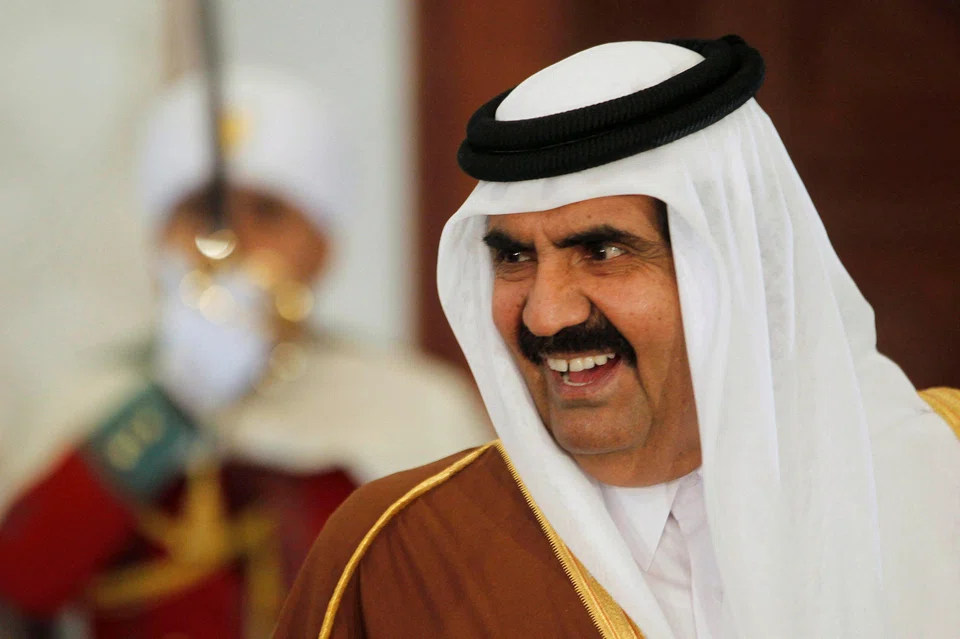
[RIYADH, Saudi Arabia] Sheikh Hamad bin Khalifa Al Thani, the former monarch who oversaw Qatar’s transformation from a little-known desert peninsula in the Persian Gulf into a country with vast wealth and global influence, died on Sunday (Jul 12). He was 74.
His death was announced by the Qatari royal court, which did not specify the cause. The court declared a public mourning period of four days.
Hamad is often described as the founding father of modern Qatar.
When he overthrew his father in a bloodless coup in 1995, Qatar was rich in natural gas but largely subordinate to neighbouring Saudi Arabia. Hamad helped turn the tiny country into a more independently minded state with political and financial influence far greater than its size, before handing over power to his son, the current emir, in 2013.
During his reign, the nation’s gross domestic product swelled 24-fold, buoyed by enormous investments to develop its natural gas-exporting industry.
Qatar created Al Jazeera news network and established a sovereign wealth fund that now oversees roughly US$600 billion in assets. It also won the rights to host the 2022 World Cup, in a bid that was marred by allegations of bribery.
More recently, under the rule of his son Sheikh Tamim bin Hamad, Qatar has fashioned a reputation as a mediator in a series of wars.
Its officials have facilitated diplomacy between Western nations on one side, and Iran, the Palestinian militant group Hamas, or the Taleban in Afghanistan on the other. Qatar has been one of the mediators in efforts to end the current war between the United States and Iran.
Born in the Qatari capital of Doha in 1952, Hamad studied at the Royal Military Academy Sandhurst, in the United Kingdom, and then returned to Qatar to join its armed forces, according to a royal court biography.

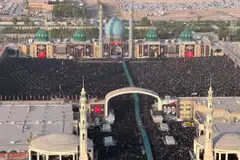
He was groomed for power early on; Qatar is an authoritarian monarchy, with hereditary rule by the Thani clan. Hamad’s father, Sheikh Khalifa bin Hamad, deposed a relative to become emir in 1972.
In 1977, Hamad was appointed Qatar’s heir apparent. That same decade, abundant deposits of natural gas were discovered, propelling the country — with a tiny population of citizens that today numbers around 400,000 — toward immense wealth.
Analysts and diplomats at the time portrayed the emir, Khalifa, as deferential to regional powers such as Saudi Arabia.
In 1995, Hamad staged a palace coup while his father was abroad, seizing power.
“I am not happy with what has happened, but it had to be done, and I had to do it,” Hamad said at the time, in a televised address.
His reign was defined by an ambitious bid to make Qatar better known and relevant far beyond its borders. The United States soon established a major military presence in Qatar, and Hamad pursued closer ties with both Iran and Israel than his father did.
Eventually, Qatar became an active shaper of events across the Middle East, backing anti-government rebels in Syria’s civil war and hosting the political leadership of Hamas and the Taleban in Doha. It also earned a reputation of being more friendly to political Islam than other Arab monarchies.
In 1996, Hamad oversaw the establishment of Al Jazeera, which caused consternation among other authoritarian governments in the Middle East by allowing more open and critical coverage of the region — albeit less so of Qatar itself.
In an interview with The New York Times in 1997, Hamad suggested that other governments had brought unrest upon themselves by “lack of sharing with their people,” and pledged to prevent Qatar’s leaders from plundering state wealth.
“If the leaders concentrate on controlling their people, through the police and through the intelligence services, the result will not be good for the country as a whole,” he said.
Qatar allows slightly greater freedom of expression than its neighbours. The Arab Spring revolutions that rippled across the Middle East shook Bahrain and eastern Saudi Arabia but did not spread to the manicured streets of Doha.
Qatar remains an absolute monarchy, with an advisory legislature that possesses limited power. The country’s royal family still enjoys spectacular affluence, with the line between government and business interests often blurred.
In 2011, the government prosecuted a poet for verses that mocked the royal family, including a line about sheikhs playing video games.
In 2013, Hamad broke national and regional precedent by abdicating power voluntarily in favour of his son Tamim.
“The time has come to turn a new leaf in the history of our nation, where a new generation steps forward to shoulder the responsibility with their dynamic potential and creative thoughts,” Hamad said in a speech at the time.
Hamad had three wives. Islamic law permits a man to have as many as four simultaneously and it is common in Gulf royal dynasties for multiple marriages to be used to cement familial and political ties.
He is survived by the current emir, a number of other children, and one of his wives, Sheikha Moza bint Nasser. NYTIMES
Decoding Asia newsletter: your guide to navigating Asia in a new global order. Sign up here to get Decoding Asia newsletter. Delivered to your inbox. Free.
Share with us your feedback on BT's products and services
TRENDING NOW

Once staunchly pro-China, Malaysian Chinese businesses are now distancing themselves from Beijing

‘How many will survive?’: Bubble fears arise as China’s humanoid robotics face reality check

Philippine power giant First Gen rebuffs foreign offers, plans up to US$2.6 billion in expansion

Indonesia imposes US$116 million in fines over manipulation of Sinar Mas, Prajogo-linked stocks

