

Shocked investors scour Xi's past speeches to find next target
 Add BT as a preferred source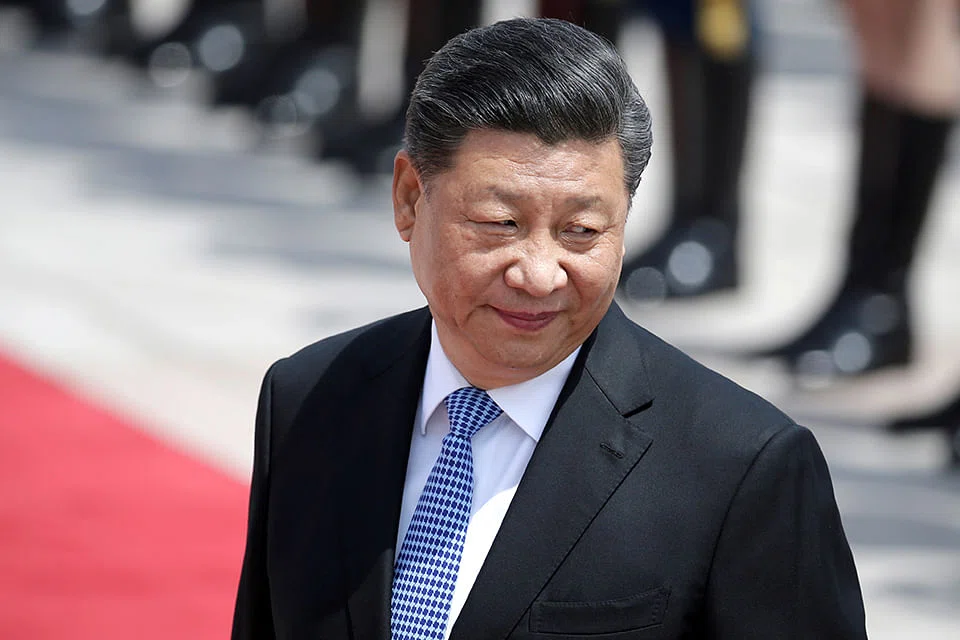
DeeperDive is a beta AI feature. Refer to full articles for the facts.
Beijing
AS US$1 trillion evaporated from Chinese stocks last week, some investors realised that they had not paid enough attention to the country's most important man: President Xi Jinping.
Traders began scouring databases and other collections of his speeches to find clues about the industries that might be next after his administration abruptly smashed the country's US$100 billion for-profit education sector, said several employees at Chinese financial firms who asked not to be identified.
Screen shots of key passages made the rounds: Mr Xi denouncing "obscene" online content, education inequality and housing-price speculation in school districts.
The jitters continued this week, with Tencent Holdings Ltd's shares plunging after the Economic Information Daily - an offshoot of the official Xinhua News Agency - decried the "spiritual opium" of online gaming, sparking worries that the sector might be next on the chopping block.
The selloff extended to Japanese gaming developers that have licensing deals with Tencent, China's most valuable corporation.
Navigate Asia in
a new global order
Get the insights delivered to your inbox.
"Investors and analysts have tended to dismiss party-speak, usually because it's so impenetrable," said Dan Wang, a technology analyst at Gavekal Dragonomics in Shanghai, who regularly reads the Qiushi Journal, a bi-monthly Communist Party publication.
"But much of it is perfectly readable, and we should know at this point that Xi usually follows through on what he says."
Reading the signals from Beijing has always been a crucial component of doing business in China.
But the abrupt education overhaul has prompted even seasoned investors to reassess how they interpret statements from Mr Xi and top officials in his government - a task made more difficult by the fact that many of his speeches are classified and made available only to the party elite.
Compounding the problem is Mr Xi's likely push for a third term ahead of a once-in-five-year meeting of party leaders next year, in which key positions are up for grabs.
That has rank-and-file members all eager to please the man who has amassed more power in China than any leader since Deng Xiaoping in the 1980s and 1990s.
Victor Shih, associate professor at the University of California in San Diego and author of Factions And Finance In China: Elite Conflict and Inflation, said: "With power mostly centralised in his hands, Xi now can change status quo policy quickly and even without much warning. On top of quick policy changes, officials below him will want to zealously implement any new policy or 'spirit', the party's term for policy direction.
"This zealous implementation will often take place regardless of the longer-term consequences because officials are afraid of being accused of lacklustre implementation."
The opacity in China's political system forces investors to gauge the importance of various statements from officials and state-run media.
After many market players shrugged off Mr Xi's criticism of out-of-school tutors back in June, this week's Tencent selloff prompted them to dig up one of his speeches from March, in which he identified "a lot of obscene and filthy stuff online" as one of a number of social problems that need to be addressed.
One element to watch is which agency makes the announcement, and over the past decade, there has been an increasing amount of joint statements that span different arms of the government and the party.
China's ban on profits for its tutoring industry was jointly issued by the general offices of top government and party bodies - the State Council and the party's Central Committee - giving the decision more authority than any single department.
While China's policy moves can feel ad hoc particularly to foreign investors, the changes are quite targeted on certain sectors, said Jason Hsu, founder and chief investment officer of Rayliant Global Advisors.
"Right now, it feels like throwing the baby out with the bath water, and every industry is at risk," he said.
"If you are more aware of what the Chinese have been communicating all along, you know what they will do. Real estate, health care, retirement living - these are identified by policy makers as undermining societal harmony, and the quality of life."
Still, the authorities have sought to address misunderstandings in the market. Following the wild selloff last week, the China Securities Regulatory Commission promised more transparency and policy predictability in a Q&A posted on its website on Sunday.
The state media have also either tweaked articles or published commentaries to try to calm market jitters.
On Tuesday, the Economic Information Daily removed the link to its piece on online gaming; the People's Daily newspaper, the party's official mouthpiece, published an editorial in its overseas edition stressing the need for government, schools, families and broader society to work together to better protect children from excessive gaming.
Markets were likely to remain volatile as investors adjust.
Although the sectors that Mr Xi wants overhauled are "fairly obvious" now, "the timing and sequencing of Beijing's regulatory actions will remain chaotic", said Jude Blanchette, Freeman chair in China Studies at the Center for Strategic and International Studies.
"The scope and severity of the current regulatory storm looks obvious only in retrospect," he said.
"I'm not aware of anyone who read Xi's 2018 speech on education and said 'He's going to crush the for-profit education sector three years hence'." BLOOMBERG
Decoding Asia newsletter: your guide to navigating Asia in a new global order. Sign up here to get Decoding Asia newsletter. Delivered to your inbox. Free.
Share with us your feedback on BT's products and services
TRENDING NOW

From 1MDB to ‘corporate mafia’: Is Malaysia facing a new governance test?
Middle East-linked energy supply shocks put Asean Power Grid back in focus

Beijing’s calculated silence on the Iran war
DPM Gan warns of 3 structural shifts to the global system that will bring greater challenges – and opportunities

