

Firms given more aid to retain workers amid shutdown
Deputy Prime Minister Heng says these measures are to help companies hold on to their workers
Singapore
COMPANIES will get additional wage support for local employees in April, while their operations are set to slow down or grind to a halt amid a month-long shutdown starting Tuesday.
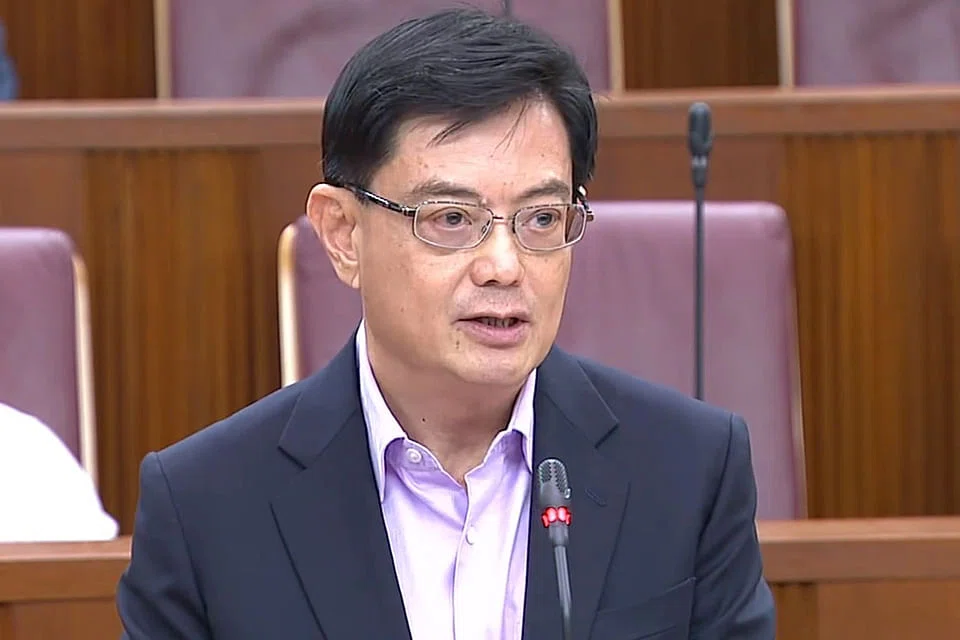
This is to encourage companies to hold on to their workers amid the "circuit breaker" period. By doing so, businesses can also resume operations quickly when the period is over, said Deputy Prime Minister Heng Swee Keat in Parliament on Monday.
As part of the additional support measures for businesses and workers costing S$4 billion, the Jobs Support Scheme introduced in Budget 2020 in February will be enhanced for one month, offsetting 75 per cent of gross monthly wages for the first S$4,600 of wages paid for each local employee in April.
The first payout in this scheme will also be brought forward to April, from May previously, with some firms expected to start receiving it next week.
In the earlier Resilience Budget, the government had already increased its share of salary payments from 8 per cent to a base rate of 25 per cent. Firms in the food services sector were to get 50 per cent, and the aviation and tourism sectors, 75 per cent.
The wage subsidy applies to over 1.9 million local employees, said Mr Heng.
The wage cap of S$4,600 does not mean that workers earning more than that do not qualify, he said, but that the maximum subsidy to firms will be capped at S$3,450 per person.
"I expect firms to make use of this Jobs Support Scheme to continue paying your workers and refrain from putting workers on no-pay leave during this period, or worse, retrenching them," he said.
"We will monitor the situation carefully together with our tripartite partners, and take action where needed," he added.
Employers who do not pay wages in April - either because they retrenched workers or put them on no-pay leave - will not benefit from the increase.
This is because the additional subsidy in April will first be paid out based on salaries paid in October 2019. It will later be adjusted for wages paid in April 2020, in the second payout.
Market watchers saw the government's move to hike the wage subsidy further as a necessary one.
OCBC Bank chief economist Selena Ling said the one-month shutdown is likely to take a heavy toll on businesses and workers, contributing to a "temporary stalling of the economic engine".
It is also uncertain whether the shutdown will succeed in curbing the local spread of the virus and not be extended further, she added.
One recruiter, however, saw the increases in wage support as stop-gap measures that may not be sustainable. Some of his suffering clients are putting employees on no-pay leave and others are contemplating layoffs.
"If the economy collapses, companies won't be able to hold on to workers even if they wanted to," said Ong Boon Huat, chairman of MCI Career Services.
UOB economist Barnabas Gan concurred, saying the move may insufficient to forestall retrenchments if economic conditions take longer than expected to turn around.
Maybank Kim Eng economists Chua Hak Bin and Lee Ju Ye expect job losses to hit as high as 200,000 in 2020, even with the fiscal help.
Nonetheless, some companies like Ademco Security Group and Creative Eateries appreciated the additional wage support.
Creative Eateries chief operating officer Bonnie Wong said the increased subsidy will keep the F&B group going for the coming month, when revenue is likely to fall by as much as 90 per cent.
The company has not laid off anyone since the virus broke out, and is still trying to retain all its workers, she added. Some employees are taking a "small amount" of unpaid leave, however, with management taking a higher share.
"This is to be conservative, especially in case the crisis is extended," Ms Wong said.
KEY POINTS
READ MORE:
TRENDING NOW

Despite the de-dollarisation debate, demand for dollar liquidity in Asia is growing

URA to review guidelines on floor space to give developers more design flexibility: Chee Hong Tat

He built the Vingroup empire. Now South-east Asia’s richest man is handing some key roles to his sons

Can a first-time homebuyer couple earning S$18,000 a month afford a new EC unit?

