

Singapore Budget debate: Tharman gives assurance of sustainability
 Add BT as a preferred source
Wong Wei Kong
DeeperDive is a beta AI feature. Refer to full articles for the facts.
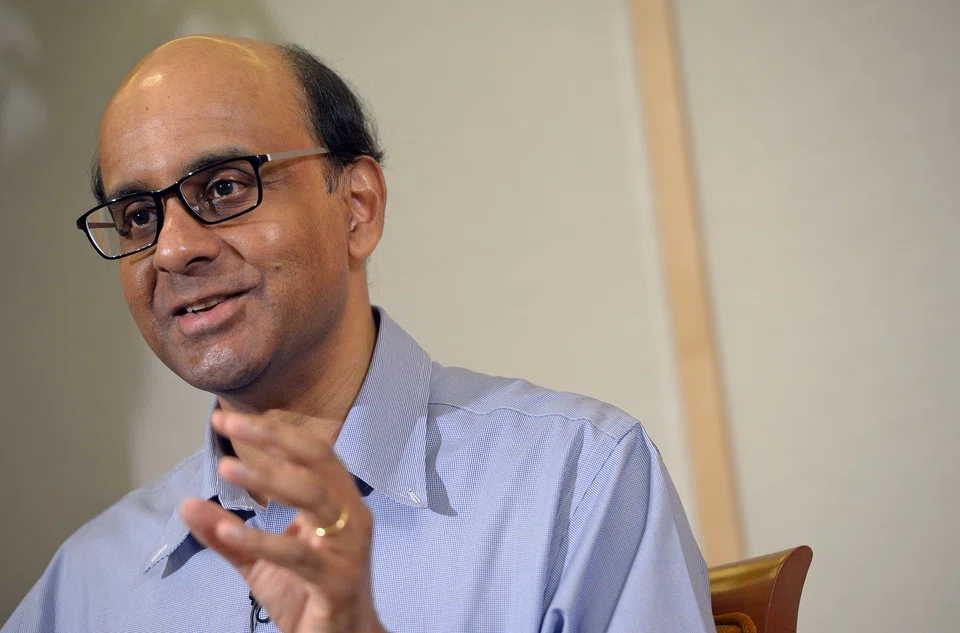
Deputy Prime Minister and Finance Minister Tharman Shanmugaratnam assured Parliament on Thursday that Singapore will remain prudent and maintain fiscal discipline even when social spending increases.
He was wrapping up this year's Budget debate which, over two-and-a-half days, saw lawmakers raise concerns about fiscal prudence and sustainability.
In his speech, Mr Tharman took pains to address concerns raised by Members of Parliament (MPs), who had wondered whether Singapore can afford to hike public expenditure at such a rapid clip.
He stressed that the government's budget position was healthy, and for this year, the deficit resulted almost entirely from funds being set aside for future investments - whether for infrastructure at Changi Airport, or for other endowment and trust funds.
Mr Tharman said that in building a fair and inclusive society, Singapore must ensure that what is being done would be sustainable through generations, and not just for each election. Singapore's CPF system, for instance, is both progressive and sustainable.
The minister also said that the addition of Temasek Holdings into the net investment returns (NIR) framework to provide funding in the 2015 Budget, which had caused some concern, would not have any impact on Temasek's investment strategy, just as it did not for GIC and the Monetary Authority of Singapore.
Navigate Asia in
a new global order
Get the insights delivered to your inbox.
Addressing the issue of business cost, Mr Tharman said the government could have taken one of two approaches - subsidising business costs across the board, or withdrawing state support altogether.
But it instead opted for the "middle path" in a phased and gradual approach to economic restructuring.
The restructuring process is one that will require time to see results as this involves having to re-engineer a business, switching to a completely new business model in some cases and sending people for training, he added.
Even as the government has slowed the inflow of foreign manpower in recent years and raised the foreign worker levies, businesses have to upgrade themselves and boost productivity.
Copyright SPH Media. All rights reserved.
TRENDING NOW
‘Boring’ is the new black: The stars are aligning for a Singapore stock market revival
Near sell-out launches in March boost developer sales to 1,300 units after four slow months

China pips the US if Asean is forced to choose, but analysts warn against reading it like a sports result
Genting Singapore’s Lim Kok Thay receives S$7.5 million pay package for FY2025

