

Singapore factories simply can't afford to let their lights go out

Annabeth Leow
Singapore
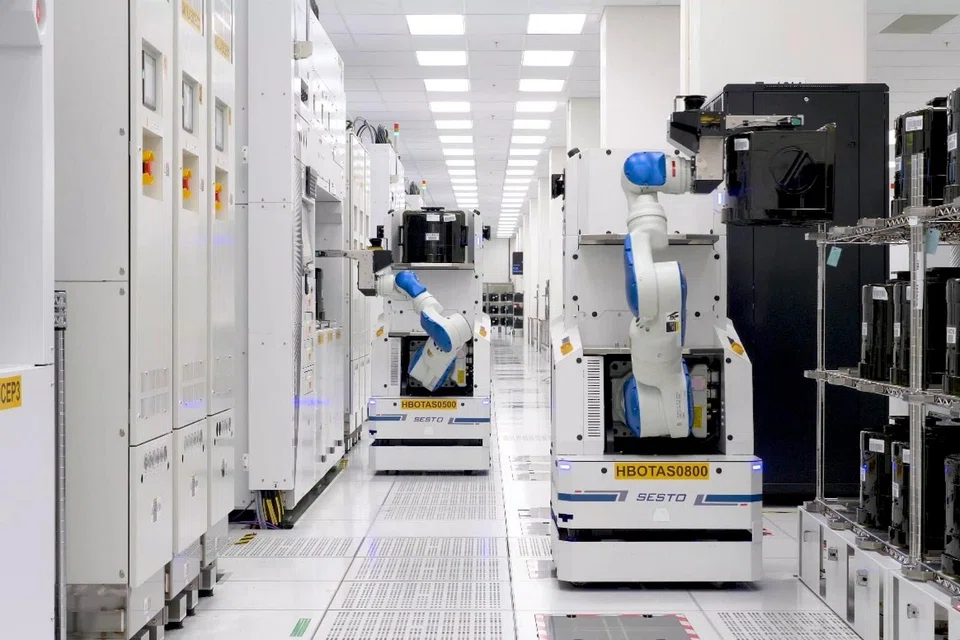
TWO semiconductor multinationals' Singapore sites have made it onto a list of exemplary factories feted by the World Economic Forum (WEF).
And, with the semiconductor industry a linchpin of manufacturing here, the hope is for homegrown companies to not be far behind.
The Singapore premises of American chipmaker Micron and Munich-based Infineon joined the ranks of the 44 factories in the WEF's Global Lighthouse Network earlier this year.
Now, "I'm confident that local companies can become part of this network", Singapore Semiconductor Industry Association executive director Ang Wee Seng told The Business Times, predicting that this could happen as soon as in the next two years.
Fong Pin Fen, director of advanced manufacturing at the Economic Development Board (EDB), called the latest feat "testament to the fact that Singapore has built a conducive environment to support companies in their adoption and integration of cutting-edge Industry 4.0 technologies".
Plus, "the Singaporean semiconductor debuts in Global Lighthouse Network do reflect the outsized role of the electronics industries in the economy", noted Matteo Mancini, a partner at consulting firm McKinsey & Co, which works with the WEF to assess Global Lighthouse Network sites.
"Though the manufacturing industry in Singapore is extremely diversified, semiconductor companies are leading the way in adoption of the Industry 4.0 technology, with clear companies leading the pack," he told BT.
But local companies, even in the semiconductor space, still have a way to go. The EDB found last year that, while semiconductor businesses here registered high maturity on the agency's Smart Industry Readiness Index, scores saw high variance as well.
The variation was blamed on how, although wafer fabs have been at the forefront of industry change, "the back-end assembly and testing players undertake vastly different activities" that may be less sophisticated.
According to Mr Mancini, "the overall sector will benefit most when key concepts around transformation are rolled out to a broader set of (small and medium-sized enterprises)".
"One of the challenges is to close the gap," added Mr Ang, who argued that "there's a huge opportunity to upgrade" in an ecosystem that includes small businesses making parts and equipment for semiconductor giants.
Both he and the EDB highlighted initiatives such as Singapore's 23 industry transformation maps - part of a S$4.5 billion scheme from Budget 2016, which covers, among others, the electronics manufacturing sector.
Mr Ang added: "The funding and support from the agencies is there. It's just a matter of awareness."
Yet another question is whether Singapore risks falling behind the pack. Kenny Liew, information and communications technology analyst at Fitch Solutions, noted that Singapore's smaller land and population size "means it cannot match the scale of its far larger East Asian peers".
Meanwhile, Indonesia was the first South-east Asian country featured in the Global Lighthouse Network - thanks to French electrical giant Schneider Electric's Batam operations and Indonesian miner Petrosea's site in Tabang, East Kalimantan, which were both recognised last July.
But, even though Fitch Solutions ranks Singapore's Industry 4.0 market readiness behind South Korea, Japan, Taiwan and mainland China, Mr Liew noted that the Republic is still the top market in South-east Asia, based on factors like its infrastructure development and skilled labour.
And, asked how Industry 4.0 efforts here fit within the region, the EDB's Ms Fong said: "Singapore's proximity to other locations in Asia allows companies to maximise productivity, creating a strong value proposition of an integrated supply chain."
She cited Infineon's expansion of activities - from the Singapore hub, to production in Batam's Batamindo Industrial Park - as one way that "complementary strengths" can be tapped.
At the end of the day, Mr Mancini said: "Singaporean companies are on a strong foot already - they are taking steps towards digitising their shop floors. . . and some are even already focusing on the use of data and analytics to drive performance. . .
"We see the adoption of shop-floor connectivity as a key, critical first step for companies (that) are embarking on the Industry 4.0 journey."
Still, outside of the semiconductor industry, manufacturing segments such as offshore and marine, precision engineering, and food and beverage "have catch-up to do", he noted.
TRENDING NOW

KKR founders among investors buying 42% of Peter Lim’s Valencia; club valued at US$1.4 billion

Singapore’s central gas buyer affirms Indonesia’s role as ‘important partner’ amid export review warning

Why the biggest business decision about AI isn’t which model to choose

NEA issues notices to 10 Singapore-based companies, including Wilmar and APP, over haze

