



Singapore, Malaysia to work on cross-border links with improved taxi scheme, co-located RTS clearance
Malaysia agrees to Singapore’s proposal to open consulates in Sabah and Sarawak, deepening ties between both nations
 Add BT as a preferred source
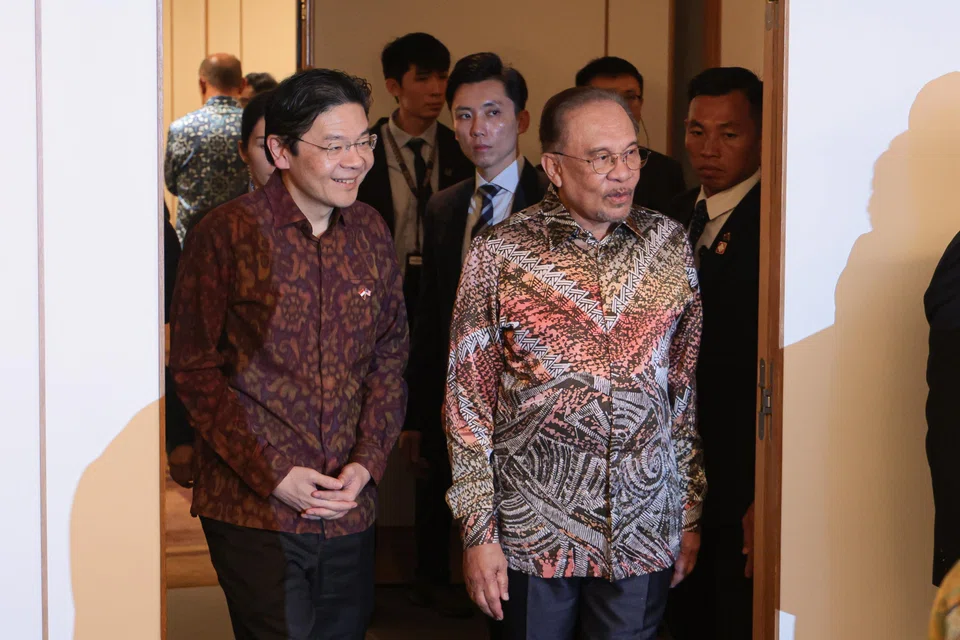
[SINGAPORE] Malaysia and Singapore are working on further improvements to cross-border travel, including enhancements to the cross-border taxi scheme and co-location of clearance facilities for the upcoming Johor Bahru-Singapore Rapid Transit System (RTS).
The latter is part of a supplementary agreement to the RTS Link Bilateral Agreement, signed at the 12th Singapore-Malaysia Leaders’ Retreat on Thursday (Dec 4).
This will facilitate preparations for co-located customs, immigration and quarantine facilities for the RTS.
Both countries are also discussing improvements to the cross-border taxi scheme. At a joint press conference, Singapore Prime Minister Lawrence Wong noted that demand has surged so much that taxi companies cannot meet it, resulting in illegal services emerging.
Both transport ministries have therefore been discussing enhancements to legal cross-border taxis “with a common goal of providing more convenient options to our commuters”, he said. The ministers are making good progress, and are expected to provide updates soon.
The annual Singapore-Malaysia Leaders’ Retreat allows both nations to take stock of cooperation, explore new areas of collaboration and provide guidance on the relationship. This year’s retreat was held in Singapore, after Malaysia hosted the last one in January 2025.
Progress on Johor-Singapore SEZ
Improved cross-border connectivity will further support the Johor-Singapore Special Economic Zone (JS-SEZ), said PM Wong. Aside from taxis, the RTS Link will be “a major game changer”, and officials are also discussing expanded bus services.
“Whether it’s through rail, car or bus, different kinds of commuting options, we will facilitate. We will provide more options, more convenience.”
He noted “very good progress” with the JS-SEZ this year, with Singapore-based companies committing more than S$5.5 billion in investments in the zone since January 2024.

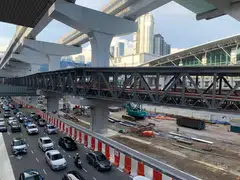

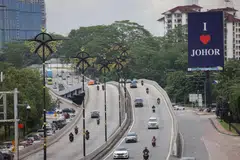
“There is tremendous potential for this to grow further. We have only just begun,” he said. “The potential is much greater going forward.”
Noting the “unprecedented” levels of investment, Malaysian Prime Minister Anwar Ibrahim noted that the success of the JS-SEZ is possible only because of trust and friendship between both nations.
Amid global uncertainty, it is critical to enhance trade between countries and within Asean, he added. “This showcase of this economic zone can be a good example of how countries can work together for the benefit of both.”
Both countries have introduced initiatives such as QR code customs clearance and automated lanes to reduce congestion at land checkpoints. Singapore is also redeveloping Woodlands Checkpoint to expand capacity and improve efficiency.
Energy and airspace cooperation
Both countries have also made progress on their energy partnership. The Energy Market Authority recently awarded conditional approval for a proposal to import low-carbon electricity from Sarawak to Singapore.
Singapore and Malaysia also plan to expand capacity for cross-border electricity trade through a second electricity interconnector. These projects will support the transition to a low-carbon future, create opportunities and support development of the Asean power grid, said PM Wong.
PM Anwar added that both countries are “very supportive” of the Asean power grid initiative involving PetroVietnam, Petronas and Singapore. Malaysia and Singapore are also embarking on gas supply from Sarawak to peninsular Malaysia and Singapore.
The prime ministers also discussed the outstanding bilateral issues of airspace management, water and maritime boundary delimitation.
In a joint statement later on Dec 4, they reaffirmed their aspiration to resolve these issues “through an amicable and constructive approach, in a sprit of mutual respect, and in accordance with the principles of international law”.
On airspace, officials are discussing air traffic management arrangements to meet current and future needs, particularly with growing air traffic in the region, said PM Wong.
This will ensure that Kuala Lumpur International Airport and Senai Airport in Johor, as well as Singapore’s Changi Airport and Seletar Airport, can operate safely and efficiently in line with International Civil Aviation Organization requirements.
While the issue of airspace has been a longstanding issue, both prime ministers noted that this is the first time both countries have ironed out the parameters on how to move forward.
Said PM Anwar: “What needs to be agreed upon is to facilitate that process and at least to have some clarity, so this will not create issues in the future.”
Water and maritime
In their joint statement, the leaders reiterated their commitment to ensure that obligations under the 1962 Johor River Water Agreement are fulfilled, and commended joint efforts to promote both nations’ shared interests.
While water is “not an immediate pressing issue”, PM Wong said both countries share an interest in increasing yield and safeguarding the Johor River’s water quality, to guard against potential extreme weather changes or disruption.
Johor’s demand for water is growing with industrial activity and investments, and there are risks of extreme weather changes such as dry spells or unforeseen disruptions, he added. Officials from both sides have been meeting to explore collaboration on new infrastructure to strengthen water supply resilience.
Both leaders will continue to encourage officials to meet regularly and develop concrete proposals for collaboration. Both countries have also agreed to discuss the price of raw and treated water.
On maritime issues, PM Wong said officials have held several rounds of discussions on setting boundaries in the east and west, and have gained a better understanding of each other’s positions.
Noting that these are complex issues with differing views, PM Wong said both leaders have directed officials to continue discussions in a constructive spirit and with mutual respect, aiming for “positive and durable outcomes with a balance of benefits for both sides”.
Even as discussions continue, both countries will maintain the positive tenor of their overall relationship and ensure that these issues do not undermine overall cooperation, he added.
New agreements
On Thursday, Malaysia and Singapore exchanged two memorandums of understanding (MOU) on healthcare collaboration and the fight against drug trafficking.
The healthcare MOU covers seven areas, including digital health, healthcare services delivery, public health and long-term care. Both countries will cooperate through information exchange, expert visits and joint training.
The anti-drug trafficking MOU strengthens cooperation in that area through information exchange on trafficking trends, training and coordinated activities among relevant agencies.
In their joint statement, the leaders also noted ongoing discussions on two MOUs, for the mutual recognition of Halal certificates; as well as for youth and sports cooperation.
Separately, PM Wong announced that Malaysia has formally agreed to Singapore’s proposal to open consulates in Sabah and Sarawak. This will allow Singapore to provide consular services to its citizens in the region, and thus deepen ties between both nations.
Decoding Asia newsletter: your guide to navigating Asia in a new global order. Sign up here to get Decoding Asia newsletter. Delivered to your inbox. Free.
Copyright SPH Media. All rights reserved.
TRENDING NOW
Simba ordered to pay S$700,000 in damages to indoor skydiving operator Altitude Xperience for trespass
Apex court dismisses almost all of the appeals by Envy’s ex-employees over S$38 million of clawbacks
What’s wrong with Orchard Road? Experts weigh in on the street’s cachet and its future
Singapore Airlines plans debut 5-year dim sum bond

