Singapore may push envelope as CBDCs gain currency
MAS to share experience and contribute towards advancing central banks' interest in multi-central bank digital currencies
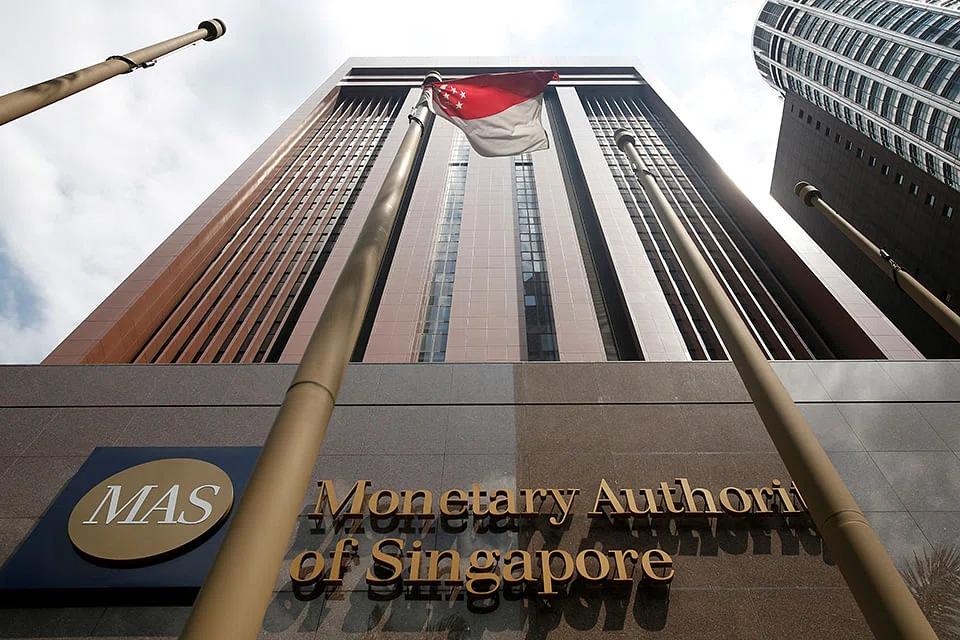
Singapore
SINGAPORE may "soon hear about the commercial launch of a multi-currency payment system for digital currencies", said a senior official of the Monetary Authority of Singapore (MAS) in a LinkedIn post this week.
This comes amid strong rising interest in central bank digital currencies, or CBDCs. China is reportedly aiming to be the first major central bank to issue a CBDC.
The Bank of Japan has also joined other major central banks, including the US Federal Reserve and the European Central Bank, to look at how such digital currencies backed by central banks can speed up cross-border payments.
In Singapore, MAS chief fintech officer Sopnendu Mohanty said in a LinkedIn post on Thursday evening that "we feel strongly about sharing our experience and contribute towards advancing central banks' interest on m-CBDCs (multi-CBDCs)".
"After completing the globally recognised pioneering with CBDC experiment - Project Ubin, you will soon hear about the commercial launch of a multi-currency payment system for digital currencies."
Singapore worked on Project Ubin, a five-year project that looked at models for cross-border payments using blockchain and CBDCs. MAS had partnered the Bank of Canada, and more broadly, with the financial industry to consider the benefits of such models.
The project's final phase in 2019 looked at ways for other blockchain networks to connect and integrate seamlessly, as well as payment commitments for trade finance, among other things, MAS said on its website.
In November 2019, MAS said that it - together with JPMorgan and Temasek Holdings - had developed a blockchain-based prototype that enables payments to be made in different currencies on the same network.
This network could improve cost efficiencies for businesses, MAS had said then.
A subsequent report released in 2020 suggested the "commercial potential" of Project Ubin, paving the way towards live adoption of blockchain technology.
It said the prototype can serve as a test network, bringing about collaboration with other central banks and the financial industry to develop a next-generation cross-border payments infrastructure.
A post from MAS on Thursday on open
nodes.com - a website supported by the Infocomm Media Development Authority that hosts topics on blockchain development - pointed to a new project after Project Ubin, known as Project Dunbar.
It said MAS is contributing what it has learnt and resources from Project Ubin, and partnering the BIS Innovation Hub and the central banking community on Project Dunbar to design, develop and test new m-CBDC models for cross-border settlement.
The BIS Innovation Hub refers to an innovation centre set up by the Bank for International Settlements. One such hub was set up in Singapore in 2019.
"Project Ubin has shown the possibility of a domestic multi-currency settlement platform cooperatively managed by a group of commercial banks," the post said.
"The natural next step would be in exploring how multi-CBDC platforms can be designed and developed as international settlement platforms, cooperatively managed by the global central banking community as a public good."
Project Dunbar's initial work would focus on defining the digital currency stack and the layers, said MAS. It would look at how they interact, the type of controls that need to be in place, and the design choices to be balanced "between process efficiency and practicality of governance".
"The intermediate goal would be to design, build and test this architecture as applied to a regional m-CBDC network with multiple central banks."
The post pointed out that while the model of m-CBDC on a common platform shows promise, "it is unlikely that the world will land on a single common settlement platform".
"The model may be useful for regions where requirements and payment policies are already similar, and a common application may be more cost-effective. In such a scenario, there will still be fragmentation, with multiple regional platforms as well as single-jurisdiction single-currency platforms."
It added that new connectivity models for linking up of such networks will be further explored as part of the project.
"MAS and the BIS Innovation Hub plan to work with central banks, financial institutions and technology partners on this collaborative effort in making cross-border payments cheaper, faster and safer for all."