

Singapore ramps up testing to aid safe reopening
 Add BT as a preferred source
DeeperDive is a beta AI feature. Refer to full articles for the facts.
SINGAPORE will employ antigen rapid tests (ARTs) and other fast, easy testing methods in a bid to increase testing frequency and move towards the safe resumption of economic and social activities, the Ministry of Health (MOH) announced on Monday.
Although the ARTs are less sensitive than the polymerase chain reaction (PCR) tests, they are cheaper, faster and more convenient to administer, making them more practical for frequent use and surveillance testing.
"This will enable us to expand the scale of testing in the wider population, allowing us to identify potential infections earlier and to trigger public health actions sooner to stem further spread," MOH said in a press statement.
In the same statement, MOH said that with immediate effect, all household members of individuals under quarantine are to self-isolate at home and minimise social interactions. They are to do so until the person under quarantine receives a negative PCR test result, or the person is no longer under quarantine. The household members should also seek medical attention promptly if they feel unwell while waiting for the outcome of the quarantined person's test result.
The number of new cases fell to 136 in the second week of the Phase 2 Heightened Alert period (from May 16 to June 13), down from 182 cases in the first week, Health Minister Ong Ye Kung said at the multi-ministry task force conference on Monday.
Testing is one major strategy in the efforts to continue bringing down these numbers, he added.
Navigate Asia in
a new global order
Get the insights delivered to your inbox.
ARTs have been deployed for large events such as weddings, and for surveillance testing of cargo drivers at land checkpoints. They are now being used in pilot surveillance testing programmes at PSA and selected dormitories, in addition to the PCR-based Rostered Routine Testing that workers in dormitories, construction sites, the airport and selected marine shipyards have been undergoing.
Individuals who receive a positive ART result will be sent to take a PCR test to confirm whether they are indeed infected with Covid-19. They will then be required to self-isolate until they receive a negative PCR test result.
Other places where ART pilots will be rolled out include student hostels in autonomous universities and a couple of selected CapitaLand malls.
The health ministry is also working on rolling out two other test methods: over-the-counter ART kits for self-testing at home, and breathalyser tests.
The self-test kits will work "almost like a pregnancy test kit" and enable individuals to check their health status easily before leaving their home to go to work, said Mr Ong. The health ministry is working to bring these kits in and will provide more information on their availability when they are ready.
The breathalysers have been adopted for testing at the Causeway and Changi Airport.
READ MORE:
- Rapid Covid tests give hope to organisers of larger events
- Rocky road for firms in race for Covid-19 test
Decoding Asia newsletter: your guide to navigating Asia in a new global order. Sign up here to get Decoding Asia newsletter. Delivered to your inbox. Free.
Copyright SPH Media. All rights reserved.
TRENDING NOW

Shelving S$5 billion office redevelopment plan proved ‘wise’ as geopolitical risks mount: OCBC chairman

Eurokars Group introduces rental car franchises Enterprise Rent-A-Car, National Car Rental, and Alamo to Singapore
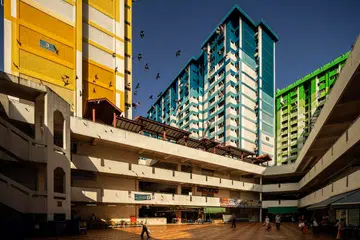
20 photos that show how dramatically Singapore has changed in two decades
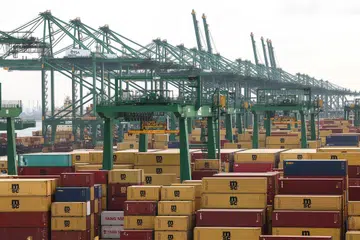
Singapore’s key exports up 15.3% in March from electronics surge, exceeding forecasts

