

Singapore tycoon seeks US$1 billion from banks over collapsed firm
More than a decade later, Ching Chiat Kwong, who says he put US$100 million of his own money into NewSat, has not forgotten
[SINGAPORE] In the early 2010s, a small Australian company tried to build a fleet of satellites before lenders, concerned about its CEO’s flamboyant behaviour, pulled hundreds of millions of US dollars of financing. The firm collapsed in 2015.
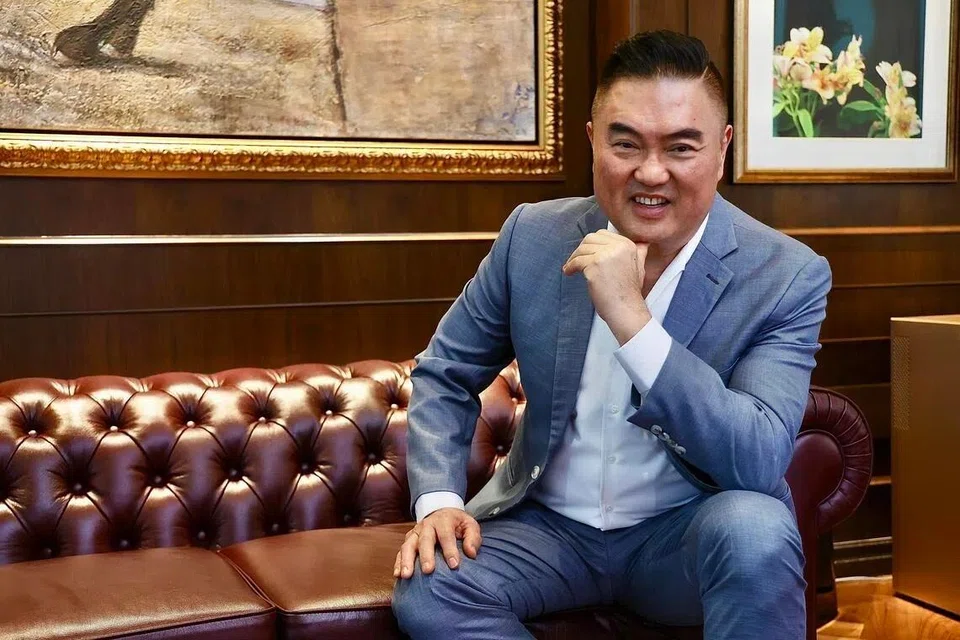
More than a decade later, Singapore real estate tycoon Ching Chiat Kwong, who says he put US$100 million of his own money into NewSat, has not forgotten. The Supreme Court of Victoria will begin hearing a case on Monday brought by the liquidators of the company against lenders Societe Generale, Credit Suisse – now owned by UBS Group – and Standard Chartered, as well as credit insurers Export-Import Bank of the United States, and Coface of France.
Within the suit are allegations that the lenders failed to honour loan agreements, which prevented NewSat paying contractors to build and launch a satellite, that ultimately resulted in a loss of potential earnings.
Just how much was lost is contentious. Ching has put the claim around US$1 billion, based on an expert report, due to the lost opportunity to launch the original satellite and others planned for the future. Standard Chartered said that the claimants asserted loss and damage of up to US$4.81 billion, according to its annual report.
The trial is the next twist in a saga over a firm that once had hopes of launching Australia’s first independently-owned satellite. But it never took off as lenders grew concerned about the behaviour of its founder Adrian Ballintine, according to a defence filing.
A key part of the case, says Ching, is a document signed by French President Emmanuel Macron, then a politician who oversaw Coface, which insured a chunk of the overall financing package.
He is the minister “who actually signed off to stop the funding”, Ching said from his office in downtown Singapore.
Spokespeople for SocGen, Standard Chartered and UBS declined to comment. A representative for Macron did not reply to requests for comment. A spokesperson for Coface declined to comment.
The banks argue that they were justified in yanking funding from NewSat. The defence filed by lawyers on behalf of the lenders called the allegations against them “vague and embarrassing” and liable to be struck out.

In a 2014 e-mail, Brendan Rudd, a consultant to the company, wrote that he had never seen nor heard of more appalling corporate behaviour than at NewSat; the firm could not survive with Ballintine leading it, and the company’s sole purpose appeared to be to fund the executive’s lifestyle, according to the defence filing. He said at the time that Ching continued to support Ballintine despite being told of some of the issues, the document says.
“I totally reject his comments about appalling corporate behaviour and that I used the company to fund my lifestyle,” Ballintine said.
Ching told Bloomberg that such concerns over corporate governance were overblown.
“When you are in industry or you want to sell services, you are like a salesman,” he said. “What is a couple of thousand dollars or first class ticket or private jet to sell what you have and get in hundreds of million dollars of sales?”
After completing his national service, Ching said he started work as an officer in Singapore’s police force before moving to construction. He listed his Oxley Holdings in 2010 although the stock has sharply fallen from its peak over a decade ago. He holds a stake currently worth more than US$100 million.
He built his fortune with a bet that Singapore’s rising young affluent class would want to buy small but more affordable single room apartments of 30 to 45 square metres.
Over time, he’s parlayed his wealth into personal investments across the globe. These include two vineyards in Tuscany and Palazzo Papadopoli, a 16th-century Venetian palace on the Grand Canal, according to a list of his assets reviewed by Bloomberg.
Ching’s office is dominated by a large, gold-framed portrait of a bull, and multiple smaller bull sculptures that he also keeps in his boardroom. Ching explained that he likes bulls, which in the Chinese zodiac are a sign of persistence. Oxen are also a fit for his company’s name, Oxley, he said.
He says he has not spoken to Macron. “I guess one day, it will happen.” BLOOMBERG
Decoding Asia newsletter: your guide to navigating Asia in a new global order. Sign up here to get Decoding Asia newsletter. Delivered to your inbox. Free.
Share with us your feedback on BT's products and services
TRENDING NOW

DBS, OCBC, UOB rout lops billions off STI as inflation, rate concerns spook investors

Grab CEO’s wife Chloe Tong on life with Anthony Tan and finding her purpose

OCBC sheds S$8 billion in value as shares close nearly 6% down; analysts cautious on banks

Deal between tycoon friends sparks scrutiny of Philippine power sector

