Small states must work together to have bigger say in the world: PM Lee
We must cooperate to deal with fundamental realities and challenges, he tells Forum of Small States
New York
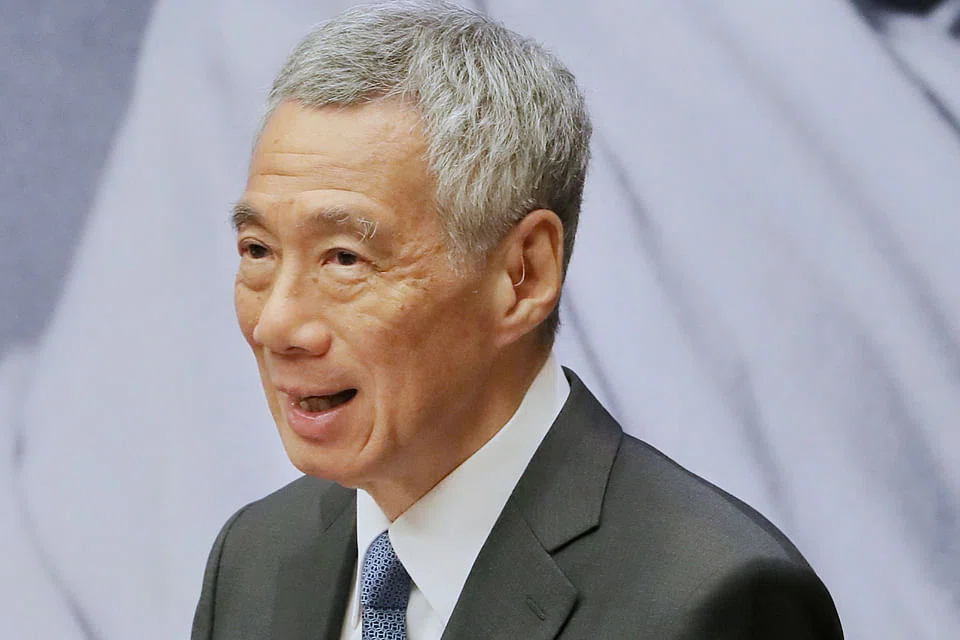
IF small states do not manage their external relations carefully, their freedom to determine their own destinies could be severely restricted even if they remain sovereign or independent in name, Prime Minister Lee Hsien Loong said in New York on Wednesday (Thursday morning, Singapore time).
Fundamental realities like that are why small states have to work together to advance their common interests and amplify their influence in the world, he said at a reception for leaders of small states that was hosted by Singapore.
The countries represented are part of the Forum of Small States, an informal grouping started by Singapore almost 30 years ago to make common cause together. From an initial headcount of 16 states, the club has grown to 107 members, well over half the membership of the United Nations.
Mr Lee, who is in New York until Friday to attend the UN General Assembly and meetings on its sidelines, made the case for closer cooperation between small states to the almost 60 leaders gathered.
The club has grown over the years, he said in brief remarks, because the fundamental realities and vulnerabilities of small states have not changed.
"Our economies are smaller and more exposed to fluctuations in the global economy. More importantly, our margin of error is much narrower than for big states, which can absorb multiple hits," said Mr Lee.
"If there is a war, we lack the strategic depth to defend ourselves. If we suffer an extreme weather event, we can take years to rebuild and recover."
For instance, rising sea levels threaten the very existence of island states, said Mr Lee, who made the same point in a speech on climate change at the United Nations Climate Action Summit on Monday.
He pointed to Hurricane Dorian - which severely damaged the Bahamas earlier this month, killing over 50 people and leaving 1,500 missing - as a grim reminder of this vulnerability.
Few small states have also survived long in history. "Unlike larger and more powerful countries, we do not set the agenda or decide the mega-trends. If Singapore disappears tomorrow, the world will continue on probably just fine," said Mr Lee.
However, small states also have their own advantages that they can seize on. For one, they can respond more nimbly and adapt more easily to changing circumstances, said Mr Lee.
"Our sense of insecurity and even paranoia are also constructive as they motivate us to deal more decisively with challenges and threats," he added. They are also less hampered by regional interests and differences, or multiple levels of government, that bigger countries must grapple with.
But small states must work together to have more influence in the world and advance their shared interests, he said, pointing to this as the reason for their strong commitment to the UN.
"Small states can and must make a contribution to the work of the UN, because it is in our interest to have a strong UN and a sound and stable multilateral system," he said.
Members of the Forum of Small States are chairing five of the six main committees of the General Assembly this year, he noted, and many small states have served on the UN Security Council or hope to do so.
"We look forward to working with all of you fellow small states to speak with a louder voice, to continue to advocate for a rules-based system, and to find enduring solutions for the challenges that affect all of us," said Mr Lee.
Tijjani Muhammad-Bande of Nigeria, who is this year's President of the UN General Assembly, said that small states were a source of stability for the international system.
"When we look at current geopolitical calculations, the voice of calm really comes from smaller states," he said.
Prime ministers, presidents and ministers of more than 50 countries attended the reception, which was held at Singapore's Permanent Mission to the UN in New York, feasting on food and drink from Singapore including pineapple tarts, satay and Tiger beer.
Nations present included island states like Barbados and Vanuatu, and other small states surrounded by larger countries such as Gambia, Moldova and Norway. All have populations of under 10 million.
Earlier in the day, Mr Lee met Barbados Prime Minister Mia Amor Mottley and exchanged views on the warm relations between their countries, said the Prime Minister's Office in a statement.
They discussed issues of common interest, such as education and civil service training, and reaffirmed their commitment to working together as small island states to address climate change.