Solar energy could solve global water crisis: Elon Musk
The billionaire acknowledges that more research towards this end is required

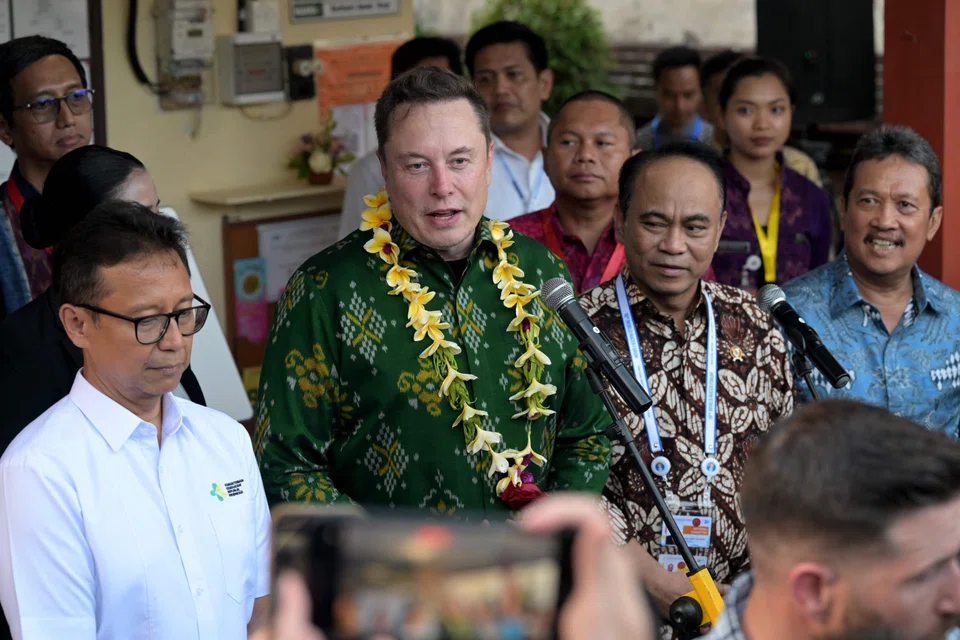
[JAKARTA] Battery costs to store renewable energy have plummeted over the past five years, which potentially makes solar energy a cost-effective and efficient clean energy source for desalination processes, said Elon Musk, billionaire chief of SpaceX and Tesla.
This, in turn, reflects solar energy’s potential to enhance the availability of clean water and address the global water crisis, he said in his keynote address at the 10th World Water Forum in Bali on Monday (May 20), which was aired through an official broadcast.
“We continue to make breakthroughs in desalination efficiency, and I think we have achieved that,” he said. “We have a promising future for water and sustainable energy.”
Desalination, the process of removing salt from seawater to produce potable water, has historically been energy-intensive and expensive.
Musk said that harnessing solar energy could make this process more economical and effective. He acknowledged that more research towards this end is required.
According to him, solar panels could generate approximately one gigawatt (GW) per square kilometre. He added: “Of course, the sun doesn’t shine all the time. When you average it out, one square kilometre produces about one GW per day.
“That’s a significant amount.”
In his opening remark at the event, outgoing Indonesian President Joko Widodo emphasised that collaboration is essential for addressing global water challenges.
He highlighted the pressing concern of dwindling clean water supplies, noting that while 72 per cent of the earth’s surface is covered by water, only 1 per cent is accessible and usable for drinking and sanitation.
Looking ahead to 2050, Widodo warned that 500 million small farmers, who produce 80 per cent of the world’s food, are projected to be most at risk from drought.
“No water, no life, no growth. Therefore, water must be managed well, because every drop is very valuable,” he said.
Indonesia has made significant strides in developing solar energy, setting ambitious targets to reach 5 GW of installed capacity by 2030.
Last year, the country inaugurated the Cirata Reservoir floating solar power plant, which stands as South-east Asia’s largest and the third-largest in the world. With a capacity of 145 megawatts, it can power 50,000 homes.
This project is a joint venture between Indonesia’s state utility company and Masdar, a renewable energy company based in the United Arab Emirates.
Musk inaugurated SpaceX’s Starlink Internet services in Indonesia on Sunday, as the country seeks to boost connectivity to its most remote areas.
Meanwhile, Reuters reported that Indonesia’s coordinating minister of investment said Musk will consider building an electric vehicle battery plant in the country, following Monday’s meeting with Widodo.
Musk was not immediately available for comment after Minister Luhut Pandjaitan made his remarks to reporters, according to the newswire.