

South Korea exports post strongest growth since 1978 on AI chip boom
Semiconductor exports surge 199.5% to US$44.8 billion
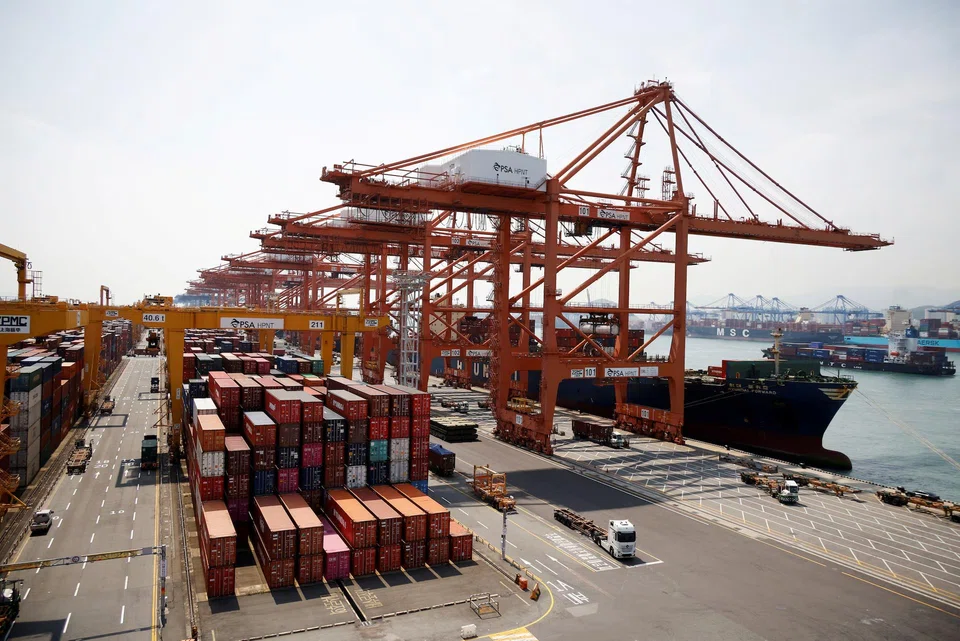
[SEOUL] South Korea’s exports expanded at the strongest pace in nearly half a century last month, smashing forecasts, on a surge in chip sales propelled by the global boom in AI investment.
Exports from Asia’s fourth-largest economy rose 70.9 per cent in June from a year earlier to US$102.25 billion, quickening from the 53.4 per cent jump in May and marking the biggest year-on-year increase since October 1978, preliminary trade data showed on Wednesday (Jul 1).
The annual percentage growth rate topped the median 61 per cent increase forecast in a Reuters poll, beating all 13 projections provided by economists.
Semiconductor exports surged 199.5 per cent to US$44.8 billion, making South Korea the fourth country in the world to reach a monthly export value of US$100 billion, after Germany, China and the US, according to the trade ministry. “Exports will remain robust in the second half, led by semiconductors.
There is no sign of the chip boom waning anywhere, so it won’t easily cool down next year either,” said Park Sang-hyun, an analyst at iM Securities. “Still, growth rates are seen nearing a peak,” Park added.
Home to the world’s biggest chipmakers Samsung Electronics and SK Hynix, South Korea’s exports have been rising since June 2025 and posting double-digit growth rates from December as global demand for AI investment drives up memory chip prices.
A separate survey showed on Wednesday that South Korea’s factory activity expanded in June for the seventh consecutive month but at a slower pace than the previous month on falling export demand.
In June, computer sales also rose 308.8 per cent on increasing AI investment by major technology firms, while steel products snapped 13 months of decline to rise 9.6 per cent on data centre construction. Petroleum products rose 49.8 per cent on high oil prices.
By destination, shipments to China and the US were up 92.1 per cent and 78.6 per cent, respectively, while those to the European Union rose 31.8 per cent. Exports to the Middle East fell 8.4 per cent.


Imports rose 30.1 per cent to US$66.10 billion, after rising 20.7 per cent the previous month. That was faster than the 26.3 per cent increase expected by economists and the fastest since May 2022.
The country posted a monthly trade balance of US$36.15 billion, the biggest on record, bringing its trade surplus for the first half of the year to US$138.3 billion, compared with an annual surplus of US$77.4 billion for the whole year of 2025. REUTERS
Decoding Asia newsletter: your guide to navigating Asia in a new global order. Sign up here to get Decoding Asia newsletter. Delivered to your inbox. Free.
Share with us your feedback on BT's products and services
TRENDING NOW

LTA proposes combining car COE categories, adding rebate-surcharge system

StarHub to acquire MyRepublic’s mobile business amid ongoing telco consolidation

DBS, OCBC, UOB rout lops billions off STI as inflation, rate concerns spook investors

Grab CEO’s wife Chloe Tong on life with Anthony Tan and finding her purpose

