

South Korea, Japan and the US hold drill against North Korea submarines
 Add BT as a preferred source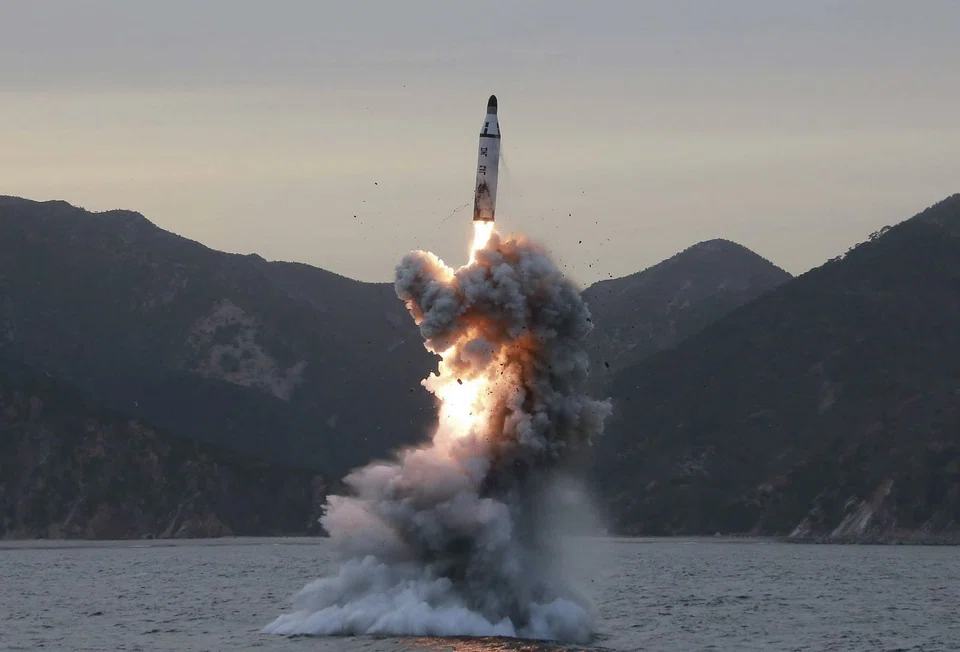
DeeperDive is a beta AI feature. Refer to full articles for the facts.
[SEOUL] South Korea, Japan and the US held a joint naval exercise Monday aimed at countering missile threats from North Korean submarines, Seoul's defence ministry said, amid mounting concerns over the hermit state's weapons programme.
Pyongyang is on a quest to develop a long-range missile capable of hitting the US mainland with a nuclear warhead, and has so far staged five nuclear tests, two of them last year.
The three-day drills involving more than 800 troops kicked off after US President Donald Trump warned Sunday that the United States is prepared to act unilaterally to deal with North Korea's nuclear programme if China proves unwilling to help.
The exercise began off South Korea's southern coast near Japan, featuring multiple naval destroyers and helicopters used in anti-submarine warfare, the ministry said.
It was aimed at "ensuring effective response to the North's submarine threats including the submarine-launched ballistic missiles (SLBM)," and "demonstrates the three countries' strong determination", according to the ministry.
Tensions have escalated in the region following a series of missile launches by North Korea in recent months and reports suggesting Pyongyang may be preparing another atomic test.
Navigate Asia in
a new global order
Get the insights delivered to your inbox.
In February the North simultaneously fired four ballistic missiles off its east coast, three of which fell provocatively close to Japan, in what it said was a drill for an attack on US bases in the neighbouring Asian country.
Last August Pyongyang also successfully test-fired a SLBM 500 kilometres towards Japan, far exceeding any previous sub-launched tests, in what the North's leader Kim Jong-Un hailed as the "greatest success".
A nuclear-capable SLBM system would take the North's threat to a new level, allowing deployment far beyond the Korean peninsula and a "second-strike" capability in the event of an attack on its army bases.
Analysts say that while Pyongyang has made faster progress in its SLBM system than originally expected, it is still years away from deployment.
The isolated North is barred under UN resolutions from any use of ballistic missile technology.
AFP
Share with us your feedback on BT's products and services
TRENDING NOW

Air India asks Tata, Singapore Airlines for funds after US$2.4 billion loss

Beijing’s calculated silence on the Iran war

China pips the US if Asean is forced to choose, but analysts warn against reading it like a sports result

Richard Eu on how core values, customers keep Singapore’s TCM chain Eu Yan Sang relevant

