South Korea names BIS veteran as new central bank governor
Shin Hyun-song’s nomination is widely viewed as a step to strengthen macro-financial oversight at a time when South Korea’s sensitivity to capital flows is rising
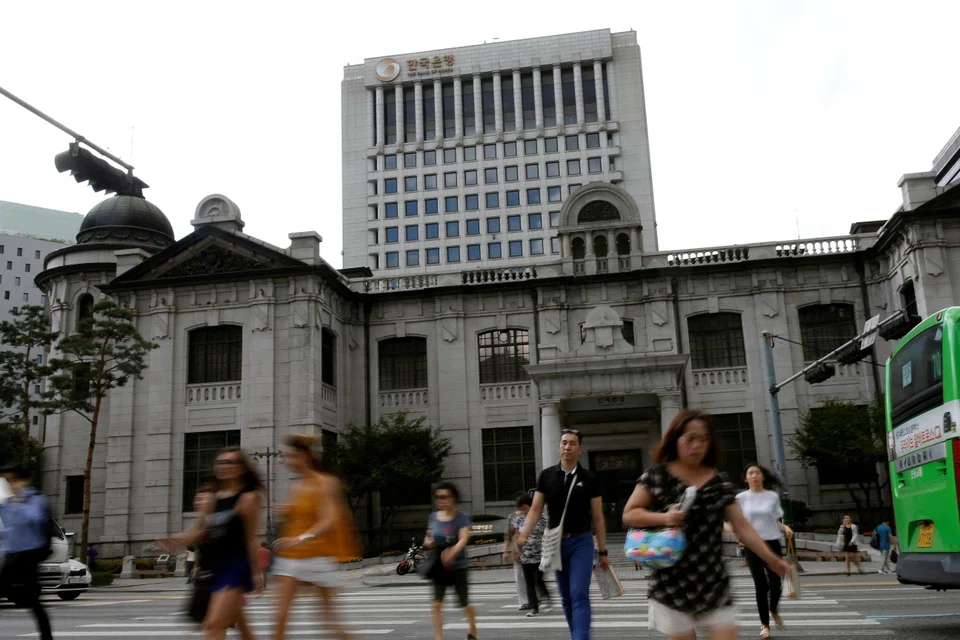
[SEOUL] South Korea nominated Shin Hyun-song as the nation’s next central bank governor, charging the senior Bank for International Settlements (BIS) official with steering monetary policy at a time of growing uncertainty due to the conflict in Iran.
The office of President Lee Jae-myung announced the appointment of Shin to lead the Bank of Korea (BOK) on Sunday (Mar 22). The nominee has served since 2014 as economic adviser and head of the BIS Monetary and Economic Department in Basel, and has many decades of experience across academia, global policymaking and financial stability research.
“He is the right person to achieve the monetary policy goals of price stability and national economic growth at a time when uncertainty in the global economy has increased due to the Middle East situation,” Lee’s spokesperson, Lee Kyu-youn, told a briefing on Sunday.
Current BOK governor Rhee Chang-yong’s term ends on Apr 20, shortly after the monetary policy board meeting on Apr 10. The new leader, if confirmed in a parliamentary hearing, will chair the May meeting and shape policy till 2030.
The transition comes at a time when the monetary policy outlook for Asia’s fourth-biggest economy has become more uncertain as the Iran conflict adds fresh risks to both inflation and growth, complicating the bank’s rate path just weeks after its latest policy decision.
Shin’s nomination is widely viewed as a step to strengthen macro-financial oversight at a time when South Korea’s sensitivity to capital flows is rising. The nominee’s research on digital finance and systemic risk aligns closely with Seoul’s expanding stablecoin debate and the coming shift to 24-hour won trading.
“We are in a situation where inflation and an economic slowdown may occur simultaneously,” said Seok Byoung-hoon, economics professor at Ewha Womans University. “Given that the Bank of Korea’s primary objectives are price and financial stability, it will likely need to prioritise controlling inflation for the time being, regardless of who becomes the next governor.”
Shin said in a statement that he will “carefully consider how to conduct a balanced monetary policy that accounts for inflation, growth and financial stability”, citing risks from factors including the Middle East tensions and US tariffs.
He added that his detailed views on policy and organisational management will be “explained thoroughly” during the confirmation hearing.

The BIS, an institution often described as the central bank for central banks, describes Shin as an “intellectual leader in the fields of banking, international finance and monetary economics”. In a statement, the BIS said on Sunday that Shin will step back from his duties with immediate effect, and Frank Smets will serve as the acting head of the Monetary and Economic Department.
Born in Daegu in 1959, Shin received his doctoral degree in economics from the University of Oxford and taught at Princeton University, where he was the Hughes-Rogers Professor of Economics. In 2010, he served as an adviser to South Korea’s then-president Lee Myung-bak.
Shin was among a handful of candidates – including BOK former senior deputy governor Lee Seung-heon and former deputy governor Suh Young-kyung – seen by markets as potential nominees for the top job.
South Korea’s export-driven economy has been supported by robust semiconductor demand, but the worsening conflict in the Middle East is darkening the outlook for a country heavily reliant on imported energy. Seoul has moved to cap certain fuel prices for the first time in three decades to cushion the impact of higher oil costs, even as a weaker won adds to inflationary pressure.
At its last policy meeting, the central bank held its benchmark rate at 2.5 per cent and introduced a new six-month forward guidance framework through which the board signalled expectations that settings would stay unchanged for some time.
Still, rising oil prices are prompting some economists to warn that the BOK may need to resume tightening later this year. Higher borrowing costs could help cool a housing market that has fuelled concerns over elevated household debt and broader financial stability risks.
Shin is set to have early sway over decisions that could shape monetary policy till the end of the decade, as officials assess whether the current pause can hold or gives way to renewed tightening – or eventual easing – in response to shifting economic conditions.
“He is likely to strengthen the macro prudential framework and focus more on household debt/FX stability, a clear shift from growth-inflation focused monetary policy,” said Park Jeong-woo, an economist at Nomura. “Given his background at the BIS, and Korea’s macro conditions, I believe he is more likely to incline towards hawkish stance.”
Current governor Rhee oversaw one of South Korea’s sharpest tightening cycles in decades. His legacy will likely be defined by his efforts to improve transparency at the central bank including his introduction of a Fed-style dot plot offering guidance on the future policy direction. BLOOMBERG
Decoding Asia newsletter: your guide to navigating Asia in a new global order. Sign up here to get Decoding Asia newsletter. Delivered to your inbox. Free.
Share with us your feedback on BT's products and services