

South Korea orders striking steel, petrochemical truckers to return to work
 Add BT as a preferred source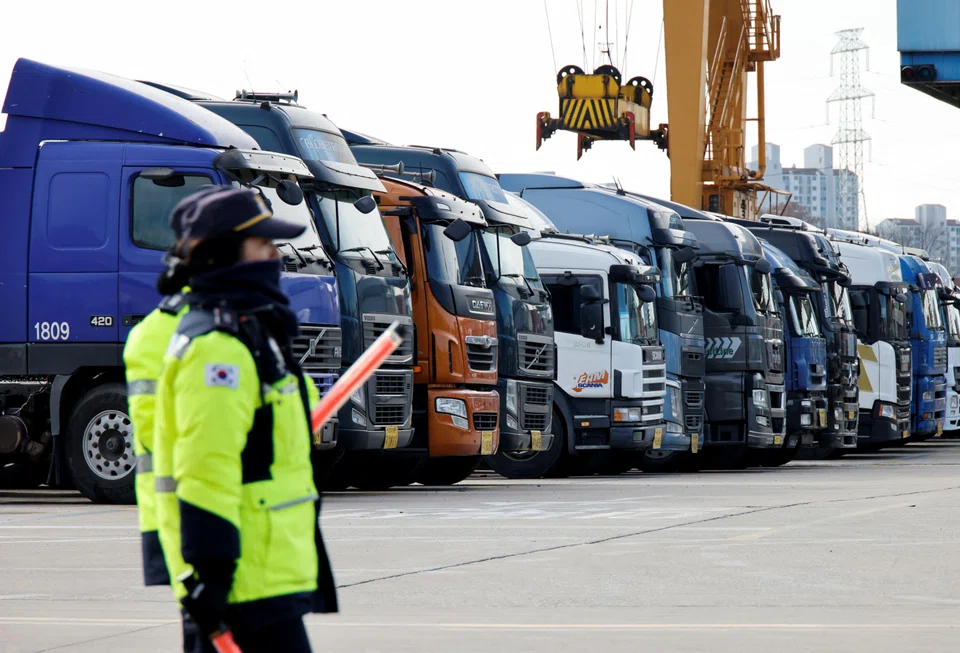
DeeperDive is a beta AI feature. Refer to full articles for the facts.
SOUTH Korea ordered striking truckers in the steel and petrochemical industries to return to work on Thursday (Dec 8), widening a back-to-work decree beyond the cement industry amid a prolonged nationwide strike that has disrupted supply chains.
During opening remarks at a televised meeting of the country’s cabinet, Prime Minister Han Duck-soo told the members to issue the “start work” order.
Tens of thousands striking truckers are demanding a minimum wage programme be permanent and broader. The government has so far refused, but has said it can extend it beyond the current three years.
The Democratic Party, an opposition party that holds a majority in parliament, has decided to support the government’s extension proposal, according to media reports.
“The government remains steadfast. We absolutely have to break the vicious cycle of an unjustified organised act,” Han said.
No more negotiation sessions have been planned, a senior union official said.
Navigate Asia in
a new global order
Get the insights delivered to your inbox.
The second strike in less than six months has hampered supplies of goods from cars to fuel, costing the country 3.5 trillion won (S$3.6 billion) in its first 12 days, the government said this week.
About a third of 2,000 fuel tankers are on strike, and as of Wednesday afternoon 78 petrol stations had run out of fuel nationwide, many of which were in the Seoul metropolitan region, according to government data.
Last week, the government issued a “start work” order to force 2,500 striking drivers in the cement industry back on the road. About 35 per cent of 2,600 fuel tanker drivers across the country are striking, media reports have said, citing the industry ministry.

Steel shipments are running at 48 per cent of normal levels, and shipments of petrochemical products have fallen to about 20 per cent, the transport ministry said on Thursday, raising concerns that those disruptions would hurt production of cars and ships.
Petrochemical companies are considering cutting production as early as this weekend because of shortages of raw materials and space for unused inventory.
The “start work” order last month was the first time the government had forced striking workers back on the job. Failure to comply can lead to cancellation of licences, three years in jail or a fine of up to 30 million won (S$30,8651).
The government has said its order has been effective in getting striking truckers back on the road, but the union says it will take legal action with the help of certified labour attorneys to defy the order.
Some truckers say loss of income during the strike is making it difficult for drivers to maintain the industrial action. REUTERS
Decoding Asia newsletter: your guide to navigating Asia in a new global order. Sign up here to get Decoding Asia newsletter. Delivered to your inbox. Free.
Share with us your feedback on BT's products and services
TRENDING NOW
Air India asks Tata, Singapore Airlines for funds after US$2.4 billion loss

Beijing’s calculated silence on the Iran war

China pips the US if Asean is forced to choose, but analysts warn against reading it like a sports result

Richard Eu on how core values, customers keep Singapore’s TCM chain Eu Yan Sang relevant

