South Korea plans wider probe into stock short-selling by global banks
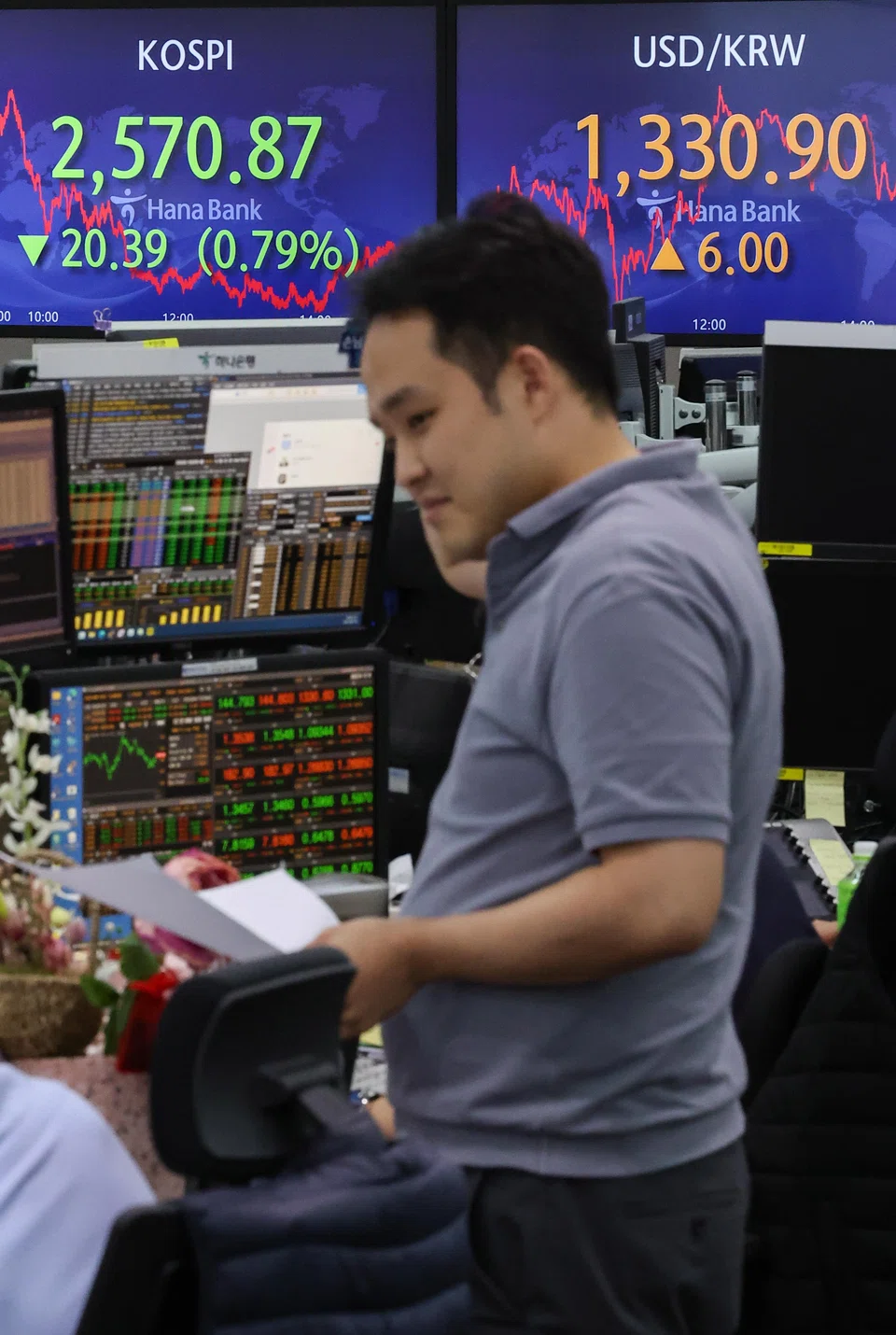
SOUTH Korea’s financial watchdog plans a wider probe into short-selling trades by global investment banks in the US$1.6 trillion equity market, taking a hard-line stance to root out illegal practices.
Banks that have conducted short-selling trades most frequently in South Korea will be subject to the investigation that would start in November, the Financial Supervisory Service said in a Tuesday (Oct 31) statement. The regulator said it will collaborate with watchdogs in Hong Kong and Singapore for its probe.
The FSS will “hold those responsible” and ensure “naked short selling practices don’t take hold,” the statement said. Naked short-selling refers to the practice of selling shares that an investor doesn’t own and hasn’t borrowed. The agency will look into all short-selling transactions since May 2021 when the country partially lifted a ban that was imposed during the pandemic.
The watchdog will also review the short-selling consignment order processes of Korean brokerages to establish if they were aware of illegal naked short selling by global investment banks. A special 20-person investigation team will be launched on Nov 6, the FSS added.
The move comes just weeks after the Korean regulators proposed an imposition of record fines on two global investment banks for their routine engagement in naked short-selling, considered illegal in the country. Public perception of such trading practices in the Asian nation remains deeply negative, with local retail traders staging protests against these activities from time to time.
South Korea’s benchmark Kospi, one of Asia’s top-performing national gauges earlier in 2023, entered a technical correction this month amid the unwinding of the retail-driven rally in electric-vehicle linked stocks and an outflow of foreign funds. The gauge is now down more than 14 per cent from an Aug 1 peak.
The nation is yet to fully lift a wider, pandemic-era ban on stock short-selling, which officials said was a temporary measure. After a partial easing move in 2021, out of the more than 2,000 publicly traded companies in the country, only members of the Kospi 200 Index and the Kosdaq 150 gauge are eligible for shorting. BLOOMBERG
Decoding Asia newsletter: your guide to navigating Asia in a new global order. Sign up here to get Decoding Asia newsletter. Delivered to your inbox. Free.
Share with us your feedback on BT's products and services