
South Korea presidential race too close to call
 Add BT as a preferred source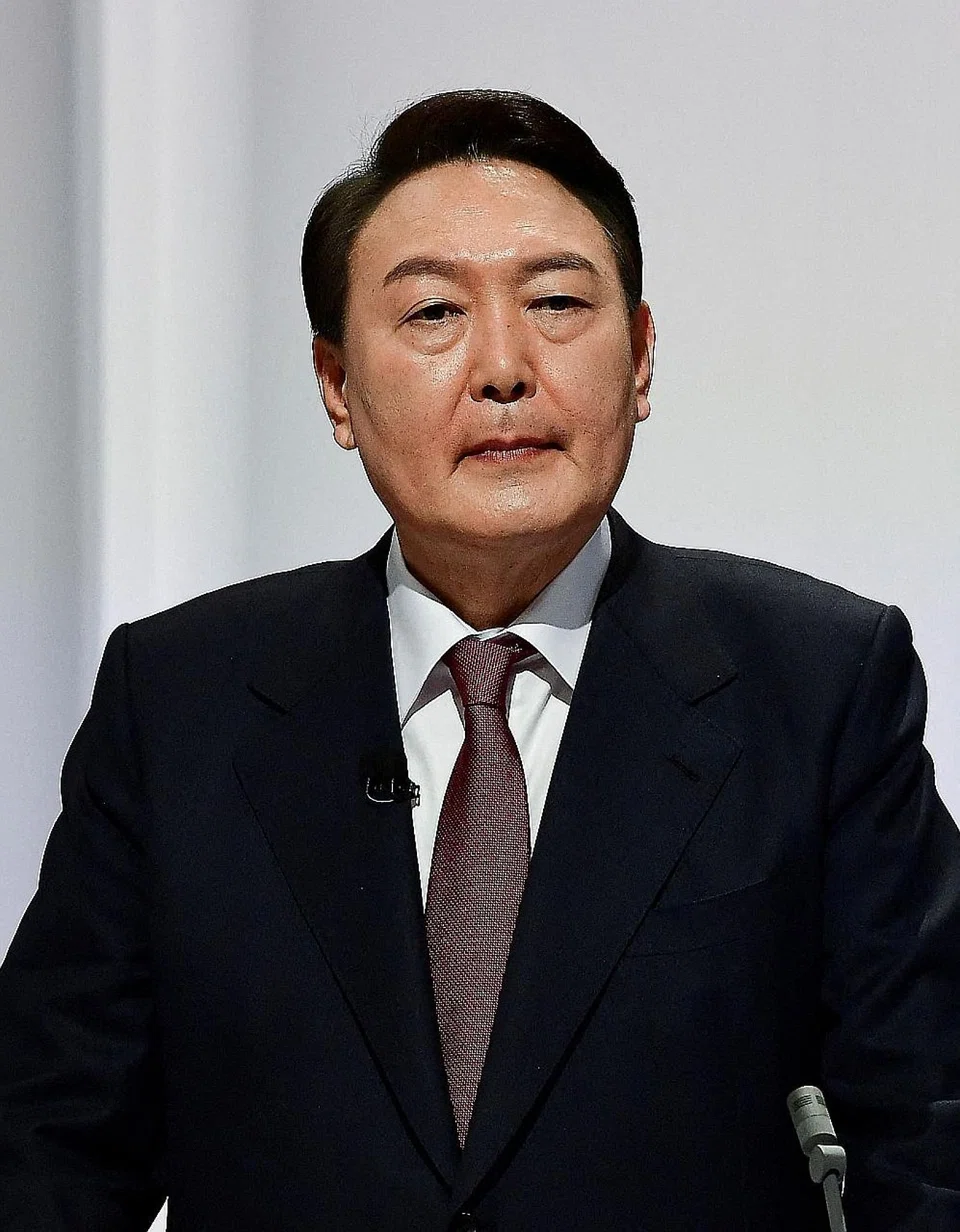
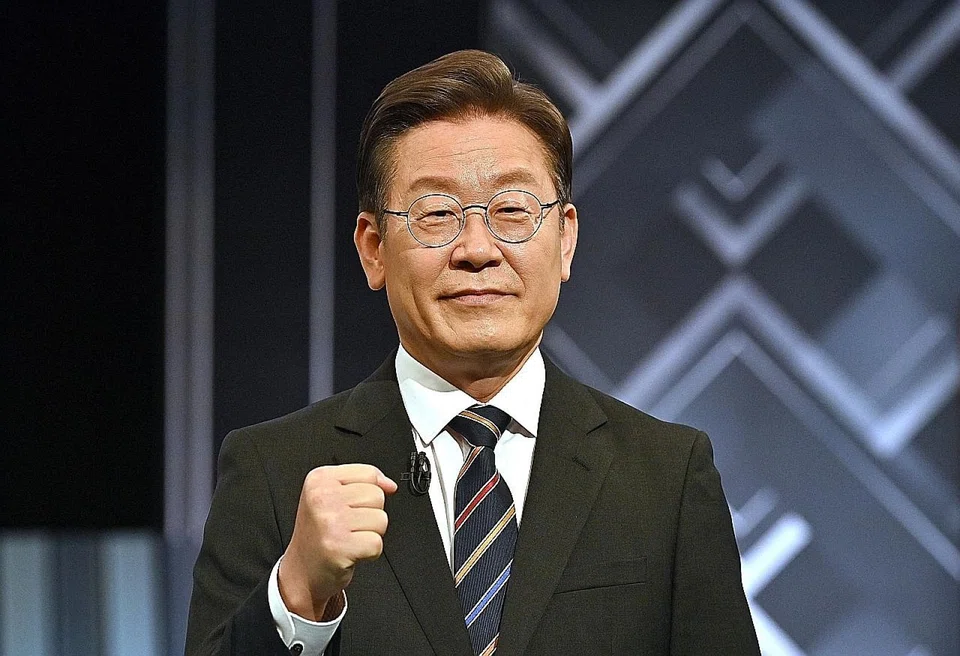
SOUTH Korea's presidential race was too close to call as votes were being counted, with an exit poll released minutes after polls closed on Wednesday (Mar 9) showing conservative candidate Yoon Suk-yeol with a lead of less than 1 percentage point.
Yoon had 48.4 per cent of the votes, compared with 47.8 per cent for progressive candidate Lee Jae-myung of the ruling Democratic Party, a joint exit poll by 3 major TV broadcasters showed. A separate exit poll by JTBC TV network showed Lee with 48.4 per cent of the votes compared with Yoon's 47.7 per cent. Final official results are expected early on Thursday morning.
About 4 hours after the polls officially closed, 20 per cent of the vote had been counted, with Lee at 49.9 per cent and Yoon at 46.9 per cent, according to the National Election Commission. Workers in protective gloves were processing ballots for an election that came as the country battled a record wave of coronavirus infections.
Health officials said more than 1 million people were expected to be under some sort of Covid-19 home treatment on election day. South Korea's presidents serve a single 5-year term and the winner would replace Moon Jae-in, who has backed rapprochement with North Korea and largely avoided stances that would rankle China, the country's biggest trading partner.
Yoon, 61, is a former top prosecutor, political newcomer and foreign policy novice. He was hand-picked by Moon in 2019 with a mandate to make good on his pledges to go after the most powerful. But ties soured after Yoon's probes included members of the current government and led to the resignations of 2 of Moon's justice ministers.
A victory for Yoon would return a hawk to the presidential Blue House, likely leading to a stronger embrace of South Korea's military alliance with the US and support for the Biden administration's push to bring in allies to build supply chains for crucial items, such as semiconductors, that are not dependent on China.
Navigate Asia in
a new global order
Get the insights delivered to your inbox.
It could also mean a chill for relations with neighbours North Korea and China after Yoon said he backed the option of a pre-emptive strike if Pyongyang posed an immediate threat and called for a new deployment of a US-made missile interceptor system known as Thaad.
China banned sales of group tour packages and appearances of Korean celebrities on television shows in retaliation for Seoul's decision to deploy the US-led missile shield system about 6 years ago, despite Beijing's objection.
"He is more willing to treat China as a threat," said Naoko Aoki, a research associate at the University of Maryland's Center for International and Security Studies. "Yoon has signalled he will more closely align with the US. Although that does not mean South Korea will be in lockstep with the US on all issues, that will not please China," she said.
A former factory worker who later became a civil rights lawyer, Lee, 57, has been in politics for more than 15 years as a member of the progressive camp - becoming governor of heavily populated Gyeonggi province surrounding Seoul in 2018. He has pushed to make the country Asia's first to introduce universal basic income.
A victory for Lee would likely mean a continuation of Moon's policies of warmer ties with Pyongyang. On the campaign trail, Lee said the best way to build peace on the heavily armed peninsula would be by ensuring trust with North Korea. Lee has also called for trying to gain advantage for South Korea by leveraging the friction between China and the US.
Economic issues were a top concern for voters. Housing prices have doubled in urban centres such as Seoul during Moon's term, while wages have failed to keep pace. This has made home ownership unaffordable for many families over the long term, while inflation unexpectedly accelerated in February, with the turmoil in financial markets caused by Russia's invasion suggesting there will be little respite for rising prices for the coming months.
Neither Lee nor Yoon has any significant foreign policy experience. North Korea, meanwhile, has cast a shadow on the race by test-firing a barrage of ballistic missiles weeks before the election and apparently resuming construction for the first time in about 4 years at the site where it has conducted all of its 6 nuclear tests.
"One thing that will be the same whoever wins is that the learning curve will be steep on all these issues, as both candidates are new to foreign policy," Aoki said.
Decoding Asia newsletter: your guide to navigating Asia in a new global order. Sign up here to get Decoding Asia newsletter. Delivered to your inbox. Free.
Share with us your feedback on BT's products and services

