

South Korea proposes record US$597 billion 2027 Budget to supercharge AI investment
The government has earmarked US$1.9 billion for a special semiconductor budget
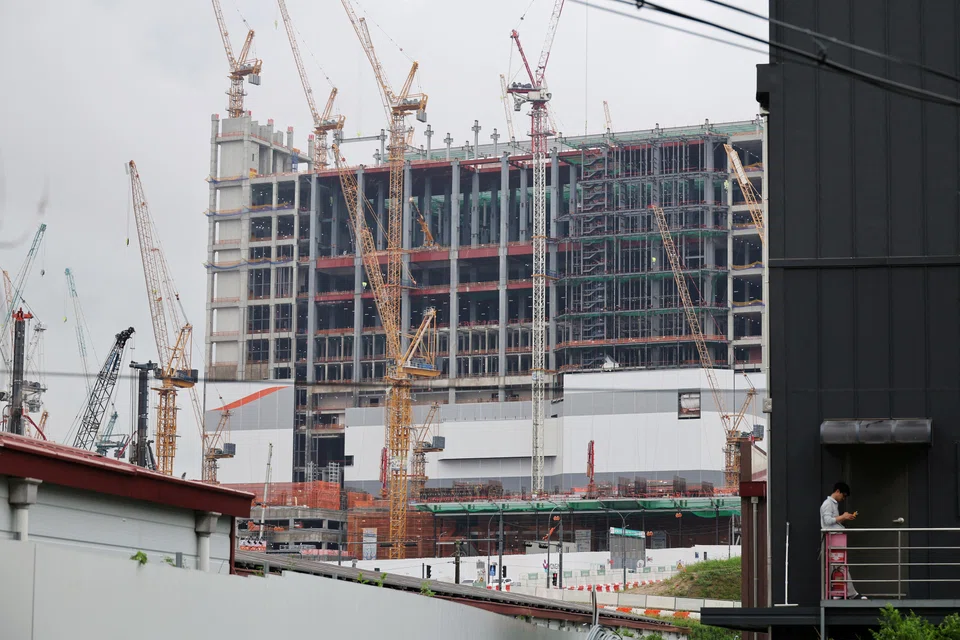
[SEOUL] South Korea on Tuesday (Sep 1) unveiled its most aggressive fiscal spending plan on record, setting total government expenditure for 2027 at 821 trillion won (US$596.9 billion) to strengthen the country’s technological edge amid the global AI race.
In its annual Budget proposal, the budget ministry said the spending plan represented a 12.8 per cent rise from 2026, marking the largest year-on-year increase on record.
The proposal signals a shift in Asia’s fourth-largest economy under President Lee Jae-myung, who has championed an expansionary fiscal policy since taking office in June 2025, pivoting away from three years of fiscal austerity under his predecessor.
The historic spending increase is being fuelled by a windfall from the country’s semiconductor industry.
Chipmakers Samsung Electronics and SK Hynix are generating unprecedented profits driven by global demand for high-bandwidth memory (HBM) used in the AI boom.
Total tax revenue is seen increasing 40.7 per cent in 2027 to 584.4 trillion won, with corporate tax receipts alone projected to more than double to 216.7 trillion won.
That revenue will help reduce South Korea’s debt-to-GDP ratio by 3.3 percentage points to 48.3 per cent, down from an estimated 51.6 per cent in 2026.
Bond yields up
Part of the tax windfall will be allocated to curb government borrowing. Total government bond sales for 2027 will drop to 222.8 trillion won, down from 225.7 trillion won in this year’s Budget.
Net bond issuance, which reflects the creation of fresh sovereign debt, will decline even more sharply by 13.1 trillion won to 96.3 trillion won, down from 109.4 trillion won in 2026.



Despite this, yields on South Korea’s 10-year government bond rose 6.5 basis points to 4.378 per cent after the Budget was announced, in a sign that the market had anticipated a deeper reduction in bond sales in 2027 amid a global bond slump.
“It would have been better for the market if the government made a bigger reduction (of bond sales),” said Kong Dong-rak, an analyst at Daishin Securities, adding that local bond yields have been climbing amid a global sell-off in long-dated bonds.
“It’s good that the net issuance plans are also down. Some adjustments to reduce the allocations of long-dated debt” will stabilise the local bond market, he said.
Future response fund
Rather than channelling its projected 162.3 trillion won of excess tax revenue into short-term spending, the government plans to direct it into a strategic endowment called the Future Response Fund, designed for long-term investments.
The fund will deploy 45.4 trillion won in 2027 to expand initiatives in youth welfare, future growth engines and specialised education programmes.
For 2027, a core pillar of spending will be to support next-generation semiconductor infrastructure.
The government has allocated 21.3 trillion won for industrial water systems, power grids and logistics networks to strengthen national chip manufacturing and advance critical technology infrastructure nationwide.
The government earmarked 2.6 trillion won for a special semiconductor budget, Budget Minister Park Hong-keun told the cabinet meeting.
It also proposed 3.4 trillion won in spending for a nuclear-powered submarine programme and other strategic weapons, presentation material during the meeting showed.
The Budget proposal will require parliamentary approval.
President Lee Jae Myung said on Tuesday the economy is at a point where an interest rate rise is unavoidable, potentially weighing on growth as vulnerable households grapple with higher borrowing costs. REUTERS
Decoding Asia newsletter: your guide to navigating Asia in a new global order. Sign up here to get Decoding Asia newsletter. Delivered to your inbox. Free.
Share with us your feedback on BT's products and services
TRENDING NOW

Once staunchly pro-China, Malaysian Chinese businesses are now distancing themselves from Beijing

Looking beyond looming CEO succession, should UOB potentially pursue a transformative merger?

Could stablecoins be the future of money?

Grab CEO’s wife Chloe Tong on life with Anthony Tan and finding her purpose

