

South Korea says joint military drills with US to be curtailed
The allies agree to conclude the exercises on Aug 21, according to a Wednesday statement by South Korea’s joint chiefs of staff
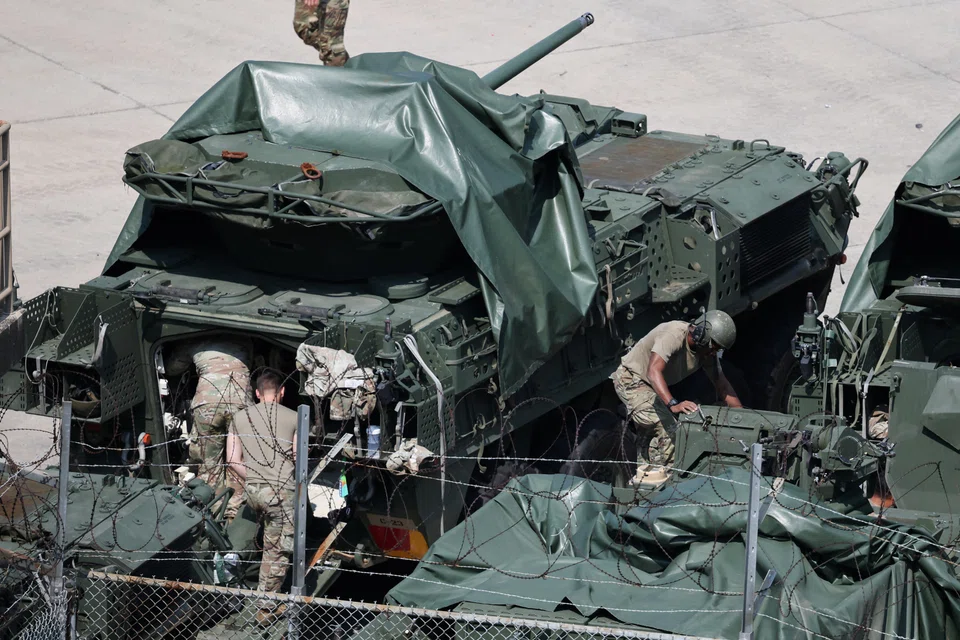
[SEOUL] The US and South Korea agreed to curtail joint military drills after US President Donald Trump ordered a reduction, citing his good relationship with Pyongyang.
The allies agreed to conclude the exercises on Friday (Aug 21), South Korea’s joint chiefs of staff said in a statement on Wednesday.
Originally the drills, which began on Monday, were scheduled to run until Aug 27.
The decision to scale back the drills comes after Trump criticised the exercises over the weekend, describing them as an “inappropriate and hostile” signal to a country that has been “unthreatening and respectful”.
The US and South Korean militaries have long stressed that the exercises are defensive in nature.
North Korea earlier on Wednesday slammed the drills without directly commenting on Trump’s recent remarks.
“The drill poses the most immediate and open threat to the Democratic People’s Republic of Korea and the regional security,” the North’s official Korean Central News Agency said in a commentary.
“This is a development that can not be overlooked.”
The move to reduce the exercises comes as Washington is stepping up efforts to engage with Pyongyang.
Trump is making a push for a high-stakes meeting with North Korean leader Kim Jong Un as soon this autumn during the president’s next trip to Asia, The Wall Street Journal reported, citing people familiar with the matter.
Trump is expected to join other world leaders in the southern Chinese city of Shenzhen in November for the Asia-Pacific Economic Cooperation summit.
It is unclear how much South Korea, a longtime US ally, is involved in the reported outreach.
Trump has been increasing pressure on Seoul over trade and security even as he described Kim as his “good friend”.
While Seoul has backed the idea of Washington engaging with Pyongyang, Trump’s insinuation that the move to curtail drills was prompted by Seoul’s lack of support for the Iran war could undermine confidence in bilateral ties.
“A reduction in joint military exercises as a means to advance Korea peace is acceptable to South Korean progressives,” said Andrew Yeo, a senior fellow at the Brookings Institution.
“But linking South Korea’s lack of support for US efforts in Iran to reduced exercises does raise concerns once again about US credibility and commitment to the US-Republic of Korea alliance.”
South Korea has previously said it hoped Trump’s overture would open a path to engagement with North Korea.
Trump and Kim met three times during the US leader’s first term, but the talks failed to curb North Korea’s nuclear ambitions.
Pyongyang now appears to have less incentive to immediately engage with Washington over its prized nuclear programme after emerging as a key ally of Russia in President Vladimir Putin’s war against Ukraine.
In a potential sign of backdoor diplomacy, Chinese Foreign Minister Wang Yi will make his first visit to Seoul in nearly five years this week to discuss North Korea and other global issues.
“For allies, they are getting used to Trump’s unpredictability. They grit their teeth and bear it, trying to make the best of things. South Korea may go along,” said Victor Cha, Korea chair at the Center for Strategic and International Studies.
“Lee may not have liked that he was not consulted on Trump’s decision, but if it leads to renewed summitry between Trump and Kim, that is very much in the Lee government’s interests and objectives,” Cha said. BLOOMBERG
Decoding Asia newsletter: your guide to navigating Asia in a new global order. Sign up here to get Decoding Asia newsletter. Delivered to your inbox. Free.
Share with us your feedback on BT's products and services






