

South Korean inflation picks up, boosting case for more tightening
 Add BT as a preferred source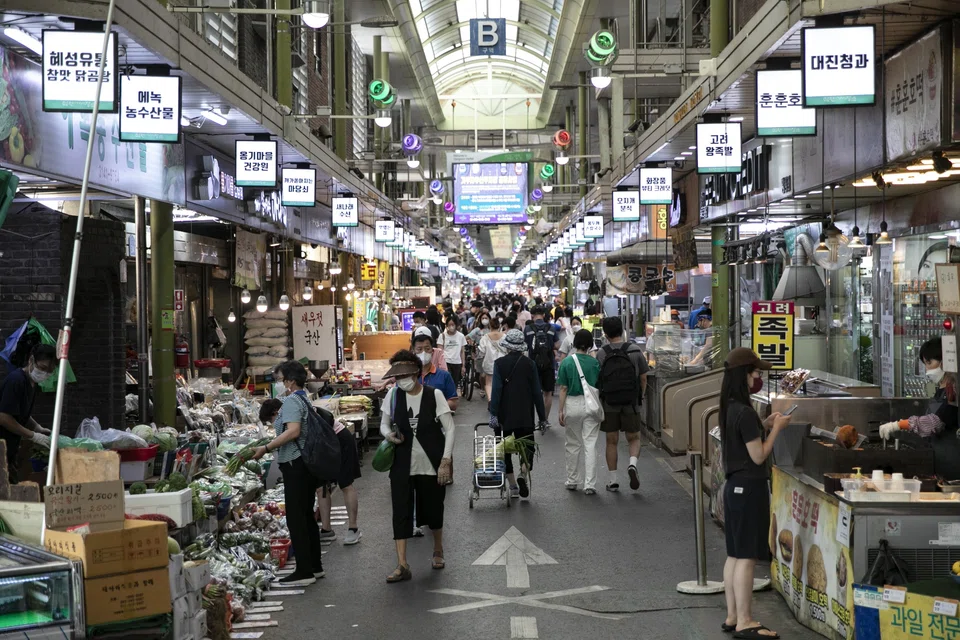
SOUTH KOREA’S inflation picked up again in October, highlighting resilient consumer demand and increasing pressure on the central bank to keep raising interest rates.
Consumer prices advanced 5.7 per cent from a year earlier, quickening from 5.6 per cent in September and matching economists’ estimates, the statistics office reported on Wednesday (Nov 2). Core inflation accelerated to 4.8 per cent, well above estimates of 4.5 per cent.
The result reinforces the need for the Bank of Korea (BOK) to keep tightening monetary policy. The central bank meets in three weeks’ time and will decide whether to deliver another half-percentage-point hike or revert to a more gradual pace of 25 basis points.
“This keeps the door to a 50 basis-point hike open,” said Ahn Jae-kyun, a fixed-income analyst at Shinhan Securities. “While inflation isn’t the only factor to consider in policy, demand is strong and today’s numbers undeniably show that.”
The BOK has raised its benchmark by a half-point at two of its past three meetings, seeking to narrow a rate gap with the Federal Reserve and stem the won’s depreciation.
The Korean currency is hovering around its lowest level in 13 years, boosting the cost of imports and offsetting the benefits of weakening price growth in food and energy. Escalating inflation also risks a price-wage spiral that the BOK sees as one of the biggest threats to the economy.

The central bank is tightening even as falling exports and a deteriorating consumer outlook threaten economic growth. A crowd crush in Seoul that killed more than 150 people during the weekend may also weigh on consumption, which has been a key driver of growth this year.
The BOK meets Nov 24, when it plans to update its projections for inflation and growth. Its key rate currently stands at 3 per cent.
Today’s report also showed:
- From the prior month, prices rose 0.3 per cent in October
- Food and non-alcoholic beverage prices advanced 7.5 per cent from a year earlier even though they fell 1.3 per cent compared with a month prior
- Transportation costs rose 5.4 per cent from a year earlier. Still, they edged down 0.5 per cent from a month earlier, reflecting slowing energy price growth
- All other major categories of consumer products and services rose compared with a month earlier BLOOMBERG
Decoding Asia newsletter: your guide to navigating Asia in a new global order. Sign up here to get Decoding Asia newsletter. Delivered to your inbox. Free.
Share with us your feedback on BT's products and services
TRENDING NOW
DBS, OCBC and UOB shares hit all-time highs as sentiment improves

E-commerce job cuts signal S-E Asia’s shift from scaling to deeper user engagement

Targeted credit relief: Vietnam steers funding to Vingroup, Sun Group, Masterise megaprojects

With AI, it’s not about coding better; workers need to think better: Koh Boon Hwee

