

South Korean lead in US trade pact may help limit chip spats
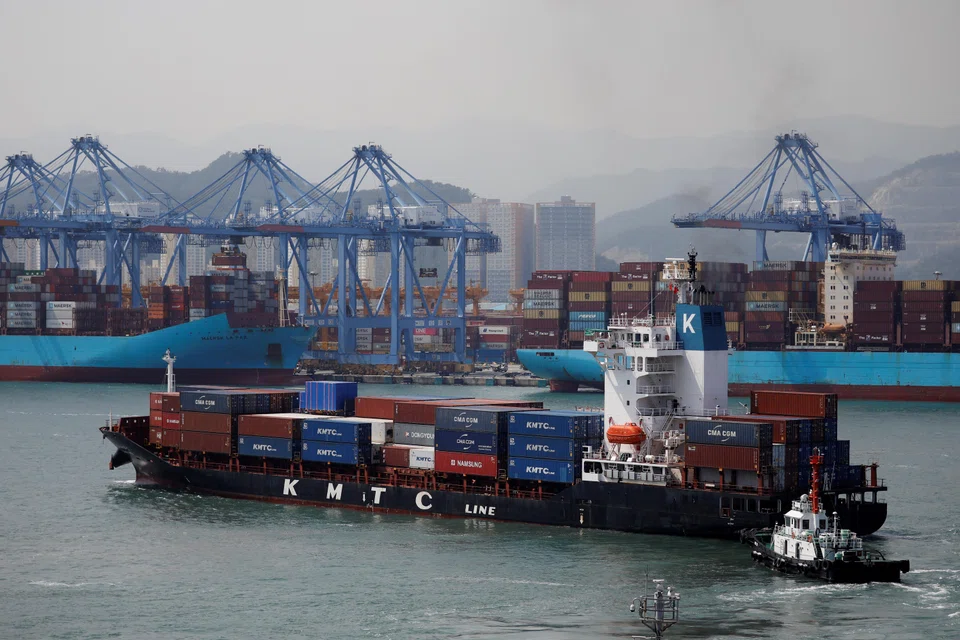
SOUTH Korea will lead efforts by a US-led trade pact in Asia to secure global supply chains through a network of cooperation, a role that may also help limit the risk of trade spats with Japan.
Seoul will helm the Indo-Pacific Economic Framework’s (IPEF) network for responding to supply chain issues, with Japan as vice-chair. The network will ensure consultation among all 14 IPEF nations over any actions that can have a critical impact on key supplies.
“This reduces the potential for trade spats between South Korea and Japan that we have seen in the past,” Sim Jinsu, director general for new trade strategy and policy, said. “It strengthens the stability of ties between the two.” This applies to all other IPEF members too, he added.
South Korea’s semiconductor production came under pressure in 2019 when it became the target of Japan’s export controls on chipmaking materials such as photoresist. While the dispute has been resolved since a summit last year between the two nations, the threat of fresh disruptions has lingered in a region fraught with political and historical tensions.
The IPEF commits each member to minimising unnecessary barriers that affect supply chains. If Japan imposed export controls unilaterally, it would amount to a violation of the spirit of the agreement, according to Sim.
While it does not completely guarantee a future free of trade spats, the pact is supposed to make it harder for the two countries to put up trade restrictions against each other.
For the US, the leadership roles taken by South Korea and Japan can help advance its agenda of solidifying cooperative ties between its two biggest Asian allies that have at times seen their ties strained by disputes related to Japan’s 1910 to 1945 colonial rule over the Korean Peninsula.
The Crisis Response Network (CRN) underpins the supply chain deal forged last year at IPEF. As chair, South Korea will have the right to summon a meeting of member nations within roughly two weeks of any supply chain emergency to coordinate a joint response.
In September, South Korea plans to run mock drills involving member nations with a focus on urea, a key input for diesel trucks that the country struggled to secure from China in 2021, Sim said. Semiconductor and battery-related materials are other potential items for further simulations as the CRN develops, he said.
SEE ALSO

Simulations would allow South Korea to draft contingency plans that could enable members to sound early warnings among one another, fast-track customs clearance and provide alternative transportation routes among others, he said.
The IPEF has been part of an effort led by US President Joe Biden to counter China’s economic influence in Asia. Participating countries include India, Vietnam, Indonesia, Malaysia, the Philippines, Singapore, Thailand and New Zealand. Together they represent about 40 per cent of global economic output.
The strength of the IPEF supply chain agreement stems from the mix of members from resource-rich nations such as Australia to industrial powerhouses such as Japan, Sim said.
South Korea is heavily reliant on trade for its economic growth and has found itself sandwiched between the world’s two largest economies, as Washington and Beijing vie for global clout. Seoul’s leadership role in IPEF supply chains offers an avenue to amplify its voice in an increasingly divided world of trade.
The supply-chain component of the IPEF aims to avoid the kind of bottlenecks that occurred during the Covid-19 pandemic while two other pillars focus on the transition to renewable energy and a fair economy related to taxation and corruption issues.
The members have yet to strike a deal on the final trade pillar due to thornier issues such as rules for digital commerce and labour. The uncertainty over further progress persists after Republican presidential nominee Donald Trump has vowed to terminate IPEF should he return to the White House.
As the inaugural chair of the CRN, South Korea will continue to support efforts to strengthen and stabilise supply chains regardless of the outcome of the US election, Sim said. BLOOMBERG
Decoding Asia newsletter: your guide to navigating Asia in a new global order. Sign up here to get Decoding Asia newsletter. Delivered to your inbox. Free.
Share with us your feedback on BT's products and services
TRENDING NOW
Easy to rent out, hard to sell: Are buyers losing interest in Singapore’s one-bedroom condos?
GovTech retrenches another 38 staff in second round of layoffs
Stocks to watch: Seatrium, CapitaLand Investment, Keppel DC Reit, Suntec Reit, CLCT, TSH Resources
World’s largest offshore wind platform by Seatrium consortium on track to be completed by 2028

