South Korean parliament approves US$350 billion US investment Bill
Primary investment sectors include shipbuilding, semiconductors, pharmaceuticals and critical minerals
[SEOUL] South Korea’s parliament passed a special Bill on Thursday (Mar 12) to pave the way for Seoul’s US$350 billion investment commitments in strategic US industries, under a trade deal struck in 2025.
The law implements a trade agreement signed in November, under which South Korea agreed to invest US$200 billion in US strategic industries and US$150 billion in shipbuilding-related cooperation, in return for more favourable tariff terms.
The National Assembly passed it with bipartisan support, in a plenary session on Thursday.
Due to come into force after about three months, the legislation will serve as a basis to create a state-backed investment corporation with two trillion won (S$1.7 billion) in capital, and a strategic investment fund.
The Bill names shipbuilding, semiconductors, pharmaceuticals, critical minerals, energy, artificial intelligence and quantum computing as priority investment sectors. Additional sectors can be added by presidential decree.
A central provision requires US investments to meet the principle of “commercial feasibility”, meaning that they must generate sufficient cash flow to cover the principal and interest over their lifespan.
Exceptions are permitted when national security or supply chain stability are at stake, provided that the relevant South Korean parliamentary committees approve them.
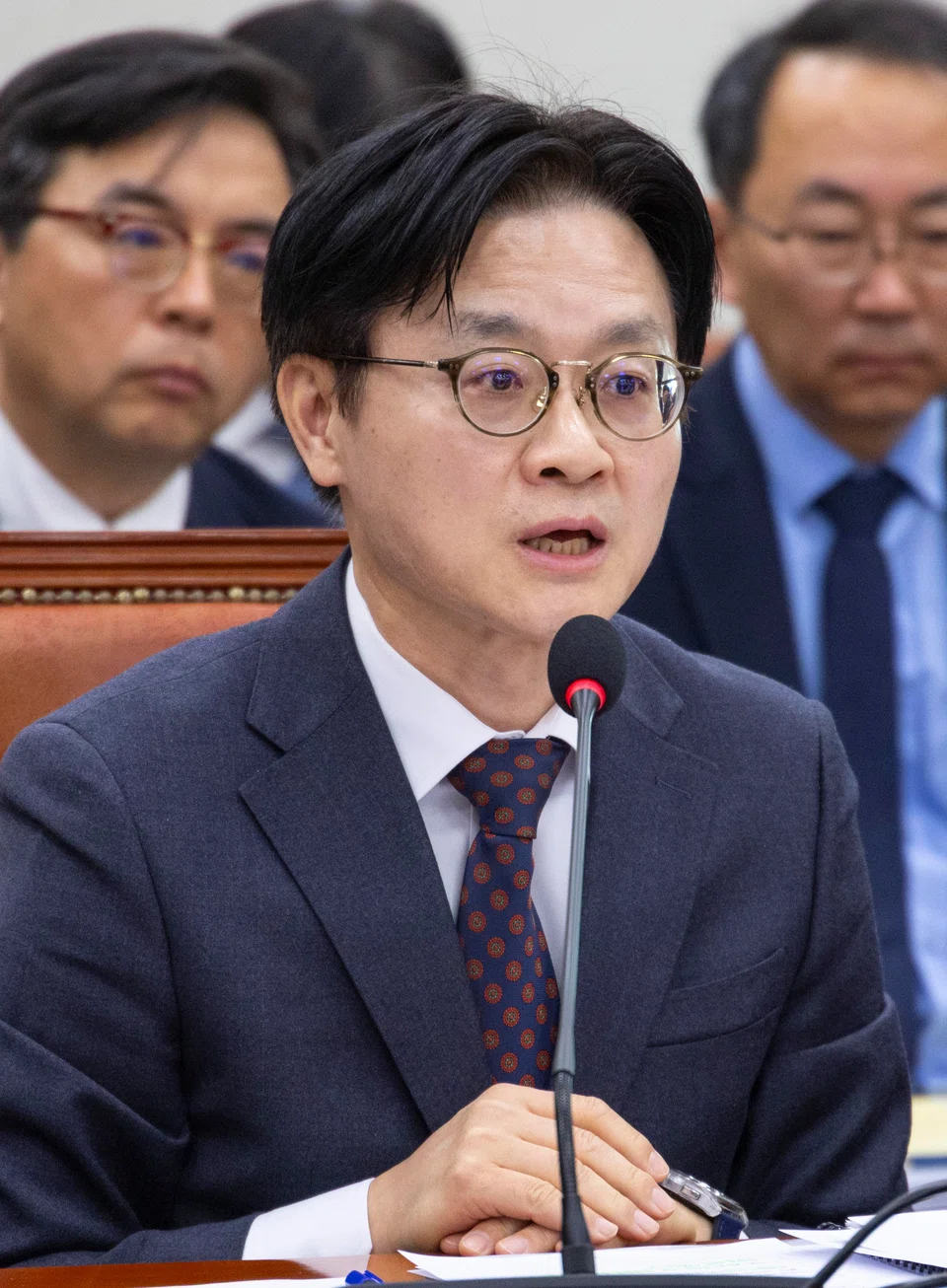
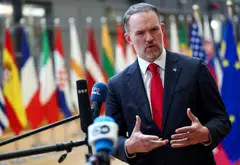
South Korea’s Industry Minister Kim Jung-kwan will lead a joint US-South Korea committee to assess proposed projects.
A finance minister-led committee will decide whether to advance them to a US panel headed by the Secretary of Commerce, which can also propose projects.
Tariff and FX uncertainties
In late January, US President Donald Trump threatened to raise the tariffs on South Korean goods to 25 per cent, saying that Seoul’s legislature had yet to enact the trade framework that had capped US levies at 15 per cent.
South Korean officials have said that the trade deal remains valid, despite a US Supreme Court decision in February that struck down a large swath of Trump’s tariffs.
Officials in Seoul have voiced concerns regarding the effect of US investments on an already weak won currency, and said that the projects would be based on consideration of foreign exchange market conditions as well as commercial feasibility.
South Korea is included in a broader US “Section 301” probe into excess industrial capacity, which the US Trade Representative Jamieson Greer has said could lead to new tariffs on major trading partners.
Industry minister Kim Jung-kwan told a parliamentary committee on Thursday that the US probe was within South Korea’s expectations.
The foreign ministry said that Washington had expressed its intention to restore the tariffs struck down by the US Supreme Court using the probe.
It added that South Korea will consult with the US to ensure that the existing tariff balance is preserved, and the country is not disadvantaged.
Trade envoy Yeo Han-koo told media that the US appeared to be aiming to shorten its probe to four to five months, meaning that Washington could revise its tariffs to the levels they were at, before the US Supreme Court’s ruling some time after mid-July. REUTERS
Decoding Asia newsletter: your guide to navigating Asia in a new global order. Sign up here to get Decoding Asia newsletter. Delivered to your inbox. Free.
Share with us your feedback on BT's products and services