South Korea’s exports extend momentum on solid chip, auto strength
The upbeat trade report comes days after the Bank of Korea kept its benchmark rate steady at 2.5%
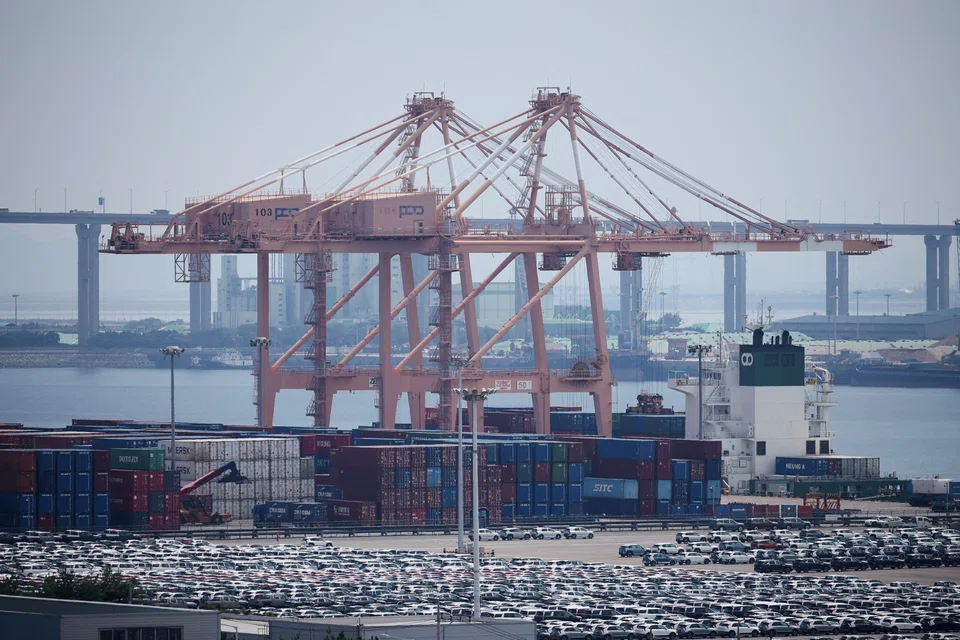
[SEOUL] South Korea’s exports remained solid in November, buoyed by robust demand for semiconductors and autos, offering reassurance for policymakers as they navigate a wave of global protectionism.
Shipments adjusted for working-day differences climbed 13.3 per cent in November from a year earlier, after a 14 per cent gain in the previous month, according to data released on Monday (Dec 1) by the customs office. Headline exports climbed 8.4 per cent, following a revised 3.5 per cent increase in October. Imports rose 1.2 per cent, resulting in a trade surplus of US$9.7 billion.
Semiconductor exports continued to lead the momentum, climbing almost 39 per cent amid sustained appetite for artificial intelligence and data centre demand. Automobiles also rebounded with a nearly 14 per cent gain, more than offsetting the drag from sectors including petrochemicals.
The upbeat trade report comes days after the Bank of Korea (BOK) kept its benchmark rate steady at 2.5 per cent and tweaked its statement to indicate it’s not quite as tilted towards further rate cuts as it has been until now.
Governor Rhee Chang Yong said that the board is evenly split on the outlook, with three members open to further easing and the other three expecting to stand pat in the near term. The central bank slightly upgraded growth and inflation forecasts to 2026.
Alongside the rate decision, the BOK raised its 2026 growth outlook to 1.8 per cent from 1.6 per cent projected in August and lifted its 2025 estimate to 1 per cent, reflecting solid third-quarter output supported by strong chip exports and a steady recovery in private consumption.
South Korea and the US finalised a landmark agreement last month to cap US tariffs on imports of South Korean goods at 15 per cent. The deal includes cars that were previously subject to a 25 per cent levy. Seoul expects the auto rate to be retroactively reduced starting Nov 1 as the country’s ruling party proposed a special bill to implement its US$350 billion investment pledges last week.
Rhee said outbound shipments and firms’ equipment investment will outperform expectations, supported by the global semiconductor upcycle and the recent trade accord breakthrough with Washington.
By destination, shipments to the US dipped 0.2 per cent as sectors such as steel and auto parts weakened due to the American levies, while exports to China rose 6.9 per cent. Shipments to the Middle East jumped about 33 per cent, and those to South-east Asia gained 6.3 per cent.
SEE ALSO




With exports equivalent to more than 40 per cent of the country’s GDP, the continued strength may give the BOK room to stay patient with policy as it monitors domestic risks, including rising household debt levels and elevated property prices. BLOOMBERG
Decoding Asia newsletter: your guide to navigating Asia in a new global order. Sign up here to get Decoding Asia newsletter. Delivered to your inbox. Free.
Share with us your feedback on BT's products and services