

South Korea’s inflation accelerates, supporting the central bank’s hawkish tilt
Transportation leads the advance in the CPI, surging 11.6% in May from a year earlier

[SEOUL] South Korea’s consumer inflation accelerated to the fastest pace in more than two years, reinforcing the central bank’s tilt towards higher interest rates as the impact from the Middle East conflict ripples across the economy.
Consumer prices rose 3.1 per cent in May from a year earlier, the biggest gain since March 2024, data from the Ministry of Data and Statistics showed on Tuesday (Jun 2). The median estimate in a Bloomberg survey of economists called for a 2.9 per cent advance after the 2.6 per cent gain in April.
Core inflation, which excludes volatile food and energy prices, rose 2.5 per cent, suggesting that underlying price pressures are also beginning to broaden alongside higher headline inflation.
The latest reading reinforces the Bank of Korea’s (BOK) recent shift to a hawkish tilt as policymakers anticipate higher energy prices and broader inflation from the war in Iran, as well as faster growth driven by the tech sector. Officials left interest rates unchanged last week, but two board members dissented in favour of a rate increase, while updated guidance showed a bias towards higher borrowing costs in the coming months.
“Inflation came in a bit stronger in May, partly reflecting travel-related demand,” said Bumki Son, an economist at Barclays. “For now, the key things to watch are the conflict in the Middle East and how quickly oil supplies normalise.”
Much of the unexpected strength in core inflation also appears to have been driven by higher international and domestic airfares, likely reflecting the pass-through of increased fuel surcharges, Son added.
The advance in the CPI was led by transportation, surging 11.6 per cent in May from a year earlier, while recreation and culture rose 5 per cent. Food and lodging gained 2.7 per cent and household goods and services climbed 2.6 per cent.
Broader consumer-price increases remained modest, with communication costs gaining 0.6 per cent and food and non-alcoholic beverage prices rising 1.6 per cent.
BOK governor Shin Hyun Song said last week that inflation appears to have more room to rise and suggested officials increasingly see inflation, growth, the weak won and housing-related financial risks pointing towards the same policy response. Semiconductor exports jumped to a record in May, which is expected to keep holding up broader economic growth, while apartment prices in the capital have risen consistently for well over a year.
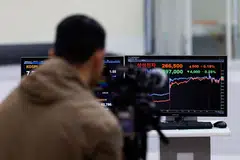


While the latest inflation reading is broadly consistent with the central bank’s updated outlook, policymakers will likely remain alert to signs that higher energy costs are feeding more broadly into services prices and inflation expectations.
“In our inflation outlook, we expect upward momentum to persist to June,” Son said. “The key question will be how quickly inflation moderates after a likely pickup in August, driven by base effects from last year.” BLOOMBERG
Decoding Asia newsletter: your guide to navigating Asia in a new global order. Sign up here to get Decoding Asia newsletter. Delivered to your inbox. Free.
Share with us your feedback on BT's products and services
TRENDING NOW

LTA proposes combining car COE categories, adding rebate-surcharge system
StarHub to acquire MyRepublic’s mobile business amid ongoing telco consolidation

DBS, OCBC, UOB rout lops billions off STI as inflation, rate concerns spook investors

Grab CEO’s wife Chloe Tong on life with Anthony Tan and finding her purpose

