

South Korea’s inflation holds steady at BOK target before Iran impact
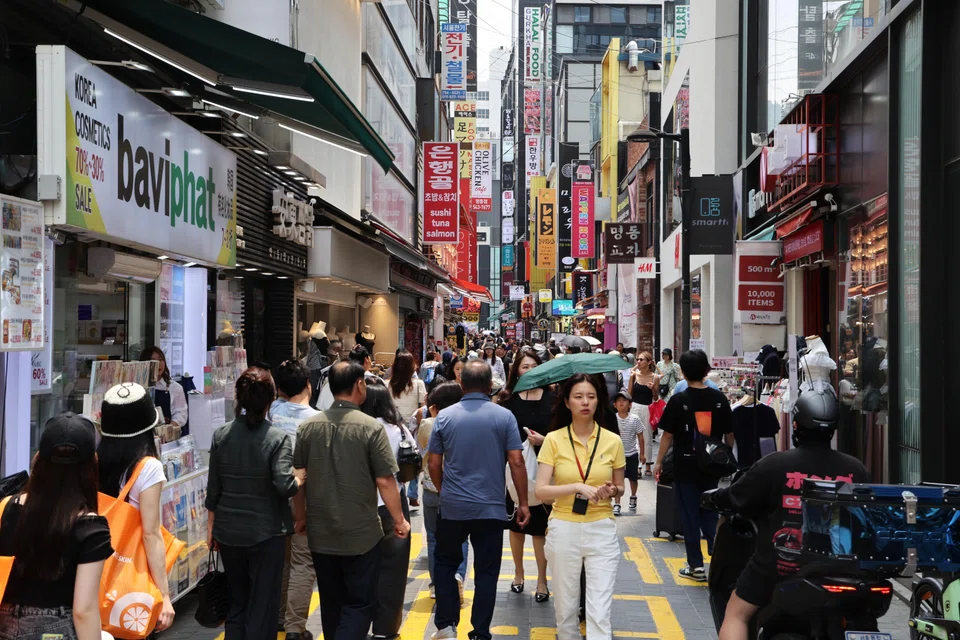
SOUTH Korea’s headline inflation held steady at the central bank’s target level, suggesting overall price pressures remained contained before the Iran conflict triggered a wave of global energy volatility.
Consumer prices rose 2 per cent in February from a year earlier, matching January’s pace, the Ministry of Data and Statistics said on Friday.
The result, which missed the median 2.1 per cent forecast in a Bloomberg survey, was in line with the Bank of Korea’s 2 per cent inflation target and consistent with recent policy signals.
The Lunar New year holiday, which typically boosts demand for food and fresh produce and creates seasonal price volatility, came in February this year. Last year, the holiday occurred in January, complicating year-on-year comparisons.
Core inflation, which strips out volatile food and energy, accelerated to 2.3 per cent from 2 per cent in January.
Still, policymakers remain alert to potential risks from developments in global markets. Heightened tensions in the Middle East have rattled financial markets and fuelled volatility in oil and other energy products, raising the possibility of renewed upward pressure on prices stemming from costlier imports.
South Korea is particularly vulnerable to such swings because it imports almost all of its energy supplies, with the majority of crude oil and a large share of natural gas sourced from the Middle East.
Economists say increases in energy costs can quickly feed through to domestic prices. In Korea, higher oil prices tend to push up import prices first before affecting consumer prices within a few months.
“In Korea, we see immediate pass-through from oil prices to import prices, which then takes just one-two months to affect consumer prices,” said Kathleen Oh, Morgan Stanley’s chief Korea economist. “Upward pressure on inflation could build quickly if the current elevated oil price persists.”




Last week, the central bank held its policy rate at 2.5 per cent for a sixth consecutive meeting, extending a pause that began last July after four cuts.
The BOK raised its inflation outlook for this year to 2.2 per cent from its earlier projection of 2.1 per cent, indicating price pressures will stay near its target level.
In February, food and non-alcoholic beverage prices rose 2.1 per cent from a year earlier, while prices for food and lodging gained 3 per cent. Housing and utilities costs increased 1.2 per cent, and recreation and culture climbed 3 per cent.
Broader consumer-price gains remained modest, with communication costs rising 0.4 per cent and health costs gaining 0.9 per cent.
Meanwhile, Seoul apartment prices extended their gains for another week in the latest tally, though the pace slowed for a fifth consecutive week after President Lee Jae Myung criticised multi-home owners and speculative buyers. BLOOMBERG
Decoding Asia newsletter: your guide to navigating Asia in a new global order. Sign up here to get Decoding Asia newsletter. Delivered to your inbox. Free.
Share with us your feedback on BT's products and services
TRENDING NOW

Once staunchly pro-China, Malaysian Chinese businesses are now distancing themselves from Beijing

Cliff Tan has 7 million followers and a 4-month waitlist. Why won’t he expand his business?

Could stablecoins be the future of money?

Grab CEO’s wife Chloe Tong on life with Anthony Tan and finding her purpose

