South Korea’s inflation holds steady, dimming rate cut prospects
Both headline and core gauges continue to hover near the Bank of Korea’s 2% target
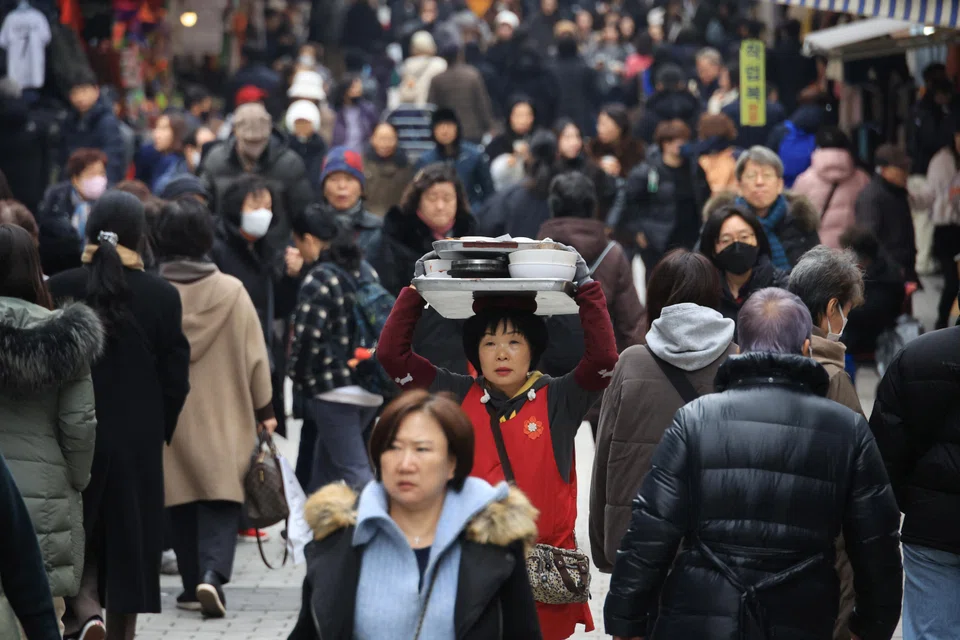
[SEOUL] South Korea’s consumer inflation held steady in November, giving the central bank more reason to stay cautious about monetary easing as authorities remain wary that a persistent property market rally could kindle financial imbalances.
Consumer prices advanced 2.4 per cent from a year earlier, unchanged from October’s increase, the Ministry of Data and Statistics said on Tuesday (Dec 2). The pace exceeded the median forecast of 2.3 per cent in a Bloomberg survey of economists.
Core inflation, which excludes volatile food and energy items, dropped to a 2 per cent clip versus 2.2 per cent in October, the data showed. Both headline and core gauges continue to hover near the Bank of Korea’s 2 per cent target.
The data reflects higher food and fuel prices due to the weaker won. Fuel costs also rose after the government partially reversed its fuel-tax subsidies in October. Meanwhile, apartment prices in Seoul climbed for a 43rd consecutive week as at Nov 24, Korea Real Estate Board data show.
Food and non-alcoholic beverage prices climbed 4.7 per cent in November from a year earlier, while housing and utilities costs rose 1.2 per cent. Prices for food and lodging gained 2.9 per cent and transportation costs also increased 3.2 per cent.
The latest inflation reading comes just days after the Bank of Korea held its benchmark rate steady at 2.5 per cent, and slightly raised its growth and inflation forecasts while signalling a more balanced stance on the policy outlook. Governor Rhee Chang Yong said that the board is now evenly split on whether a further rate cut might be warranted.
The BOK increased its inflation outlook for 2025 to 2.1 per cent, up from 2 per cent. The inflation forecast for next year was also raised to 2 per cent.
The central bank added that inflation is expected to gradually slide towards the 2 per cent level as global oil prices stabilise, but exchange rates and recovering domestic demand will likely keep it somewhat above the path projected in the previous outlook.
“For this year, the rise in the exchange rate, and worsening weather conditions acted as upward adjustment factors,” governor Rhee told reporters after the bank held its policy meeting last Thursday. “The exchange rate, and the recovery in domestic demand are expected to raise inflationary pressures more than previously anticipated.”
SEE ALSO



Still, Rhee added that the outlook remains highly uncertain, with risks tied to the currency, oil prices, and the strength of the economic recovery. BLOOMBERG
Decoding Asia newsletter: your guide to navigating Asia in a new global order. Sign up here to get Decoding Asia newsletter. Delivered to your inbox. Free.
Share with us your feedback on BT's products and services