

South Korea’s US$350 billion US investment unlikely to kick off in first half, finance ministry says
The countries have an agreement to cap annual dollar investment outflows at US$20 billion
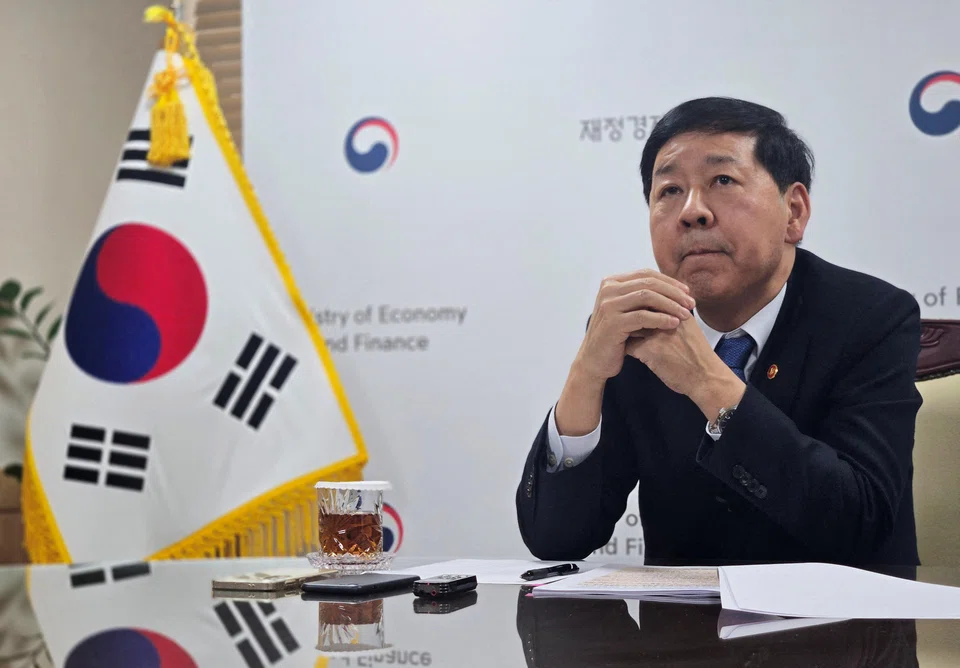
[SEOUL] South Korea’s planned investment of US$350 billion in strategic US sectors under a trade deal is unlikely to kick off in the first half of 2026, Finance Minister Koo Yun-cheol said.
This means the weak won currency should not face new major dollar outflows.
The allies agreed to cap annual dollar investment outflows at US$20 billion, under a November trade deal that cut US President Donald Trump’s tariffs on imports from South Korea, which agreed in turn to invest US$350 billion in strategic US sectors.
“It’s unlikely,” Koo told Reuters on Friday (Jan 16), when asked if the investment could begin in the first half of this year.
“Even if a nuclear power plant gets selected, for example, there will be processes to follow, such as finding a location, designing it and building them, so the initial outflows could be much smaller than that,” he added.
He was referring to an annual cap of US$20 billion on outflows agreed by the two countries.
“Not a lot (of investment) can be made under the current foreign-exchange situation, at least for this year.”
Slumping currency adds to concerns
The slumping won is a worry for Seoul officials planning for such large outflows, as it nears levels unseen since the global financial crisis from 2007 to 2009, even though exports are humming and the stock market jumped 76 per cent in 2025.
Koo warned traders not to test the resolve of authorities on the won which, on Friday, was hovering near 16-year lows of 1,473.8 won (S$1.29) to the US dollar, after weakening by more than 2 per cent this year.
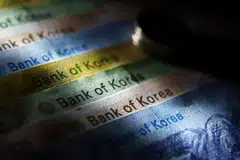
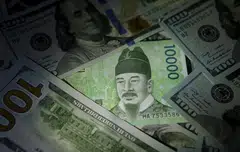
“It is true that there is depreciation pressure in the foreign-exchange market that is somewhat bigger than we thought,” he added.
The government will swiftly adopt recently unveiled market-stabilising measures because herd-like behaviour in the markets could push the won down, he said.
“That’s not something we will tolerate,” he continued, adding that the US appreciated South Korea’s recent efforts to keep the won from depreciating, a currency movement the US does not want.
On Wednesday, US Treasury Secretary Scott Bessent said he had discussed with Koo that the currency’s recent depreciation was not in line with South Korea’s economic fundamentals.
Package planned as soon as possible
Koo said the government planned to implement the investment package as soon as possible.
It would ask parliament to start reviewing a bill proposed in 2025 to set up a special fund for the package from February, he said, but added that uncertainty over an expected US court ruling on Trump’s tariffs could affect the process.
No specific projects have yet been agreed under the deal, but they could involve nuclear power plants as flagged by US Commerce Secretary Howard Lutnick, he said.
The government’s efforts to rein in the won have failed to sway the currency very far from the key psychological level of 1,500 won to the US dollar.
Such efforts included spurring the National Pension Service to sell dollars, and pushing exporters to convert more of their overseas earnings into won.
Koo has been among the officials who blamed higher demand for dollars on Korean investors’ insatiable appetite for overseas stocks as the interest rate differential with the US swelled to two percentage points, its widest since 1999. REUTERS
Decoding Asia newsletter: your guide to navigating Asia in a new global order. Sign up here to get Decoding Asia newsletter. Delivered to your inbox. Free.
Share with us your feedback on BT's products and services
TRENDING NOW
Prima to move out of historic Keppel Road flour mill building in 2028

Grab CEO’s wife Chloe Tong on life with Anthony Tan and finding her purpose

OCBC sheds S$8 billion in value as shares close nearly 6% down; analysts cautious on banks
As Asia’s food delivery giants rejig the pie, who will win the market?

