

S&P 500, Nasdaq rise as CoreWeave results ease AI spending worries
Nvidia is on the rebound after shedding US$430 billion in market value
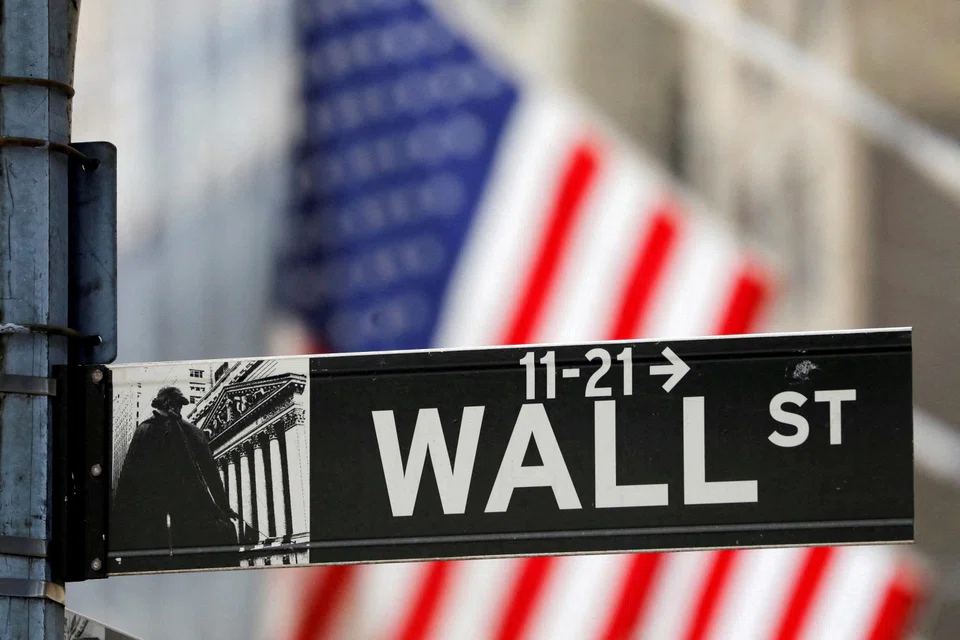
[BENGALURU] The S&P 500 and the tech-heavy Nasdaq climbed on Wednesday (Nov 11) morning after neocloud firm CoreWeave’s strong earnings calmed investor jitters about bloated artificial intelligence expenditure.
CoreWeave’s shares jumped 12.7 per cent after the battered company said it would become profitable in the first half of 2028, on an adjusted basis, as it sought to reassure investors that strong demand and customer commitments could support its debt-fuelled expansion.
“CoreWeave was emblematic of the shift from viewing all AI investments as good investments to taking a more sober look at the returns on the billions of dollars being spent on AI,” said Steve Sosnick, chief market analyst at Interactive Brokers.
“The earnings report helped ease some of those concerns.”
The results boosted sentiment across AI infrastructure stocks, with Nebius Group and Applied Digital rising 12.5 and 5.2 per cent, respectively.
Nvidia edged 2.4 per cent higher after shedding about US$430 billion in the last two sessions as questions about CEO Jensen Huang’s relationship with a businesswoman alleged to be a Chinese spy roiled markets.

The Philadelphia SE Semiconductor index jumped 3 per cent to a one-week high, with Marvell Technology and Micron up 5.5 and 6.8 per cent, respectively.
Data storage firms Seagate Technology and Western Digital also traded higher.
Equities whipsawed this week, with concerns over slower data centre deployment, higher interest rates and Nvidia’s troubles pitted against the appetite to buy the dip.


Investors bought equities during last week’s sell-off, with all net inflows coming through exchange-traded funds and institutional clients leading the purchases, Bank of America Global Research analysts said in a note.
At 9.49 am ET, the Dow Jones Industrial Average fell 73.82 points or 0.13 per cent to 52,162.06, the S&P 500 rose 57.14 points or 0.76 per cent to 7,578.07, and the Nasdaq Composite gained 288.47 points or 1.16 per cent to 25,354.34.
Six of the 11 major S&P 500 sectors were in positive territory, with tech and energy leading gains. The CBOE Volatility Index, Wall Street’s fear gauge, fell for the fourth straight session and was at 18.48.
Investors also examined the terms set by Anthropic on Tuesday for its blockbuster initial public offering. The Claude chatbot creator is aiming for a valuation of up to US$1.4 trillion in the share sale.
Rate fears linger
Hotter-than-expected inflation data on Tuesday reinforced expectations the US Federal Reserve would raise interest rates next month.
The central bank should consider raising borrowing costs by 50 basis points if October inflation worsened, Fed governor Christopher Waller had said before the consumer price index report, adding that a tamer approach risked hurting the Fed’s credibility.
Traders see a hike next month as a certainty, with an 11.5 per cent chance of a half-percentage-point increase, according to the CME FedWatch Tool.
Meanwhile, oil prices climbed 1.8 per cent following the previous session’s two-month lows, after Iran’s security chief said Teheran would not allow enriched nuclear material to leave the country.
The US bond market is shut on Wednesday for Veterans Day.
Advancing issues outnumbered decliners by a 1.01-to-1 ratio on the New York Stock Exchange, and by a 1.57-to-1 ratio on the Nasdaq.
The S&P 500 posted eight new 52-week highs and no new lows, while the Nasdaq Composite recorded 32 new highs and 51 new lows. REUTERS
Decoding Asia newsletter: your guide to navigating Asia in a new global order. Sign up here to get Decoding Asia newsletter. Delivered to your inbox. Free.
Share with us your feedback on BT's products and services
TRENDING NOW

‘We’ll look at it, we’ll see what is feasible’: SIA CEO on new business-class seat colours

SIA Q2 net profit quadruples to S$209.7 million on better unit revenue, lower Air India losses

Higher rates, weaker spending: Is the Philippines entering stagflation?

The limits of China’s trade concessions to Europe

