Sri Lanka puts IMF targets at risk with ‘ambitious’ tax goals
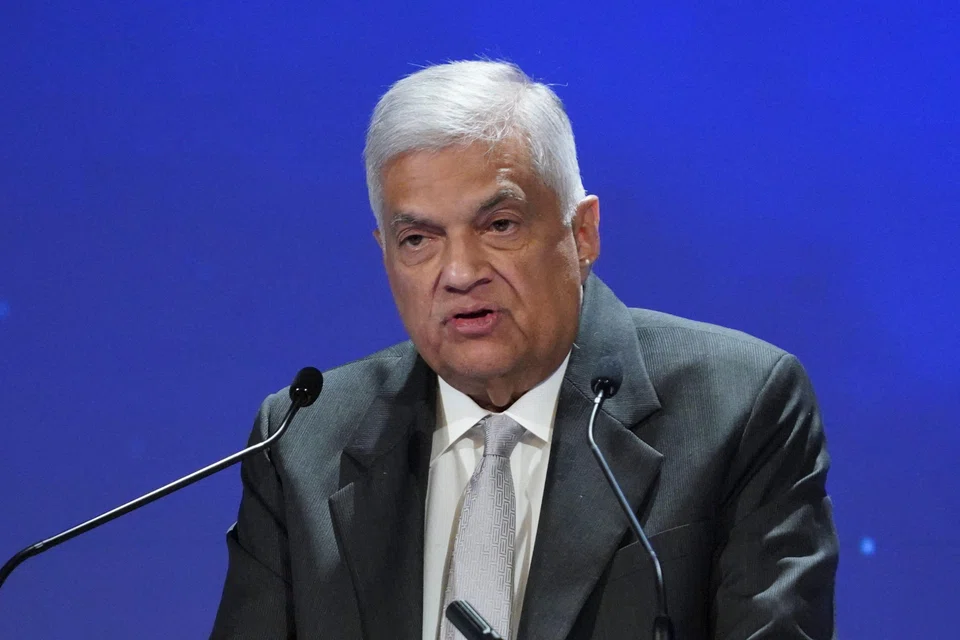
SRI Lanka’s president set “ambitious” tax revenue goals in his budget that may be difficult to meet, analysts said, potentially raising risks around its loan programme with the International Monetary Fund.
President Ranil Wickremesinghe delivered a fiscal plan on Monday (Nov 13) that projects tax revenue will increase more than 47 per cent next year. He also boosted government workers’ pay and increased state pensions ahead of next year’s election.
Wickremesinghe is facing a tricky balancing act: trying to meet the IMF’s spending and revenue targets under a US$3 billion bailout package, and at the same time, keeping voters happy to shore up support before next year’s elections.
While the economy is recovering from its worst crisis in seven decades and a historic debt default last year, the nation’s fiscal health is still precarious. Sri Lanka remains dependent on IMF inflows to preserve its foreign-exchange reserves.
The South Asian nation is already struggling to meet its revenue targets set by the IMF for this year, with the fund projecting a 15 per cent shortfall. Economists say the government’s goals for next year will be difficult to achieve.
“We expect the country to miss its revenue projections for next year, resulting in increased challenges to keeping the IMF programme on track,” Ankur Shukla, South Asia analyst at Bloomberg Economics, wrote in a note.
The IMF hasn’t yet made public its revised targets for next year under the new staff level agreement reached with Sri Lanka’s government. Revenue goals are generally an indicative target, which means the lender won’t necessarily halt funding if Sri Lanka fails to meet that goal.
Wickremesinghe didn’t outline any major tax-raising measures in his budget, with the higher revenue expected to come from a recent hike in the value-added tax rate and a clampdown on tax evasion. The government is also hoping to sell some state assets, which should help boost its non-tax revenue.
Udeeshan Jonas, chief strategist at Capital Alliance Plc in Colombo, said the government’s revenue goals suggest the economy needs to grow 4 per cent to 5 per cent next year. The central bank is predicting a contraction of 2 per cent this year and 3.3 per cent expansion in 2023.
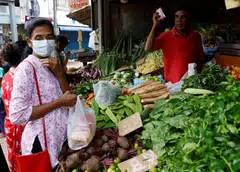

“Revenue targets are ambitious,” Jonas said. “It is an attempt to manage difficult objectives of giving handouts to state workers and the most needy.”
The president also projected a surge in borrowing next year in order to capitalise banks and pay off foreign debt.
Since its default in May 2022, Sri Lanka has been working to restructure its debt. The government is currently trying to reach a deal with creditors to help secure the next US$330 million payout under the IMF programme.
Officials set aside about US$9.2 billion in the budget next year for restructuring the defaulted dollar bonds.
Wickremesinghe is targeting a budget deficit, without bank recapitalisation, of 7.6 per cent of gross domestic product in the fiscal year beginning in January. That compares with this year’s shortfall of 8.5 per cent.
Under the IMF programme, Sri Lanka must reach a primary fiscal surplus of 2.3 per cent of GDP by 2025 and reduce the debt-to-GDP ratio from 128 per cent last year. BLOOMBERG
Decoding Asia newsletter: your guide to navigating Asia in a new global order. Sign up here to get Decoding Asia newsletter. Delivered to your inbox. Free.
Share with us your feedback on BT's products and services