Stars aligned for euro overhaul, EU reboot
Macron pushes for greater fiscal integration within the EU as a way to address at least some of the shortcomings
Brussels
WHEN France elected Emmanuel Macron in May, the prospects of mending the euro's inherent flaws suddenly brightened. Adopted in 1999, the common European currency was intended as a political project to foster unity, but the crisis in Greece a decade later exposed the euro's inability to enforce shared rules, principally on government debt and spending.
The French president is pushing for greater fiscal integration among the 19 nations that now use the euro as a way to address at least some of those shortcomings. With Germany indicating an openness to Mr Macron's calls, the political stars may be aligning to overhaul the euro, and so reboot the European Union.
Here are some of the proposals on the table, and the hurdles to their adoption:
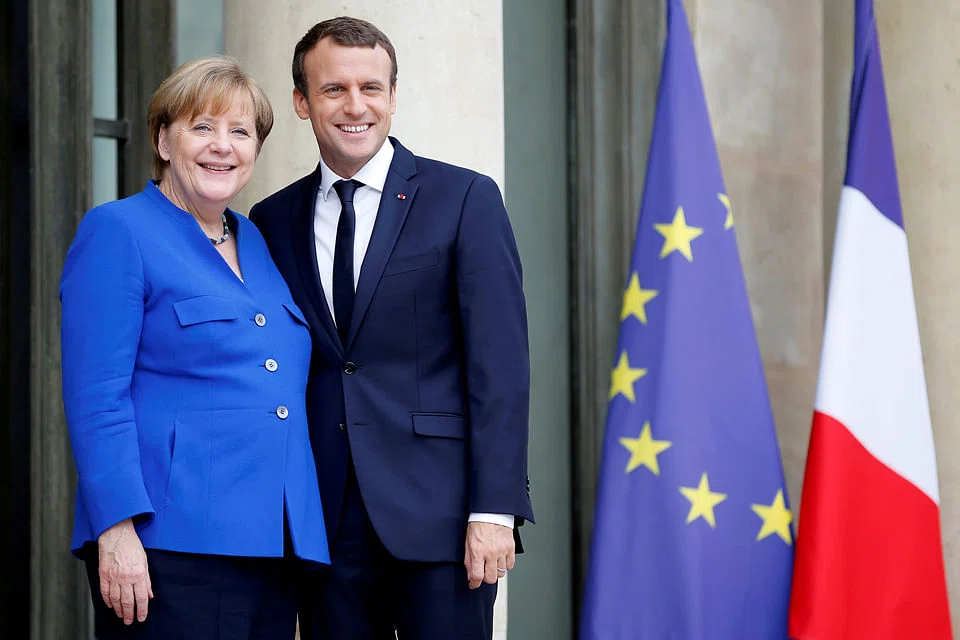
German Chancellor Angela Merkel has said that she is open to the idea. "I've personally always said: it depends on how," Mrs Merkel said during a July 13 press conference in Paris. "I have nothing against a euro-area budget. I have proposed in 2012 a smaller euro-area budget and failed miserably." "I'm very glad that this idea is being introduced again," she added.
The common budget and finance minister proposals have the backing of countries such as Spain and Italy, which have said that such steps are important in order to strengthen the bloc and to shield it from future crises. The European Commission, the EU's executive arm, has also voiced support for this idea.
The euro has had a tricky decade. Since the onset of the European debt crisis, five of the bloc's members had to be bailed out, and Greece nearly left the euro in 2015 amid financial mismanagement, political brinkmanship and a ballooning deficit.
But since the peak of the turmoil, many of the key structural weaknesses have been addressed, mainly through the creation of a banking union - a set of new structures and regulations that centralised the supervision and resolution framework for the bloc's biggest lenders. And while budget rules have also been strengthened, more controversial reforms have been put on the back burner for lack of political will.
Perhaps the most controversial proposal is the issuance of debt that would be guaranteed by the euro states, an idea that has been rejected by Mr Schaeuble as putting too much risk on taxpayers. In an effort to quell objections, the commission floated the creation of so-called European Safe Assets, a financial instrument that would bundle sovereign debt from across the currency bloc so that it can be sold to investors as one product.
Giving the ESM a broader remit would also hand more powers to the fund's board of governors - euro-area finance ministers themselves. Germany is in favour, pushing to strengthen the role of the fund, while the commission would most likely prefer to keep as many of its powers concentrated in Brussels.
But this idea has few supporters (beyond Germany, only Finland and the Netherlands have been in favour) and has been vehemently opposed by other countries such as Italy. States are also trying to complete the establishment of a common financial backstop to the single resolution fund, an entity designed to foot the bill for winding down failed banks. While the commission and countries including France and Italy have been pushing for the ESM to offer a credit line for that backstop, Germany has been strongly opposed.
Mrs Merkel has publicly acknowledged the need to take some steps towards more integration. While it is highly unlikely that any move will take place before German elections on Sept 24, talks on these issues could progress soon after a government is formed - assuming that the coalition is willing.
While Berlin's reservations persist, Mr Macron's election has helped galvanise the German government in some areas where it had until recently dug in its heels. The chancellor's key opponent, Social Democrat leader Martin Schulz, is a former European Parliament president keen for closer EU integration who would likely assist Mr Macron's initiatives. And a Merkel win would give fresh momentum to the already reinvigorated Franco-German dynamic, allowing the euro area's two core members to take more initiative, especially on the less controversial outstanding reforms.
After all, even if the two sides do not see eye to eye on all the open issues, they agree that a stronger euro area will be better equipped to handle the next financial or political crisis. BLOOMBERG