
Strict rules at home push Chinese metaverse entrepreneurs, investors overseas

Singapore has become a particular hotspot for web3 talent from China
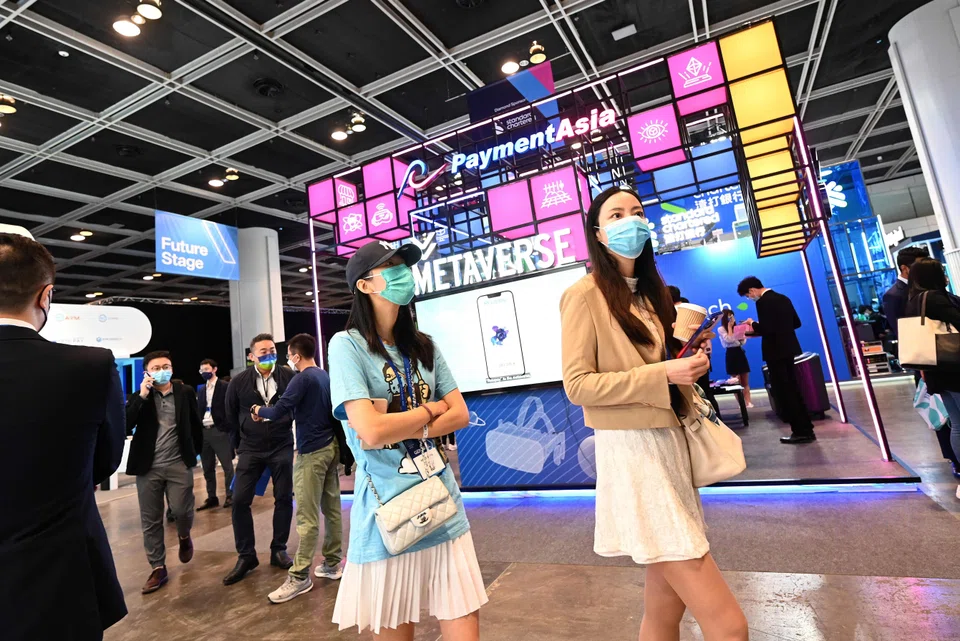
    • A metaverse stand in Fintech Week 2022 in Hong Kong. Developing metaverse and web3 projects in mainland China is difficult, with the government taking a tough stance on cryptocurrency.
    • A metaverse stand in Fintech Week 2022 in Hong Kong. Developing metaverse and web3 projects in mainland China is difficult, with the government taking a tough stance on cryptocurrency. PHOTO: AFP
    Published Tue, Dec 27, 2022 · 05:50 AM

    “METAVERSE” and “web3” have become buzzwords in the global tech industry over the past two years, as they are believed to be integral parts of the next generation of the Internet. Tech firms and entrepreneurs across the world have been scrambling to start businesses to tap these opportunities, attracting huge investments from players ranging from private equity and venture capital funds to institutional investors and tech giants.

    The metaverse is a virtual space that allows users to interact, combining aspects of social media, online gaming, augmented reality (AR), virtual reality (VR), and cryptocurrency. It has attracted increasing market attention since Facebook rebranded itself as Meta and vowed to focus on the metaverse.

    In the first half of the year, global investment in metaverse businesses topped US$120 billion, more than double the figure for all of 2021, according to a report from consulting firm McKinsey & Company.

    Web3 is the term for a new decentralised Internet based on blockchains – the shared ledgers used by cryptocurrencies such as Bitcoin – where users own the content they produce, no longer beholden to giant Internet companies. Last year, investment in web3 reached US$30.5 billion, 7.5 times the amount in 2020, according to Cointelegraph Research, a crypto industry media outlet.

    Both startups and Chinese tech giants Tencent Holdings, Alibaba Group and ByteDance are investing in metaverse and web3 projects.

    But developing metaverse and web3 projects in China is difficult, with the government taking a tough stance on cryptocurrency. China has banned issuing cryptocurrencies as well as trading them, over concerns about financial risks such as money laundering and illegal fundraising. As a result, many have sought opportunities overseas in markets such as South-east Asia, where governments have typically had a relatively relaxed stance on cryptocurrency.

    Asean Intelligence

    Get insights into businesses across South-east Asia

    Get the free report

    However, regulations in some markets have become increasingly strict after a combination of factors caused crypto asset prices to plummet, including the collapse of high-profile cryptocurrencies, rising inflation, higher United States interest rates, slowing economic growth, and concerns about the impact of the war in Ukraine.

    Recent shocks in the industry, such as the meltdown of crypto exchange FTX.com, have also spurred regulators to caution investors about digital assets.

    Overseas investment

    China’s regulators have banned trading of crypto assets except for the central bank’s own digital yuan, which is bad news for domestic metaverse and web3. Cryptocurrency is an integral part of the next generation of the Internet, with some critics saying web3 is a rebranding of sorts for crypto.

    Preceding web3 was web1 of the 1990s and early 2000s, when people largely engaged with the internet passively using open infrastructure – the era of blogs and message boards. The next phase was web2, initially web2.0, which emerged with social media giants like Facebook and Twitter in the mid-2000s. Internet users began actively participating in the Internet, creating their own content. But most was distributed by big companies, who monetised the content but kept the profits for themselves.

    Web3, supposedly, will replace centralised, corporate platforms with decentralised networks combining the open infrastructure of web1 and participation of web2. Users will own the data they create and earn cryptocurrency by trading the content they create, which proponents of web3 believe will give them a fair share of profits so far hoarded by tech behemoths.

    Last year saw the emergence of non-fungible tokens (NFTs), a unique if controversial crypto asset whose ownership and authenticity are tracked using blockchain. But Chinese financial regulators warned NFTs could be used for “money laundering and illegal financial activities”, and be the subject of speculation.

    Amid intensified regulatory scrutiny of transactions in digital assets on the Chinese mainland, Tencent laid off staff at its NFT purchase and collection platform Huanhe.

    Consequently, Chinese metaverse and web3 businesses turned their focus to overseas markets. Earlier this year, Hong Kong-listed Chinese livestreaming firm Inkeverse Group launched an NFT project called Hoot Labs, selling NFTs which can be used as social media users’ profile pictures. But it has forbidden Chinese mainland-based users from accessing its services.

    Inkeverse, formerly called Inke, has also launched an international metaverse social media platform called The Place, where users can hold parties, play music and interact in a VR space.

    Tencent, meanwhile, invested in March in Australian NFT startup Immutable, which is developing a blockchain-based online game where NFTs can be sold. The startup is valued at around US$2.5 billion.

    Alibaba-owned newspaper South China Morning Post has launched an NFT startup called Artifact Labs, a platform for NFT content owners and creators, expanding a project started last year that issued NFTs featuring its news archives.

    South-east Asia is the primary arena for Chinese metaverse and web3 entrepreneurs and investors because of looser oversight on cryptocurrency. Also, the geographical proximity and cultural similarities with China made South-east Asian countries the first stop for Chinese tech firms venturing overseas.

    Singapore is a particular hotspot for China’s tech talent. However, the decentralised aspiration of web3 facilitates a remote working culture, enabling one company to be spread across multiple countries.

    “You will find the boss of a web3 startup is in Singapore, but the team is in Thailand and Vietnam. So, it is difficult to say which country the company is based in,” Li Jiachao, vice-president of private-equity investor Initiate Capital, told Caixin.

    Lots of Chinese coders have either moved to Singapore for web3 projects or are working on them remotely from China, multiple market insiders said.

    “Singapore is the best place for Chinese nationals to start a web3 business in terms of culture and operation cost,” said a Singapore-based Chinese web3 entrepreneur cited by tech media outlet PingWest.

    The city-state is also short of skilled coders, putting them in hot demand, according to another entrepreneur cited by PingWest.

    Some startups have tried to connect web3 to online gaming. Games using blockchain technology allow players to trade their game assets for cryptocurrency in the form of tokens, which they can then convert into cash – a model called “play to earn”.

    “Financing in the gaming industry has not been easy in the past two years, but with the introduction of web3 and metaverse, the situation changed,” Li Jianyuan, a Malaysian entrepreneur, told Caixin. Li’s blockchain game launched a beta version at the beginning of this year, and it got a US$500,000 investment in the early stage of its the seed funding round.

    Some Chinese private equity investors have joined global venture capital investors to set up offices in Singapore and invest in local web3 projects, market insiders said.

    “There are more and more investable metaverse and web3 projects, most of which are founded by Chinese entrepreneurs,” said Li of Initiate Capital. The latter has invested in a Singapore-based web3 startup called NFTScan, a service provider to NFT coders, that has teams in Singapore, China and North America.

    Changing regulatory landscape

    While Chinese metaverse and web3 entrepreneurs originally found a more accommodating environment in South-east Asia, they are now facing a changing regulatory landscape for cryptocurrency.

    Last month, Singapore’s financial regulator warned of risks in trading cryptocurrencies after FTX’s dramatic failure. The world’s second largest digital asset exchange, created by the industry’s onetime wunderkind Sam Bankman-Fried, filed for bankruptcy protection in the US in November.

    That month, the crypto bourse collapsed from a US$32 billion valuation to insolvency as customers’ scrambling for withdrawals dried up its liquidity, revealing a hole in its balance sheet and causing rival exchange Binance to walk away from a potential bailout.

    The run on FTX sent shockwaves through the global cryptocurrency market and into the broader financial markets as some institutional investors found large investments at risk. Among them was Singapore’s state-owned investor Temasek Holdings, which wrote down about US$275 million of investment in FTX.

    The Monetary Authority of Singapore earlier ordered Binance, the largest cryptocurrency exchange in the world, to stop registering users in the country as it has not been licensed by the regulator. Some market participants have been concerned that the country’s policy stance on crypto assets could become more cautious, thus denting prospects for local metaverse and web3 projects.

    Metaverse and web3 enterprises also need to pay close attention to legal issues, including anti-money laundering, tax compliance, intellectual property rights, and anti-monopoly rules, Ning Xuanfeng, a partner of law firm King & Wood Mallesons, told Caixin. For example, the Australian government has proposed that NFT trading in primary and secondary markets would likely be taxed, Ning said.

    The high volatility of crypto assets this year, following a long bull run, has resulted in a cooling down of the NFT market. Global NFT trading volume fell 97 per cent from a peak of US$17 billion in January to about US$470 million in September, according to Dune Analytics, a blockchain data analytics platform. CAIXIN GLOBAL

    Decoding Asia newsletter: your guide to navigating Asia in a new global order. Sign up here to get Decoding Asia newsletter. Delivered to your inbox. Free.

    Share with us your feedback on BT's products and services



