

Strong enforcement measures will guard against new EP system fraud
Manpower minister says processes similar to preventing fraud on salary, education qualifications to be developed

Singapore
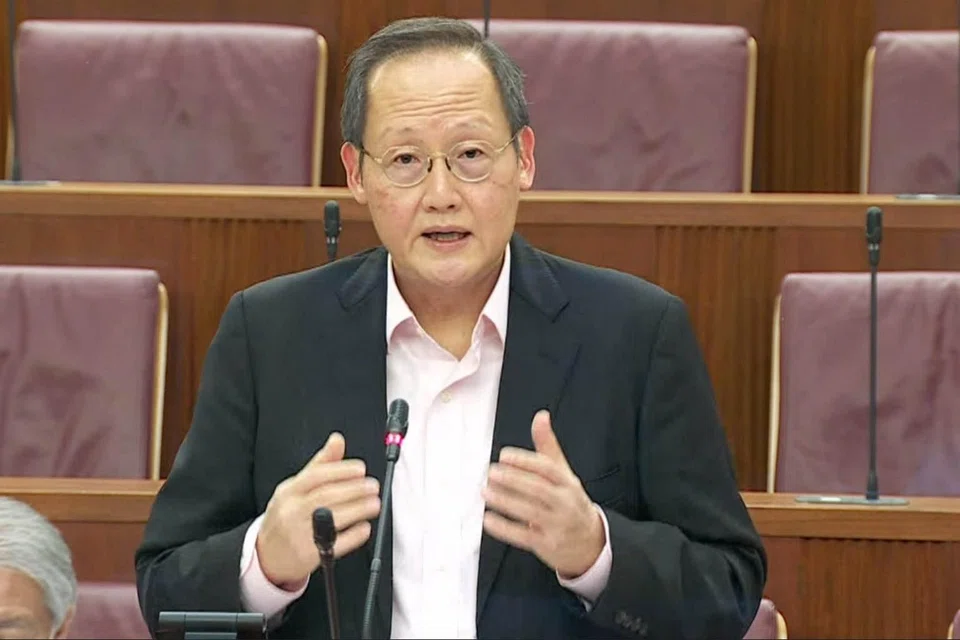
THERE will be strong enforcement measures to guard against employers attempting to game the Complementarity Assessment Framework (Compass), the new points-based system to assess Employment Pass (EP) applicants and their employers, said Manpower Minister Tan See Leng in Parliament on Monday (Mar 7).
Noting that there are already verification processes to prevent fraud for salary and educational qualifications, Dr Tan said similar processes will be developed for the new criteria, such as whether the applicant's job role is listed on the official "shortage occupation list".
"Employers certainly will not be able to get away with changing the job title to claim bonus points."
At the end of the Ministry of Manpower's (MOM) Committee of Supply debate, Dr Tan responded to concerns that Members of Parliament (MPs) had about Compass.
Responding to a question from Patrick Tay (Pioneer SMC) on what constitutes a top tier institution under Compass, Dr Tan said that besides universities, top-tier technical institutes, polytechnics and some vocational institutes will be considered. MOM will also work with sector agencies to recognise certifications that are well regarded by the industry.
An EP application must score at least 40 points across 4 foundational and 2 bonus criteria in order to be approved. For 2 of the foundational criteria, companies with fewer than 25 professionals, managers, executives and technicians (PMETs) will receive 10 points each by default, for a total of 20 points.
Workers' Party (WP) MP Jamus Lim (Sengkang GRC) raised concerns that this will result in a "cliff effect", discouraging small and medium-sized firms from growing bigger, as they would no longer gain these points by default if they employ 25 or more PMETs.
In reply, Dr Tan said the 2023 start date will give businesses time to adapt to the new framework, adding that there are multiple support schemes available as well.
He added: "As we use funding to support this group... the moment they get to a certain size, I think it is also the social compact and their responsibility to ensure that our Singaporean core continues to be supported and to be brought along with them as well."
One of the foundational criteria looks at the share of a company's PMET workforce that is of the same nationality as the applicant. On WP MP Gerald Giam's (Aljunied GRC) question on the rationale for this diversity criterion, Dr Tan said that it was developed to ensure that Singapore does not depend on one source for foreign talent.
This was partially influenced by the manpower challenges the Republic faced during the pandemic when some foreigners were not allowed to enter the country due to border control measures.
Liang Eng Hwa (Bukit Panjang SMC) asked if the new framework will result in a higher number of EPs than before, if all employers are able to meet the requirements under Compass.
Dr Tan replied that MOM chose not to set a quota on EP applicants as it is meant to be the "top tier in terms of all our work passes".
The system was designed to ensure that every EP holder will "pull their weight" in complementing local workers while supporting and driving Singapore's economy, he added.
TRENDING NOW

Grab CEO’s wife Chloe Tong on life with Anthony Tan and finding her purpose

Income Insurance appoints former Manulife Singapore top man as new CEO

Incidence of civil servants buying property near unannounced MRT stations ‘a concern’, but may not establish misconduct: PSD

Three ex-employees of Envy group join Ng Yu Zhi in bankruptcy

