Suez Canal revival gathers pace as Hormuz crisis reroutes ships
In July, vessels transiting the waterway rise 27% year on year to 1,340
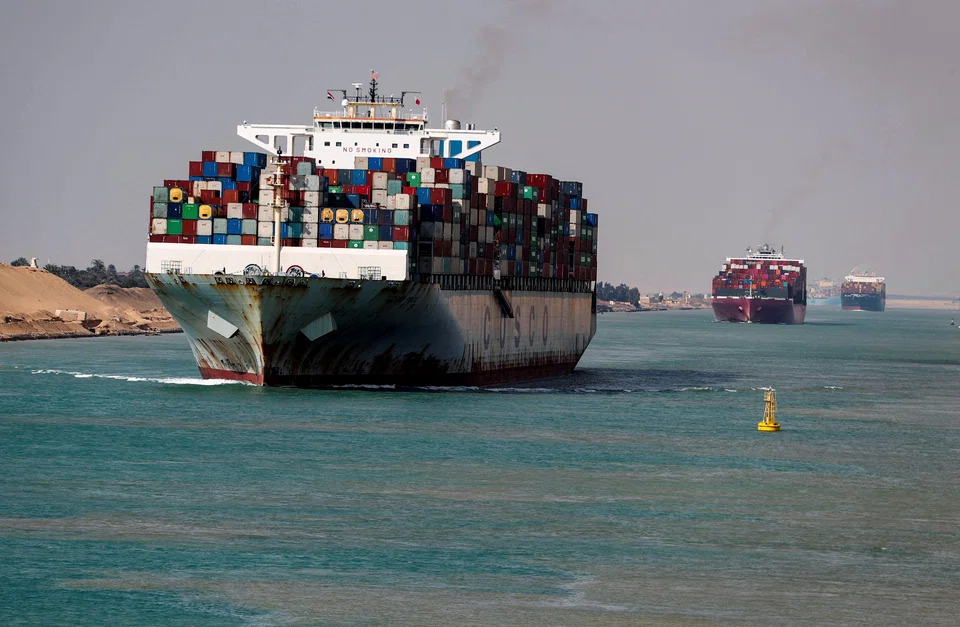
[CAIRO] Suez Canal revenue rose 42 per cent in July from the year earlier, as the Iran war’s effective closure of the Strait of Hormuz and Houthi threats in the southern Red Sea led more ships to use the Egyptian waterway.
A total of 1,340 vessels transited the canal that month, according to data from state statistics agency Capmas. That is 27 per cent more than in July 2025 and compares with 1,208 ships this June, extending a partial recovery that began earlier in 2026.
Oil tankers accounted for 526 of July’s vessels, versus 485 the month before.
The increase likely at least partly reflects the rerouting of Saudi Arabian oil exports via the Red Sea due to the shuttering of Hormuz. A subsequent threat from Yemen’s Houthi rebels has spurred many ships to exit north rather than cross the Bab El-Mandeb, another chokepoint.
Canal income rose to US$505 million in July, Capmas data showed, the highest monthly level since December 2023.
Traffic volumes plunged in early 2024 when the Houthis began targeting international shipping in the southern Red Sea to pressure Israel during its war against Hamas in Gaza.
The waterway that is the shortest sea route between Europe and Asia has, along with tourism and overseas remittances, traditionally been a key source of foreign exchange for Egypt.
The Suez Canal Authority expects full-year revenue to climb to between US$5.8 billion and US$6 billion from US$4.1 billion in 2025, chairman Osama Rabie told a local TV talk show last week.
Despite the recent uptick, both crossings and revenue remain far below their pre-Gaza war levels. The waterway brought in a record US$10.2 billion in 2023 and some 2,300 ships crossed in April of that year, according to Capmas data.
SEE ALSO

The resurgence is expected to continue in the coming months, with both the re-rerouting of Asia-bound oil exports and a number of European shippers announcing the resumption of some of their Red Sea services, said Mohamed Abu Basha, head of macroeconomic analysis at investment bank EFG Hermes. BLOOMBERG
Decoding Asia newsletter: your guide to navigating Asia in a new global order. Sign up here to get Decoding Asia newsletter. Delivered to your inbox. Free.
Share with us your feedback on BT's products and services