

Sunak hands US$6.2b to UK firms facing lockdown recession
 Add BT as a preferred source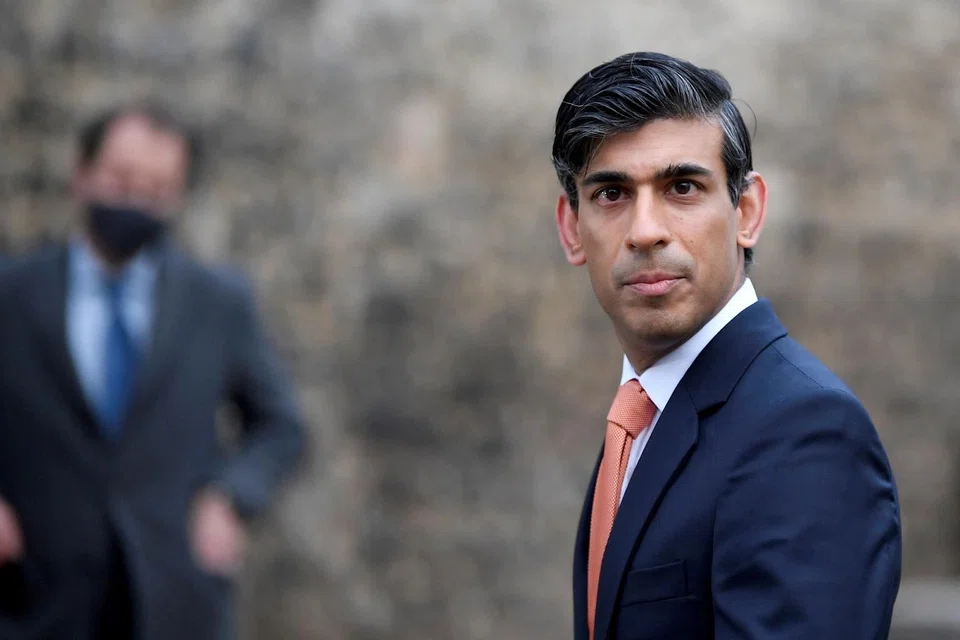
[LONDON] Chancellor of the Exchequer Rishi Sunak announced US$6.2 billion of emergency support to help UK businesses survive a third lockdown that threatens to plunge the economy into a sharp double-dip recession.
Retail, hospitality and leisure businesses will be entitled to one-off grants of as much as £9,000 (S$16,139) to tide them over until the spring, the UK finance minister said in a statement Tuesday. That's on top of existing funds of as much as £3,000 per month for those required to shut their doors because of coronavirus restrictions.
"This will help businesses to get through the months ahead - and crucially it will help sustain jobs, so workers can be ready to return when they are able to reopen," Mr Sunak said. In a video message on Twitter, he said the budget in early March will "set out the next stage in our economic response."
Business groups said the government hasn't gone far enough to protect companies and workers from the slump. Mike Cherry, chair of the Federation of Small Businesses, saying for many, the grants "won't be enough for businesses who are already under the cosh and on the brink."
Kate Nicholls, chief executive officer of the UK Hospitality group said Mr Sunak's aid represents "only a sticking plaster for immediate ills." "It is not enough to even cover the costs of many businesses and certainly will not underpin longer-term business viability for our sector," she said in a statement. She called for an extension to the business rates holiday, which currently runs until the end of the tax year in April, as well as an extension to reduced value added tax rates for the industry.
The latest measures add to the £280 billion it has cost the Treasury to tackle the virus and support firms and workers through the pandemic. Closing schools and more businesses will sharpen an economic slump in the first quarter, delaying a recovery from the worst recession in three centuries.
Restrictions will be in place in England until at least Feb 15, and Prime Minister Boris Johnson has said he hopes a mass vaccination programme will mean the government can relax some of the rules in the spring.
"The next few weeks are going to be difficult," Mr Sunak said. "But the end is in sight. We are vaccinating more and more people every day." The Treasury estimated the money will help 600,000 business properties nationwide.
Mr Sunak also made a further £594 million of discretionary funding available to businesses in sectors other than hospitality and leisure that are also impacted by the coronavirus lockdown.
The Scottish, Welsh and Northern Ireland governments were apportioned £375 million, £227 million and £127 million respectively to spend on the grants.
The additional aid comes after business groups demanded more support in the wake of new coronavirus restrictions announced by Mr Johnson late Monday.
This hit to the economy will be worse than the one in November since schools are closed this time. Bloomberg Economics now sees a 4.5 per cent contraction in the first quarter. JPMorgan on Tuesday cut its forecast for the first quarter, saying it now expects a 2.5 per cent contraction, compared with a near stagnation previously.
"This is bad," Ludovic Subran, chief economist at Allianz said in a Bloomberg Television interview. "The UK is a service economy, so it's all about shutting down services, and it's bad because things like schools are a big part of GDP - also because they play a role in how much parents are able to work."
In addition to the extra fiscal support, the lockdown may also prompt the Bank of England to provide more support, either through quickening the pace of its bond-purchase programme, or taking more drastic measures such as cutting interest rates below zero for the first time.
The damage from the latest lockdown probably won't be as deep as the record 18.8 per cent contraction in the second quarter of last year. JPMorgan says business and households are now better prepared to adjust to lockdown conditions.
As things stand, the government's main support programme for workers - the furlough plan paying 80 per cent of wages to those whose employer was forced to close - is due to expire at the end of April. Support for the self-employed also will run through April, while business loan programmes are due to close to new entrants at the end of March.
Following Mr Sunak's announcement, the Confederation of British Industry on Tuesday called for furlough to be extended until June.
"With the vaccine rollout now underway, and increasing mass rapid testing, there really is a brighter future within reach," said the CBI's chief economist Rain Newton-Smith. "Maintaining steadfast support for firms during this painful period will help ensure the recovery is delayed for as short a time as possible."
BLOOMBERG
Decoding Asia newsletter: your guide to navigating Asia in a new global order. Sign up here to get Decoding Asia newsletter. Delivered to your inbox. Free.
Share with us your feedback on BT's products and services
TRENDING NOW

SIA sinks into the red with S$76 million Q1 loss as fuel costs jump

15-month wait-out curb lifted for private property owners buying HDB resale flats

Singapore banks’ battle for wealth talent goes beyond private bankers

New career paths, deeper client bonds: How SME founder made AI serve her employees, not replace them

