

Swiss block transfer of arms, APCs to Ukraine
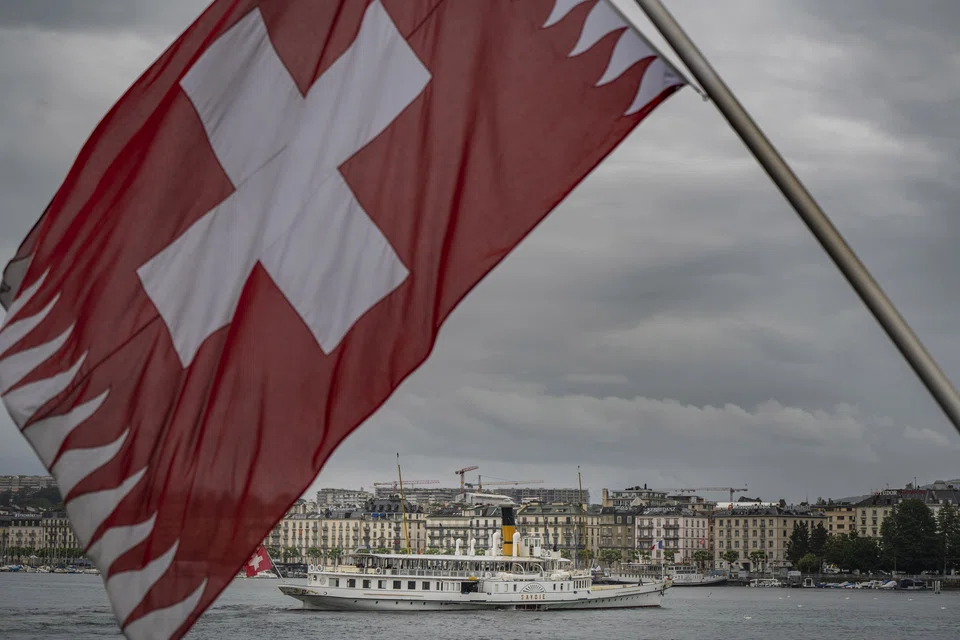
SWITZERLAND insisted Friday (Jun 3) that it would not allow Swiss war materiel to be transferred via third countries to Ukraine, in line with its strict military neutrality.
However it decided that individual parts and assembly packages could be delivered to European defence companies even if they will be used to produce war materiel that might later be transferred to Ukraine.
Switzerland said it had received requests from Germany and Denmark to transfer war materiel to Ukraine.
The German request concerned around 12,400 rounds of 35-millimetre ammunition produced by Switzerland for self-propelled anti-aircraft guns, and for Piranha III wheeled armoured personnel carriers (APCs) that were originally procured by Denmark and which have been stored in Germany since they were decommissioned.
The request made by Denmark concerns 22 Swiss-made Piranha III wheeled APCs.
Under Switzerland’s War Materiel Act, export requests cannot be approved if the recipient country is in an international armed conflict.
“Given that exports of such goods from Switzerland to Ukraine cannot be approved due to the law of neutrality’s principle of equal treatment and the provisions of the War Materiel Act, it follows that it is not possible to approve the transfer of Swiss war materiel by Germany and Denmark to Ukraine,” the Federal Council government said in a statement.
The government also decided Friday on 2 requests by Swiss firms to export parts and assembly packages to defence companies in neighbouring Germany and Italy.
The requests concerned components for both hand-held anti-tank weapons and for anti-aircraft weapons.

“There is a risk that some of the components could be incorporated into war materiel abroad that could then be passed on to Ukraine,” the government said.
The War Materiel Act allows Swiss companies to participate in international value chains of the defence industry.
In practice, the Swiss government has generally only tended to approve the export of parts and assembly packages if their share in the end product’s value remains below a certain threshold -- less than 50 per cent in the case of Italy or Germany.
“The Federal Council has decided to continue this practice. Exports of this kind are compatible with the law of neutrality,” it said.
Within days of Russia’s Feb 24 invasion of Ukraine, Switzerland decided to match the neighbouring European Union’s sanctions on Moscow, breaking with the neutral Alpine country’s traditional reserve.
Switzerland’s long-standing position is one of armed neutrality and the landlocked European country has mandatory conscription for men. AFP
Decoding Asia newsletter: your guide to navigating Asia in a new global order. Sign up here to get Decoding Asia newsletter. Delivered to your inbox. Free.
Share with us your feedback on BT's products and services
TRENDING NOW

8 public officers referred to police over property buys near unannounced MRT stations: Chan Chun Sing

Grab CEO’s wife Chloe Tong on life with Anthony Tan and finding her purpose
Retrenched PMETs who return on lower pay see median 25% wage cut

Hao Mart owner resisting OG’s mortgage foreclosure on his Tanglin GCB

