
Swiss vote to pass OECD minimum tax, 2050 climate goal
 Add BT as a preferred source
THE Swiss, feeling the impact of global warming on their rapidly melting glaciers, on Sunday (Jun 18) backed a new climate bill aimed at steering their country towards carbon neutrality by 2050.
Near-final results showed that almost 59 per cent of voters supported the new law, which will require Switzerland to slash its dependence on imported oil and gas, scaling up the development and use of greener and more home-grown alternatives.
The bill includes commitments to cut greenhouse gas emissions at 50 per cent below 1990s levels by the end of this decade.
Voters also overwhelmingly backed adopting a global minimum tax rate of 15 per cent for multinational corporations in a second referendum, with nearly 79 per cent in favour, with full results in from all but one of Switzerland’s 26 cantons.
With the slogan “So the money stays in Switzerland”, the government and most parties had been calling for “yes” votes. A rejection of the measure would have allowed other countries to pocket the estimated additional annual revenue of one billion Swiss francs (S$1.5 billion) to 2.5 billion Swiss francs, said the OECD agreement.
Swiss citizens were likely swayed by the nature of the topic, and the support should not be seen as a vote of confidence in the government – which recently has been under scrutiny over its role in the Credit Suisse Group crisis.
Navigate Asia in
a new global order
Get the insights delivered to your inbox.
Under its system of direct democracy, Switzerland is one of a few countries globally to vote on national climate goals. The current law is a softened version of an earlier proposal which would have outright banned fossil fuels but was deemed too extreme by lawmakers and the public.
The third measure on the national ballot – a plan to ensure that Covid measures including monitoring and contact tracing stay ready to be reactivated if necessary – was supported by voters, initial data showed.
Swiss people head to the polls as often as four times a year, though 2023 will only see this Sunday’s plebiscites. That is partly because the country holds parliamentary elections on Oct 22.
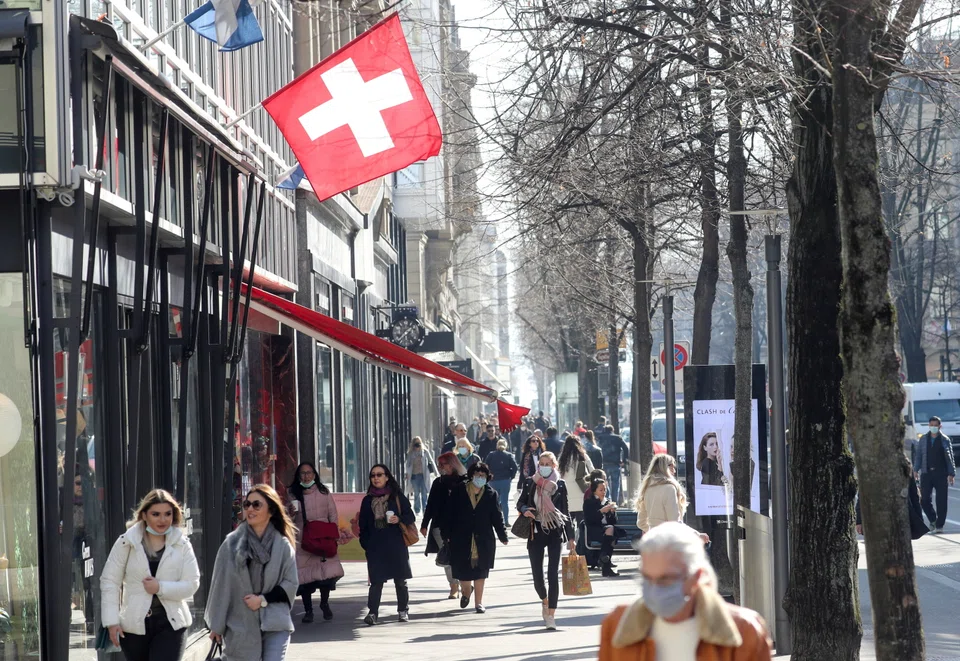
Meanwhile, voters in Geneva rejected a “solidarity” tax hike for the richest 1 per cent living in Switzerland’s second-largest city. More than 55 per cent voted against the plan, preliminary government results published on Sunday indicated.
The measure to temporarily lift the wealth tax from 1 per cent to 1.5 per cent for individuals owning more than three million Swiss francs – proposed by a coalition of leftist lawmakers, unions and activists during the pandemic – aimed to boost fiscal revenue.
The government of affluent Geneva had spoken out against the increase, saying tax proceeds were sufficient to deal with the social fallout from the Covid crisis.
Business groups had also warned that the city’s richest inhabitants might move to neighbouring states with lower rates. This had happened in Norway, where a wealth-tax increase to between 1 per cent and 1.1 per cent – notably lower than that proposed in Geneva – spurred millionaires to leave the country.
Cantonal wealth-tax data show more than 19,000 of Geneva’s about 500,000 inhabitants reach the millionaire threshold. A smaller number, somewhere between 4,200 and 10,000, would have been affected by the proposal – roughly the top 1 per cent. AFP, BLOOMBERG
Decoding Asia newsletter: your guide to navigating Asia in a new global order. Sign up here to get Decoding Asia newsletter. Delivered to your inbox. Free.
Share with us your feedback on BT's products and services

