

Taiwan presidential contender says he wants peace with China
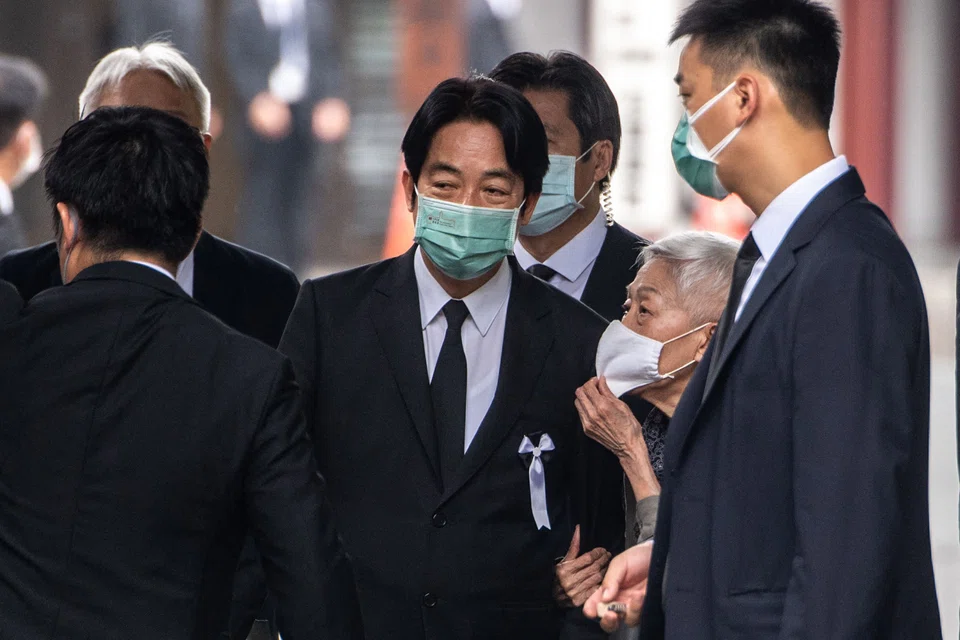
TAIWAN Vice-President William Lai pledged on Wednesday (Jan 18) to maintain the peaceful status quo with China, but also to defend Taiwan, as he took the helm of the ruling party ahead of an expected presidential run.
Lai was elected the Democratic Progressive Party’s (DPP) new chairman on Sunday, after President Tsai Ing-wen resigned as chairperson in November following the DPP’s trouncing in local elections.
Lai is widely expected to be the party’s candidate for president in the early-2024 election, though he has not formally accepted the nomination. Tsai cannot run again as president due to constitutional term limits.
As in the last election – which the DPP won handily – by promising to stand up to China, relations with Beijing are likely to top the agenda for 2024, especially as China ramps up pressure to get Taiwan to accept Chinese sovereignty.
Speaking to reporters after officially taking over as party chairperson, Lai said that the DPP’s mission was to protect Taiwan from the threat posed by China, but also that peace was the common expectation of people on both sides of the Taiwan Strait.
“We will use our best efforts to maintain the status quo of regional peace and stability,” he said, adding that peace also depended on national defence.
Lai angered China in 2018 while he was premier, telling parliament that he was a “Taiwan independence worker”, and that his position was that Taiwan was a sovereign, independent country – a red line for Beijing.
Asked about those comments, Lai said that he was committed to following Tsai’s policy, which included stating that only Taiwan’s people can decide their future, and that the Republic of China – Taiwan’s formal name – and the People’s Republic of China are “not subordinate to each other”.
“The pragmatic acceptance is that Taiwan is already a sovereign, independent country, and there is no need to separately declare Taiwanese independence,” he added.

China has refused to talk to Tsai since she first took office in 2016, believing her to be a separatist. Tsai says that the Republic of China on Taiwan is an independent country already, and that Beijing has no right to claim it.
Taiwan’s main opposition party – the Kuomintang or KMT – traditionally favours close ties with Beijing, and has not decided on its presidential candidate yet.
A Tuesday poll published by the Taiwanese Public Opinion Foundation showed Lai leading – but only slightly – over Hou Yu-ih, the KMT mayor of New Taipei city who is considered by party sources as a potential frontrunner for their candidate. REUTERS
Decoding Asia newsletter: your guide to navigating Asia in a new global order. Sign up here to get Decoding Asia newsletter. Delivered to your inbox. Free.
Share with us your feedback on BT's products and services
TRENDING NOW

He built the Vingroup empire. Now South-east Asia’s richest man is handing some key roles to his sons
Despite the de-dollarisation debate, demand for dollar liquidity in Asia is growing
Can a first-time homebuyer couple earning S$18,000 a month afford a new EC unit?
Asia needs new energy security architecture

