Taiwan, US sign trade pact to cut tariffs, boost investments
The signing formalises an agreement Washington and Taipei announced in January
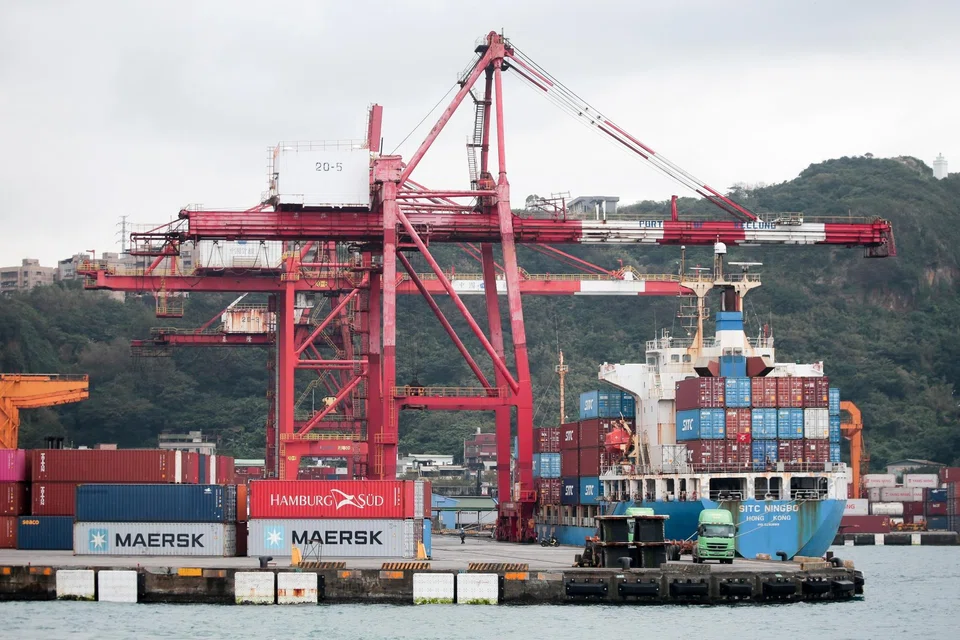
[TAIPEI] The US and Taiwan finalised a trade agreement to cut tariffs, boost market access for American products in Asia and channel billions of US dollars into US energy and technology projects.
Under the terms of the deal unveiled on Thursday (Feb 12) in Washington, Taiwan pledged to purchase more than US$44 billion worth of liquefied natural gas and crude oil from the US and open its market further to American goods, including beef, dairy, pork, wheat, medical products and automobiles.
Taipei is also committing to buy around US$15 billion in American civil aircraft and parts and invest roughly US$25 billion in power-generation equipment by 2029.
The signing formalises an agreement Washington and Taipei announced in January that would lower tariffs on goods from the self-governed island to 15 per cent from 20 per cent. There are exemptions for generic pharmaceuticals, chips and smartphones, which the US President Donald Trump’s administration has investigated for possible future levies.
“The Agreement on Reciprocal Trade with Taiwan will eliminate tariff and non-tariff barriers facing US exports to Taiwan, furthering opportunities for American farmers, ranchers, fishermen, workers, small businesses, and manufacturers,” US Trade Representative Jamieson Greer said. “This Agreement also builds on our longstanding economic and trade relationship with Taiwan and will significantly enhance the resilience of our supply chains, particularly in high-technology sectors.”
Still, uncertainty remained about Taiwan’s promise to provide financing and investment for US chip manufacturing. The document lacks significant new details about how that money would be spent.
The self-governing island initially committed to US$250 billion in direct investment to expand advanced semiconductor, energy and artificial intelligence (AI) operations in the US, plus an additional US$250 billion in government loan guarantees to boost the US chip supply chain.
In return, Taiwanese companies would be allowed to ship a set amount of semiconductor chips to the US tariff-free as American manufacturing capacity ramps up. A fact sheet released on Tuesday said that Taiwan would receive “preferential treatment” from future US chips tariffs or other remedial measures.
The US has also said that it would expand investments in key Taiwanese industries, including semiconductors, AI, defence and biotechnology, according to a January statement from the Taiwan government.

The democracy that China views as its own has benefited immensely from the global AI boom in recent years. The demand for chips to power the emerging technology propelled Taiwan’s economy to expand 8.63 per cent last year, its fastest pace since 2010.
The deal has wide-ranging implications for Taiwan Semiconductor Manufacturing Company, Asia’s most valuable company. US Commerce Secretary Howard Lutnick has said that he expects “huge” investments from the chip manufacturer, which last year pledged US$100 billion in US projects.
Trump has prioritised restoring domestic semiconductor production, calling it critical for economic and national security. The goal could run into hurdles moving forward.
Lutnick has said that his goal is to bring 40 per cent of Taiwan’s chip supply chain and production capacity to the US, a target Taiwanese officials have described as “impossible”.
Taiwan’s semiconductor industry has long been dubbed the island’s “silicon shield”, as it produces about 90 per cent of the world’s most advanced chips, which power everything from spacecraft to smartphones. That position has led some in Taipei to worry that relocating production capacity to the US, the island’s main military backer, could weaken Washington’s incentive to defend the island in the event of a Chinese invasion.
China has ramped up political and military pressure on Taiwan in recent years in a bid to reinforce its view that the island is part of its territory. Trump, who is set to meet with Chinese President Xi Jinping in April, has sought to ease disagreements with Beijing over trade, Taiwan and other issues. But the Chinese government cast a recent discussion between the two presidents about Taiwan in a contentious light.
The tariff agreement now requires approval from Taiwan’s legislature. The opposition Kuomintang, which holds a majority with a smaller allied party, has criticised the negotiations, saying they have lacked transparency. The party has also raised concerns about the impact on local pork producers and food safety issues related to feed additives in US pork and beef.
The Trump administration also announced on Thursday that it reached a framework agreement with North Macedonia for the country to eliminate customs duties on all American industrial and agricultural goods. The US will maintain its 15 per cent tariff on North Macedonian products but identify some goods that will be exempt from the levy. The two countries are also planning additional talks to reduce trade barriers on agricultural products and strengthen security cooperation. BLOOMBERG
Decoding Asia newsletter: your guide to navigating Asia in a new global order. Sign up here to get Decoding Asia newsletter. Delivered to your inbox. Free.
Share with us your feedback on BT's products and services