

Takaichi hails Japan victory, wants to build trust with markets
She has reiterated plans to avoid issuing bonds to fund a food-sales tax cut, vowing to look for other revenue streams or savings
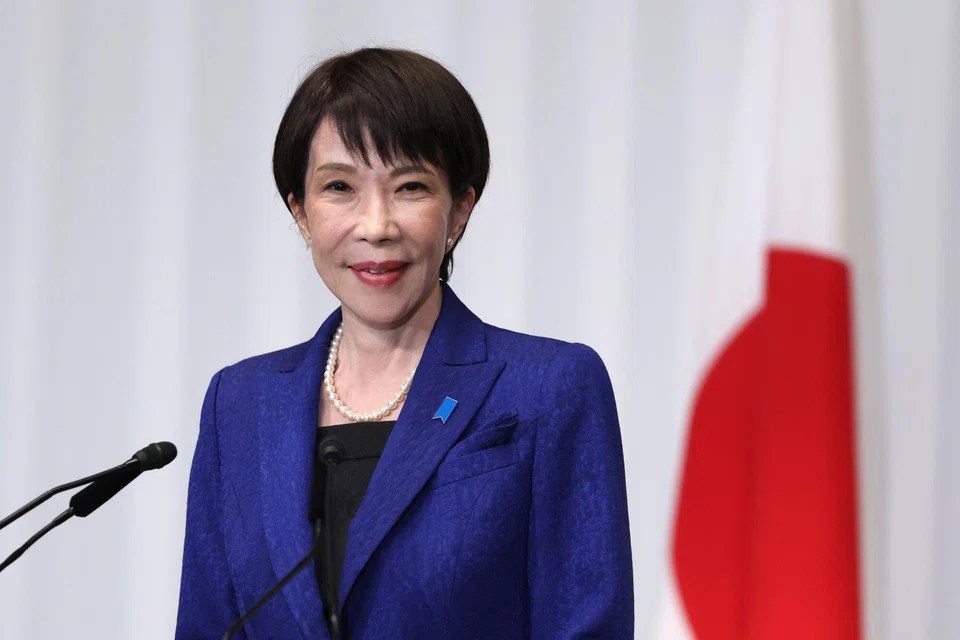
[TOKYO] Japanese Prime Minister Sanae Takaichi hailed the strong mandate she won in her election landslide, and promised to build trust with financial markets as concerns grow over how she will pay for a planned tax cut.
Speaking on Monday (Feb 9) in her first press briefing since leading the ruling Liberal Democratic Party (LDP) to its largest election win in Japan’s post-war history, Takaichi acknowledged concerns among investors regarding the plan to cut the sales tax on food items for two years.
She reiterated plans to avoid issuing bonds to fund the measure, while vowing to look for other revenue streams or savings – including revision of subsidies and tax exemptions. She did not provide further details.
“We’re talking about responsible, proactive fiscal policy, but the responsible part is crucial,” Takaichi said.
“Our policy is to secure market confidence by ensuring fiscal sustainability – by steadily reducing the debt-to-gross domestic product ratio.”
Markets on Monday provided at least a temporary reprieve from ructions that have threatened to undermine her spending plans.
Japanese equities surged to fresh record highs, while the yen and government bonds stayed noticeably calmer than many had feared – following weeks of volatility fuelled by concerns about fiscal sustainability.
Takaichi said the government considers the two-year cut on the food-sales tax to be a temporary measure to bridge the gap, before Japan can introduce a system of tax credits with cash handouts that would effectively increase take-home pay.
That measure and its details are still under discussion.



The prime minister added that she will seek a mid-term report on the sales tax cut before the summer, if she can secure the cooperation of opposition parties.
“I have received all sorts of comments pointing out some of the challenges, including the need to consider the timing of implementation, funding, as well as interest rates, the currency and the impact on financial markets,” Takaichi said, referring to the proposed sales tax cut on food.
A quarter of the government’s annual outlays are already devoted to servicing a debt load at around 230 per cent of GDP, the largest in the developed world.
Still, the return of inflation in Japan after decades of stagnant prices has led to an increase of nominal growth, helping to reduce the country’s debt-to-GDP ratio.
Optimism high after victory
Optimism is running high in Japan in the wake of Takaichi’s strong showing. The Nikkei 225 advanced 3.9 per cent on Monday for its biggest gain, since she won the LDP leadership election in September.
SoftBank’s CEO, Junichi Miyakawa, was among the industry captains welcoming the result and linking it to future growth.
“I was truly surprised by Takaichi camp’s sweeping victory yesterday,” he said. “I hope this historic landslide will become a turning point for Japan’s future, a moment that sets Japan on the path to revival.”
Throughout the briefing, Takaichi mostly reiterated her campaign pledges.
That included plans to strengthen the military, revise the nation’s pacifist constitution, affirm a strong alliance with the US and pursue stable ties with China – which has curbed trade with Japan in recent months after objecting to her stance on Taiwan.
Following the election, the LDP now has a two-thirds majority in parliament, enabling it to pass legislation easily and move to revise the constitution, which was imposed by the US after World War II and never amended.
But any constitutional changes also require approval of the Upper House, where the LDP is much weaker, as well as a national referendum – meaning the process will likely take years, if it happens at all.
“I am committed to creating an environment in which a national referendum can be held as soon as possible to let the public decide on whether or not to amend the constitution,” Takaichi said.
On foreign policy, she reaffirmed her desire for strong ties with the US and Trump, who hailed her election win and is set to host her at the White House in March.
She also said Japan is continuing to communicate with China at “various levels”, and will respond “calmly and appropriately from the standpoint of Japan’s national interests”.
While avoiding many specifics, Takaichi said she would be “bold” while also listening to a range of voices, as she seeks to build a Japan that will make younger generations proud.
“The people have given me strong encouragement to follow through by any means possible with the policy changes that I’ve put forward,” she said. BLOOMBERG
Decoding Asia newsletter: your guide to navigating Asia in a new global order. Sign up here to get Decoding Asia newsletter. Delivered to your inbox. Free.
Share with us your feedback on BT's products and services






