

Thai central bank seeks more powers to curb illicit money flows
It plans to issue guidelines limiting the size of baht-denominated online gold trades by individuals
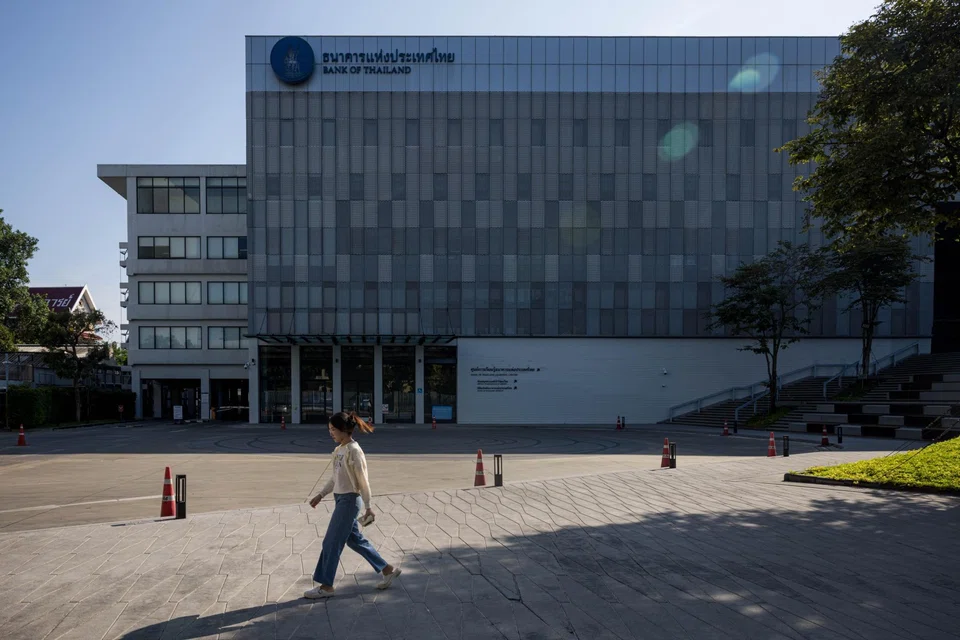
[BANGKOK] Thailand’s central bank is seeking broader powers to tackle structural risks in the financial system, including illicit-money flows and speculative activity that can distort the baht, governor Vitai Ratanakorn said.
The Bank of Thailand (BOT) has asked the finance minister to amend existing rules to give it clearer authority to oversee online gold trading in baht.
This is a segment officials say has had an outsized impact on the local currency. The revised regulations are expected to be issued between Jan 23 and 29, Vitai said on Tuesday (Jan 13).
Once effective, the central bank plans to issue guidelines limiting the size of baht-denominated online gold trades by individuals.
The BOT may set a daily cap between 50 million (S$2 million) and 100 million baht per person, Vitai said, adding the measures are aimed at curbing large, speculative transactions and will not affect retail investors or businesses such as jewellery manufacturers.
Thai authorities have warned of a punitive tax and greater scrutiny of bullion trading, as the baht’s rally to its highest level since 2021 hurts the nation’s exporters and tourism.
The currency gained about 8 per cent in 2025, as broad dollar weakness and gold’s roughly 65 per cent surge to a series of records helped offset weak domestic economic fundamentals.
The baht fell by as much as 0.8 per cent to 31.49 baht a dollar after Vitai’s comments, underperforming all emerging market currencies.
Daily gold trading volumes in Thailand have at times surpassed turnover on the local stock exchange, driving unusually large US dollar transactions.



At peak periods, gold-related deals accounted for about 50 to 60 per cent of the country’s total dollar trading, the central bank said.
The BOT wants the baht to weaken in line with economic fundamentals, but its ability to intervene directly in the foreign-exchange market is limited by existing agreements with the US, and any such moves could have implications for tariff negotiations, Vitai said.
Thailand’s central bank is working with the securities regulator to monitor domestic cryptocurrency trading, particularly Tether’s USDT stablecoin, which averages about 2.8 billion baht a day.
While authorities have identified irregularities – with more than 40 per cent of sellers classified as non-residents – BOT has said the market remains too small to pose a meaningful risk to the baht.
Separately, the central bank plans to ask lenders to step up inspections of unusual money withdrawals ahead of the Feb 8 general election, and report suspicious activities, Vitai said.
Over the longer term, Vitai said the central bank plans to seek further legal amendments to strengthen its ability to prevent illicit or abnormal money movements during elections, as part of a broader effort to safeguard the nation’s financial stability. BLOOMBERG
Decoding Asia newsletter: your guide to navigating Asia in a new global order. Sign up here to get Decoding Asia newsletter. Delivered to your inbox. Free.
Share with us your feedback on BT's products and services
TRENDING NOW

Once staunchly pro-China, Malaysian Chinese businesses are now distancing themselves from Beijing

Looking beyond looming CEO succession, should UOB potentially pursue a transformative merger?

Could stablecoins be the future of money?

Grab CEO’s wife Chloe Tong on life with Anthony Tan and finding her purpose

