

Thai reluctance to invest abroad likely to thwart bid to weaken strong baht
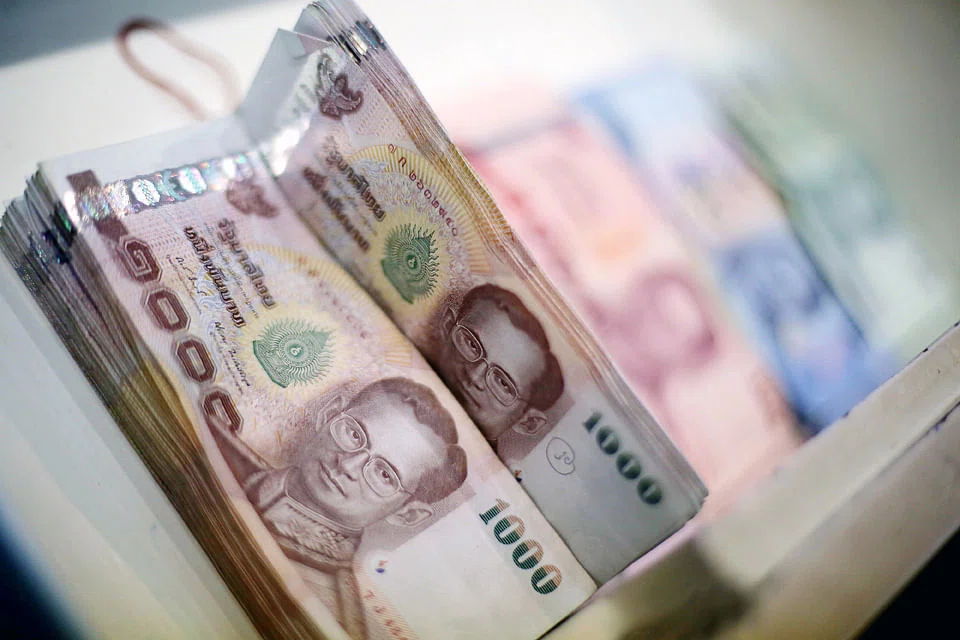
Bangkok
IF recent history is anything to go by, letting Thais invest more money abroad is unlikely to spur major outflows, and that will mean continued firmness for the baht - and continuing frustration for Thai exporters.
Authorities in Thailand, which has large current-account surpluses, are trying to get citizens to invest elsewhere, to help contain an uncomfortably strong baht.
On Monday, the central bank relaxed foreign exchange rules, letting more Thais buy securities overseas and commercial banks lend baht to non-residents for investment in Thailand and the Greater Mekong sub-region.
The immediate reaction was telling: Instead of weakening, the baht hit a near 23-month high of 33.94 per US dollar. In part, that was because some investors expected the Bank Of Thailand to introduce capital controls to cool a currency that's gained more than 5 per cent against the dollar this year, competing with the Malaysian ringgit to be South-east Asia's strongest performer.
The baht was at 33.90 at Wednesday's close, compared with 34.07 before Monday's announcement and 34.25 on June 2.
Past moves to try to weaken the baht have failed. Thais simply don't like to invest in foreign assets. According to Kasikornbank in Bangkok, Thailand had the world's third-largest surplus in 2016 - 11.3 per cent of gross domestic product, trailing only Singapore and Taiwan.
Thailand began gradually relaxing curbs on capital flows in April 2015. But Association of Investment Management Companies Industry data shows foreign assets in mutual funds grew to 1 trillion baht (S$41 billion) from about 900 billion baht since then, while overall mutual fund assets climbed to 4.8 trillion baht from about 4 trillion baht.
"Thais still want to invest more at home," said Saharat Chudsuwan, head of wealth advisory at Tisco Asset Management in Bangkok.
Drawn by low interest rates - the benchmark is 1.50 per cent - foreign investors have purchased 13.34 billion baht in equities and 136.44 billion baht in government debt this year, according to Maybank analysts.
"The baht's rapid appreciation since late May may hurt Thailand's competitiveness," said Kalin Sarasin, chairman of Thai Chamber Of Commerce and Board Of Trade, urging smaller exporters to hedge against currency risks.
Jane Namchaisiri, Federation Of Thai Industries chairman, said the central bank should consider additional short-term measures in case volatility picks up.
Thailand's foreign exchange reserves have been rising as a result of Bank Of Thailand's efforts to contain baht appreciation in the face of a massive current account surplus, analysts at ANZ said.
Headline reserves are US$184 billion but a US$29 billion asset on the central bank's forward book implies total reserves are about US$213 billion.
Kobsidthi Silpachai, head of capital markets research at Kasikornbank, said that given Thailand's large current account surplus, "outflows have to be supplemented by reversals of earlier foreign debt portfolio flows to have a meaningful impact on the baht". REUTERS
TRENDING NOW

Nvidia reinstates Jensen Huang as CEO; Trump says move poses no national security risk

Indonesia’s coal tycoon Low Tuck Kwong replaced as Bayan Resources president-director

Nvidia surges 33% after reinstating Jensen Huang, reviving AI trade; stocks soar in US and Europe

Consider lowering homeownership barriers for some non-resident foreigners

